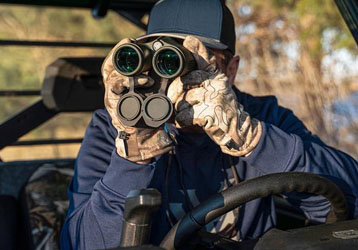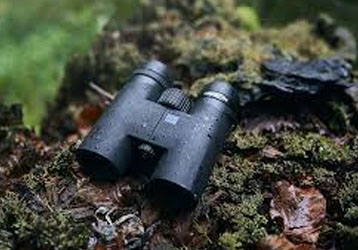










How Does a Laser Rangefinder Work? Understanding the Technology Behind Accurate Distance Measurement
Laser rangefinders have become essential tools for golfers, hunters, surveyors, outdoor adventurers, and wildlife observers. These compact devices provide fast and highly accurate distance measurements, helping users make informed decisions in the field.
But have you ever wondered how a laser rangefinder actually works?
In this guide, we'll explain the technology behind laser rangefinders, how they calculate distance, and why they have become one of the most reliable distance-measuring tools available today.
What Is a Laser Rangefinder?
A laser rangefinder is an electronic optical device that measures the distance between the user and a target using a laser beam.
Instead of estimating distance visually, a rangefinder calculates the exact distance in seconds and displays the result on a digital screen.
Laser rangefinders are commonly used for:
Golf
Hunting
Archery
Forestry
Construction
Surveying
Outdoor recreation
The Basic Principle of Laser Distance Measurement
The operation of a laser rangefinder is based on a simple scientific principle:
Time-of-Flight Technology
The rangefinder sends out a laser pulse toward a target.
The laser beam:
Leaves the device
Travels to the target
Reflects back to the rangefinder
Is detected by the internal sensor
The device then calculates the distance based on how long the laser takes to travel to the target and return.
Because light travels at an extremely high speed, advanced electronics are required to measure these tiny time intervals accurately.
Step-by-Step: How a Laser Rangefinder Measures Distance
Step 1: Target Acquisition
The user places the target inside the reticle or aiming point displayed in the viewfinder.
Examples include:
A golf flag
A deer
A tree
A building
A mountain marker
Step 2: Laser Emission
When the measurement button is pressed, the rangefinder emits an invisible laser pulse toward the target.
Step 3: Signal Reflection
The laser reflects off the target surface and returns to the device.
Reflective targets often produce stronger return signals.
Step 4: Distance Calculation
The internal processor calculates the distance using precise timing data.
The result is displayed almost instantly on the LCD display.
Why Laser Rangefinders Are So Accurate
Modern laser rangefinders can achieve impressive accuracy because they use:
High-speed processors
Precision timing circuits
Advanced optical systems
Intelligent signal processing algorithms
Many premium models can measure distances with accuracy within one yard or one meter.
This level of precision is difficult to achieve through visual estimation alone.
Factors That Affect Measurement Performance
Several environmental factors can influence ranging performance.
Target Reflectivity
Bright surfaces reflect laser energy more effectively than dark surfaces.
Examples of highly reflective targets:
Buildings
Road signs
Golf flags with reflective material
Less reflective targets include:
Dark-colored animals
Dense vegetation
Rough natural surfaces
Weather Conditions
Heavy environmental conditions may reduce ranging efficiency.
Examples:
Heavy rain
Dense fog
Snowstorms
Dust storms
Under normal outdoor conditions, laser rangefinders perform exceptionally well.
Target Size
Larger targets generally provide stronger reflected signals than smaller targets.
What Is Slope Compensation?
Many modern golf and hunting rangefinders include slope technology.
Slope compensation considers:
Distance
Elevation changes
Inclines and declines
The device calculates the adjusted distance rather than simply the straight-line distance.
This feature helps users make more accurate decisions on uneven terrain.
Key Components of a Laser Rangefinder
Laser Emitter
Produces the outgoing laser pulse.
Optical Lens System
Provides a clear view of the target.
Receiver Sensor
Detects the returning laser signal.
Digital Processor
Calculates the exact distance.
LCD Display
Shows measurement results to the user.
Together, these components create a fast and accurate measurement system.
Benefits of Using an INJIE Laser Rangefinder
INJIE Laser Rangefinders are designed for outdoor users who demand reliability and precision.
Key advantages include:
Fast measurement speed
High ranging accuracy
Long-distance performance
Clear optical viewing
Compact and lightweight design
Waterproof and durable construction
Easy one-button operation
Whether on the golf course, in the hunting field, or exploring nature, INJIE rangefinders help users obtain accurate distance information quickly.
Applications of Laser Rangefinders
Golf
Measure precise yardages to:
Flags
Hazards
Fairway targets
Hunting
Estimate distances to:
Game animals
Landmarks
Observation points
Hiking and Exploration
Determine distances to:
Mountain peaks
Trail markers
Campsites
Wildlife Observation
Observe animals from a safe distance while accurately estimating range.
Frequently Asked Questions
How accurate is a laser rangefinder?
Most quality rangefinders provide accuracy within ±1 yard or meter under normal conditions.
Can a rangefinder work in rain?
Light rain generally has minimal impact, but heavy rain may reduce maximum ranging distance.
Do laser rangefinders work at night?
Yes. Since the laser is active, many rangefinders can measure targets in low-light conditions.
How far can a laser rangefinder measure?
Depending on the model, maximum ranging distances can vary from several hundred yards to over 1,000 yards.
Conclusion
Laser rangefinders use advanced Time-of-Flight technology to provide fast and accurate distance measurements. By emitting a laser pulse, detecting its reflection, and calculating travel time, these devices deliver precise distance information within seconds.
INJIE Laser Rangefinders combine advanced ranging technology, durable construction, and user-friendly operation, making them an excellent choice for golfers, hunters, outdoor enthusiasts, and professionals seeking dependable performance in the field.