









How to Improve Long-Range Laser Measurement Accuracy in Outdoor Environments
Long-range laser measurement is widely used in construction, infrastructure inspection, forestry, land assessment, industrial fieldwork, and outdoor distance measurement. By measuring the distance between an instrument and a visible target, a long-range laser rangefinder can help users collect field data without physically accessing every measurement point.
However, outdoor measurement conditions can be unpredictable. Bright sunlight, atmospheric haze, target surface characteristics, instrument movement, and incorrect operating procedures may all affect the reliability of measurement results.
Understanding these factors is essential for anyone who relies on laser distance measurement technology. This guide explains how to improve measurement consistency, reduce avoidable errors, and select a suitable long-range laser rangefinder for different outdoor applications.
Understanding Long-Range Laser Measurement
A laser rangefinder sends a laser signal toward a target and analyzes the returning signal to determine the distance. Depending on the instrument's design, it may use time-of-flight measurement, phase-based techniques, or another ranging method.
Different devices are designed for different measurement environments. A compact handheld rangefinder may be suitable for general outdoor measurements, while specialized instruments may offer additional functions for surveying, industrial inspection, or demanding field applications.
The advertised maximum range is not necessarily the distance at which every target can be measured reliably. Measurement performance depends on the instrument specifications and the conditions under which it is used.
For this reason, users should evaluate practical measurement requirements rather than relying on a single range specification.
Choose the Right Target Before Measuring
Target selection is one of the most important factors in outdoor laser measurement.
Target Size and Visibility
Large, clearly visible targets are generally easier to measure than small objects located far away. When a target occupies only a small portion of the viewing area, it can be difficult to keep the laser aligned with the intended measurement point.
Whenever possible, select a target that is large enough to identify clearly through the instrument's optical system.
Surface Reflectivity
The surface of a target affects how much laser energy returns to the instrument. Suitable reflective surfaces may provide stronger signals, while dark, irregular, or poorly oriented surfaces can make measurements more difficult.
A target that is easy to see through the optics is not always an ideal laser target. Visible appearance and laser signal return are different characteristics.
Avoid Unintended Objects
Trees, fences, branches, cables, glass surfaces, and other objects may interfere with the intended line of sight. In some situations, the device may measure a nearer object instead of the target the operator intended to measure.
Before recording a result, confirm that the laser is directed toward the correct feature and that the displayed reading is consistent with the measurement objective.
Maintain a Stable Measurement Position
Instrument movement can affect measurement consistency, particularly when measuring small targets at long distances.
Use a Stable Stance
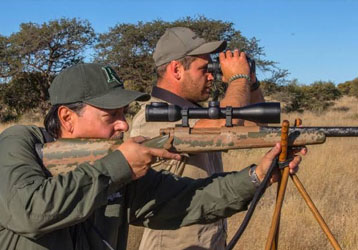
When handheld measurement is appropriate, maintain a balanced stance and hold the instrument securely. Avoid unnecessary movement while aiming and triggering the measurement.
For demanding measurements, a compatible tripod or support may help reduce movement. The mounting method should follow the instrument manufacturer's instructions.
Keep the Target in View
Optical magnification can help users identify distant features, but magnification may also make small movements more noticeable in the viewing area.
Take time to align the target before measuring. If the target is difficult to hold in view, reposition the instrument or use suitable support equipment.
Repeat Important Measurements
A single reading may not reveal an aiming mistake or an inconsistent signal return. Taking several readings under similar conditions can help users identify unusual results.
Repeated measurements should not be averaged automatically without considering why the readings differ. Large differences may indicate poor target selection, movement, environmental interference, or an incorrect measurement setup.
Understand the Effects of Weather and Lighting
Outdoor conditions can change the performance of a long-range laser rangefinder.
Bright Sunlight
Strong sunlight may make the target harder to identify through the optics or reduce the contrast of the display. Some targets may also become more difficult to measure under strong ambient light.
Users should position themselves to maintain a clear view of the target and follow the manufacturer's recommendations for outdoor operation.
Fog, Rain, and Atmospheric Haze
Fog, rain, mist, dust, and haze can scatter or weaken the laser signal. Their effects may become more noticeable over long measurement distances.
If the device produces inconsistent readings in poor visibility, consider repeating the measurement when conditions improve. Avoid treating an unstable reading as a verified distance.
Temperature Changes
Outdoor equipment may experience significant temperature changes between storage, transportation, and operation. These changes can affect electronic equipment and, depending on the instrument, its measurement performance.
Follow the specified operating temperature range and allow the instrument to adapt to environmental conditions when the manufacturer recommends it.
Dust and Moisture
Dust or moisture on the optical surfaces may reduce visibility or interfere with normal operation. Inspect the lenses and housing before use, especially after working in dusty or wet environments.
Do not wipe optical surfaces with rough materials or use unapproved cleaning chemicals.
Understand the Difference Between Distance Types
Correctly interpreting the displayed measurement is as important as obtaining a stable reading.
Line-of-Sight Distance
Line-of-sight distance is the direct distance between the instrument and the target. On sloped ground, this value may differ from the horizontal separation between two points.
Horizontal Distance
Horizontal distance represents the separation between points on a horizontal plane. Some laser rangefinders can calculate this value when the device includes the necessary angle-measurement functions.
Users should verify how the instrument defines and calculates horizontal distance before applying the result to a project.
Height Measurement
Height measurement may require more than a direct distance reading. Depending on the instrument, it may involve angle information, reference points, or a multi-step measurement process.
Incorrect aiming or an unsuitable reference point can affect the calculated result. For critical height measurements, follow the specified procedure and verify the result with an appropriate independent method.
Select the Appropriate Measurement Mode
Many long-range laser rangefinders offer different operating modes for different tasks.
Single measurement mode is useful when measuring a clearly identified target at a specific moment.
Continuous measurement mode can help users observe changing distances or identify a stable reading while adjusting the instrument's position.
Target priority functions, when available, may help distinguish between near and distant targets. Their behavior depends on the device design and should be checked in the user manual.
Angle-assisted measurement functions may support calculations involving horizontal distance or height when the instrument is equipped for these tasks.
Using the wrong mode can produce a result that appears reasonable but does not represent the quantity required. Operators should confirm the active mode before collecting important measurements.
Verify Accuracy and Repeatability
Accuracy and repeatability are related but different concepts.
Accuracy describes how closely a measurement corresponds to the true value under defined conditions. Repeatability describes how consistently the instrument produces results when the measurement is repeated under comparable conditions.
A rangefinder may produce similar readings repeatedly without necessarily meeting the accuracy required for a particular project. Likewise, a single reading that appears plausible does not establish that the instrument is operating correctly.
To evaluate measurement consistency:
Select a suitable and clearly identified target.
Keep the instrument in a stable position.
Take multiple readings under similar conditions.
Compare the results with the instrument's stated performance requirements.
Investigate unexpected differences rather than ignoring them.
Use a suitable reference or independent measurement method when necessary.
For professional applications, verification procedures should reflect the required tolerance and the manufacturer's recommendations.
Maintain the Instrument for Reliable Performance
Regular care helps preserve the usability of a long-range laser rangefinder.
Clean the Optical Surfaces Correctly
Use a clean, suitable lens cloth and follow the manufacturer's cleaning instructions. Avoid abrasive materials that may scratch optical coatings.
Check the Battery
A low battery may affect operation or cause the device to shut down unexpectedly. Confirm that the battery is charged or replaced according to the manufacturer's instructions before important fieldwork.
Inspect the Housing
Check the instrument for visible damage, loose components, or signs of moisture intrusion. Equipment that has suffered a significant impact should be inspected before being relied upon for critical measurements.
Store the Device Properly
Use the recommended protective case and storage conditions. Avoid leaving the instrument exposed to excessive heat, moisture, or direct sunlight for extended periods.
Follow Calibration and Verification Guidance
Calibration and routine field verification are not the same. Calibration establishes measurement performance in relation to recognized references under defined conditions. Field verification may help identify changes or inconsistencies during normal use.
Follow the manufacturer's guidance and any applicable professional requirements to determine when formal calibration or servicing is necessary.
Choosing a Long-Range Laser Rangefinder for Outdoor Work
Before purchasing a device, evaluate the measurement tasks and the environment in which it will be used.
Important considerations include:
Usable measurement range: Evaluate performance for the actual target sizes and surfaces encountered in the field.
Measurement accuracy: Check the stated accuracy and the conditions under which it applies.
Optical system: Consider whether the viewing system makes distant targets easy to identify.
Angle measurement: Determine whether horizontal-distance or height calculations are required.
Environmental protection: Review the device's specified resistance to dust, moisture, and temperature changes.
Power requirements: Consider battery type, operating time, and replacement availability.
Ease of operation: Check whether the controls and display are practical for the intended users.
Data requirements: Determine whether measurements must be recorded manually or transferred into a wider workflow.
The best device is not necessarily the one with the greatest advertised range. It is the instrument that meets the required performance level under realistic operating conditions.
Common Mistakes to Avoid
Several common mistakes can reduce the quality of long-range laser measurements.
Relying only on maximum range specifications: Maximum range may be measured under favorable conditions and with a suitable target.
Measuring through obstructions: The instrument may return a reading from an unintended object.
Ignoring target characteristics: Small, dark, or angled surfaces may be more difficult to measure reliably.
Confusing slope distance with horizontal distance: These values represent different quantities and should not be substituted for one another without the correct calculation.
Recording only one reading: A single measurement may not reveal an aiming or signal-return problem.
Ignoring environmental conditions: Weather and visibility can change measurement reliability.
Using the instrument outside its intended role: A handheld rangefinder may not provide the coordinate, elevation, or control functions required for professional surveying.
Avoiding these mistakes can improve measurement consistency and help users understand when further verification is necessary.
Frequently Asked Questions
What affects the accuracy of a long-range laser rangefinder?
Important factors include the instrument's specifications, target reflectivity, target size, atmospheric conditions, line of sight, instrument stability, and the measurement procedure.
Does a longer advertised range mean better measurement accuracy?
No. Maximum range and measurement accuracy describe different performance characteristics. Users should evaluate both according to their application.
Can a laser rangefinder measure distances in bright sunlight?
Many devices are designed for outdoor use, but performance depends on the model, target, and lighting conditions. Check the manufacturer's specifications and test the instrument under realistic conditions.
Why do repeated measurements sometimes produce different results?
Differences may result from movement, changing target alignment, weak signal return, atmospheric interference, or the device's operating characteristics. Recheck the target and measurement setup before recording the final value.
How often should a laser rangefinder be calibrated?
The appropriate interval depends on the manufacturer's guidance, usage frequency, operating conditions, and the accuracy requirements of the application. Follow applicable quality procedures rather than assuming that one interval suits every device.
Can a long-range laser rangefinder replace professional surveying equipment?
Not for every task. It can support distance checks and field observations, but coordinate measurement, elevation control, legal boundary work, and precision construction layout may require dedicated surveying equipment and qualified personnel.
Conclusion
Improving long-range laser measurement accuracy requires the right instrument, a suitable target, stable operation, and a clear understanding of environmental conditions. Users should also distinguish between direct distance measurements and calculated values such as horizontal distance or height.
By following consistent measurement procedures, maintaining the instrument, and verifying critical results, construction professionals, infrastructure inspectors, and outdoor field teams can make better use of long-range laser rangefinders.
Selecting equipment according to real operating conditions rather than maximum advertised range helps ensure that the instrument is appropriate for the intended application.