









Vehicle Speed Detection Sensor: Types, Working Principles and Applications
What Is a Vehicle Speed Detection Sensor?
A vehicle speed detection sensor is a device designed to measure or estimate the speed of moving vehicles using suitable sensing technology.
These sensors are used in traffic monitoring, transportation engineering, road safety studies, and intelligent transportation systems.
Depending on the application, a vehicle speed detection sensor may use radar signals, laser measurement, magnetic detection, inductive loops, or other compatible technologies.
The collected speed information can help transportation professionals understand traffic conditions, evaluate road performance, and support data-driven traffic management.
For equipment manufacturers, system integrators, and international buyers, understanding different sensor technologies is important when selecting a suitable vehicle monitoring solution.
How Does a Vehicle Speed Detection Sensor Work?
The working principle depends on the sensing technology used.
Some sensors measure vehicle speed directly through reflected signals, while others calculate speed using vehicle detection events, known distances, or image-based tracking.
The measurement process generally involves three stages:
-
Detecting the presence or movement of a vehicle.
-
Collecting measurement signals or vehicle movement data.
-
Processing the information to calculate or estimate vehicle speed.
The resulting data may be displayed locally, stored within the device, or transmitted to a compatible traffic management system.
Actual capabilities depend on the product design and technical specifications.
Main Types of Vehicle Speed Detection Sensors
Radar Vehicle Speed Sensors
Radar sensors transmit radio signals and analyze reflected signals from moving vehicles.
Conventional Doppler radar systems calculate radial speed using changes in reflected signal frequency.
Radar technology is used in various roadside monitoring applications because it can support vehicle detection without requiring physical contact with the road surface.
Depending on the sensor configuration, additional functions may include traffic data collection or integration with external monitoring platforms.
Laser Vehicle Speed Sensors
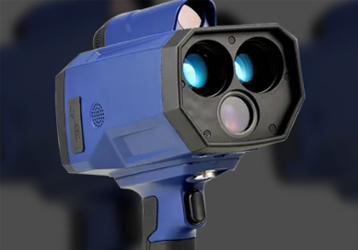
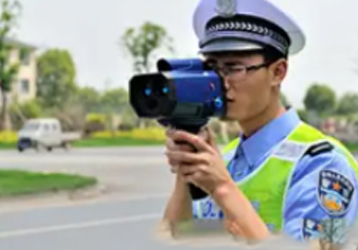
Laser speed sensors use laser-based distance measurement technology to determine changes in the distance between the instrument and a moving target.
By analyzing these changes over time, the equipment calculates the target's speed.
Laser technology can be useful when directional targeting or individual vehicle measurement is required.
Its performance depends on optical design, target characteristics, environmental conditions, and measurement geometry.
Inductive Loop Sensors
Inductive loop detectors are installed within the road surface and detect changes in electromagnetic characteristics when vehicles pass over them.
A properly configured system using two detection points separated by a known distance can calculate vehicle speed from the travel time between those points.
Inductive loop technology is used in various traffic data collection applications.
However, installation generally requires work within the road surface.
Magnetic Vehicle Detection Sensors
Magnetic sensors detect changes in the surrounding magnetic field caused by passing vehicles.
Depending on the system configuration, multiple sensors or suitable detection algorithms may be used to estimate vehicle movement and speed.
These sensors can support selected traffic monitoring applications where their installation and performance characteristics meet project requirements.
Camera-Based Vehicle Speed Detection
Camera-based systems use image processing to track vehicle movement.
Speed can be estimated using calibrated image geometry, timing information, and appropriate processing algorithms.
Some systems combine cameras with radar or other sensors to improve traffic data collection.
Camera performance depends on factors such as positioning, calibration, lighting conditions, image quality, and software design.
Comparison of Vehicle Speed Detection Technologies
| Sensor Type | Measurement Method | Typical Considerations |
|---|---|---|
| Radar | Reflected radio signals | Detection area, target identification, installation geometry |
| Laser | Changes in measured distance | Optical targeting, reflectivity, atmospheric conditions |
| Inductive Loop | Vehicle detection at road-embedded loops | Road installation, maintenance, sensor spacing |
| Magnetic | Vehicle-induced magnetic field changes | Sensor configuration, installation and processing |
| Camera-Based | Calibrated image tracking | Lighting, calibration, visibility and data processing |
No single sensor technology is ideal for every traffic monitoring project.
The correct selection depends on measurement objectives, infrastructure conditions, operating environment, and available resources.
Applications of Vehicle Speed Detection Sensors
Highway Traffic Monitoring
Vehicle speed sensors can support traffic data collection on highways and expressways.
Depending on the system configuration, they may provide information about vehicle movement and traffic conditions at selected monitoring locations.
Urban Traffic Management
Speed detection sensors can help transportation professionals collect traffic information on urban roads.
This information may support traffic engineering studies, road performance assessments, and monitoring projects.
Intelligent Transportation Systems
Intelligent transportation systems combine sensing equipment, communication networks, and data processing platforms.
Vehicle speed detection sensors can provide information to compatible systems for further analysis.
Transportation Research
Researchers use vehicle speed data to investigate traffic flow, road conditions, and vehicle movement patterns.
Consistent measurement procedures and appropriate sensor calibration are important for maintaining data quality.
Industrial Traffic Monitoring
Vehicle speed detection sensors may also be used in logistics facilities, industrial parks, and private transportation networks.
Important Features to Consider When Choosing a Vehicle Speed Sensor
Measurement Accuracy
Review the manufacturer's accuracy specifications and the conditions under which performance was tested.
Detection Range
Confirm that the sensor supports the intended operating distance or detection area.
Speed Measurement Range
The equipment should support the expected minimum and maximum vehicle speeds.
Environmental Protection
Consider operating temperature, moisture resistance, dust protection, and other environmental requirements.
Installation Requirements
Some sensors require roadside mounting, while others need installation within the road surface.
Communication Interfaces
Depending on the project, data interfaces may be required for integration with traffic management platforms.
Maintenance and Calibration
Review recommended inspection, maintenance, and calibration procedures.
Manufacturer Support
Technical documentation, warranty coverage, and after-sales assistance are important procurement considerations.
Vehicle Speed Detection Sensors in Intelligent Transportation Systems
Vehicle speed sensors can serve as an important data source within intelligent transportation infrastructure.
When connected to compatible monitoring systems, these sensors may support traffic information collection, historical data analysis, and transportation planning.
However, successful integration depends on communication compatibility, data quality, system architecture, and ongoing maintenance.
Organizations should evaluate the complete monitoring solution rather than selecting sensors solely on the basis of individual specifications.
Frequently Asked Questions
What is a vehicle speed detection sensor?
A vehicle speed detection sensor is a device used to measure or estimate the speed of moving vehicles through technologies such as radar, laser, road-embedded detection, or image processing.
Which sensor is commonly used for roadside speed measurement?
Radar and laser technologies are common options for non-contact roadside vehicle speed measurement.
Can a vehicle speed sensor connect to an intelligent transportation system?
Some sensors provide communication interfaces that allow integration with compatible traffic management systems.
Are road-embedded sensors more accurate than radar sensors?
Not necessarily. Accuracy depends on the specific sensor, installation, calibration, processing system, and operating conditions.
What should buyers consider when choosing a vehicle speed detection sensor?
Important factors include measurement performance, detection range, installation requirements, environmental suitability, communication compatibility, maintenance, and manufacturer support.
Conclusion
Vehicle speed detection sensors provide important information for modern traffic monitoring and transportation management.
Radar, laser, inductive loop, magnetic, and camera-based technologies offer different measurement methods and installation characteristics.
For transportation professionals and international equipment buyers, understanding these differences helps identify suitable sensors for specific monitoring applications.
Selecting equipment based on verified technical specifications, infrastructure requirements, and long-term maintenance considerations can support more reliable vehicle speed data collection.