









Hunting Scope Optical Technology: A Practical Guide to Modern Hunting Optics
The global outdoor optics market continues to develop as users demand clearer images, better optical transmission, stronger construction, and more flexible magnification. As a result, modern hunting scopes are becoming increasingly sophisticated optical products.
A professional hunting rifle scope may combine high-quality optical glass, fully multi-coated lenses, variable magnification, precision reticles, side-focus systems, illuminated reticles, waterproof housing, and durable mechanical components.
For optical brands, distributors, wholesalers, and outdoor equipment importers, understanding these technologies is important when selecting products for different markets.
1. What Is a Modern Hunting Scope?
A modern hunting scope is a magnified optical system designed for outdoor observation and lawful hunting applications.
Compared with basic optical scopes, professional products may include:
Variable magnification
Multi-coated optical lenses
FFP or SFP reticles
Side focus
Parallax adjustment
Illuminated reticles
Waterproof construction
Fog-resistant housing
Shock-resistant mechanical structures
The goal is to provide a reliable viewing experience in changing outdoor environments.
2. Optical Clarity Is More Than Magnification
One of the most common mistakes when selecting an optical scope is focusing only on magnification.
For example, a 24× scope does not automatically produce a better image than a 16× scope.
Image quality is influenced by:
Optical Glass
Lens Design
Lens Coating
Light Transmission
Optical Alignment
Mechanical Stability
Manufacturing Precision
Therefore, buyers should evaluate the complete optical system.
3. Magnification Range
Variable magnification is one of the most important features of modern hunting optics.
Common configurations include:
3-9×
4-12×
4-16×
5-20×
6-24×
5-25×
A variable-power scope allows users to select lower magnification for wider viewing and higher magnification for detailed observation.
4. 3-9×40 Hunting Scope
A 3-9×40 hunting scope offers a balanced combination of magnification and portability.
Main specifications
Magnification: 3-9×
Objective Lens: 40mm
Potential advantages include:
Compact construction
Moderate weight
Flexible magnification
Wide field of view at lower power
This configuration remains suitable for general outdoor optical applications.
5. 4-12×40 Hunting Scope
The 4-12×40 scope provides additional magnification while maintaining a relatively compact 40mm objective.
It can be positioned as a mid-range optical solution for buyers looking for a balance between:
Portability + Magnification + Optical Performance
6. 4-16×44 Hunting Scope
A 4-16×44 hunting scope offers a wider magnification range and a larger objective.
Possible configurations include:
FFP reticle
SFP reticle
Side focus
Illuminated reticle
Fully multi-coated optics
This type of configuration can be positioned toward professional outdoor optics markets.
7. 6-24×50 Hunting Scope
A 6-24×50 hunting scope combines high magnification with a larger objective lens.
The configuration provides:
6× minimum magnification
24× maximum magnification
50mm objective
The larger optical system can provide greater light-collection potential but generally increases product size and weight.
8. Objective Lens Diameter
Objective lens diameter affects the optical system's light-collection capability.
Typical hunting scope objective sizes include:
| Objective | General Characteristics |
|---|---|
| 32mm | Compact and lightweight |
| 40mm | Balanced design |
| 44mm | Increased optical capacity |
| 50mm | Larger light-collection potential |
| 56mm | Large optical system |
The correct objective depends on the magnification range and intended application.
9. Understanding Exit Pupil
Exit pupil is an important optical specification.
The approximate formula is:
Exit Pupil = Objective Diameter ÷ Magnification
For example:
A 40mm objective at 8×:
40 ÷ 8 = 5mm
A 50mm objective at 10×:
50 ÷ 10 = 5mm
This demonstrates why objective diameter and magnification should be considered together.
10. Field of View
Field of View, or FOV, represents the visible area through the scope.
Generally:
Lower Magnification → Wider FOV
Higher Magnification → Narrower FOV
A wider FOV can make environmental scanning easier, while higher magnification provides greater image enlargement.
Professional manufacturers should list FOV values at clearly defined magnification settings.
11. Eye Relief
Eye relief describes the distance between the observer's eye and the eyepiece while maintaining the full usable image.
Adequate eye relief can improve:
Viewing comfort
Ease of positioning
Observation stability
Overall ergonomics
Eye relief should be included in professional product specifications.
12. Lens Coating Technology
Anti-reflective coatings are an important part of modern optical manufacturing.
Common descriptions include:
Coated
Multi-Coated
Fully Multi-Coated
Fully multi-coated optics generally indicate that multiple lens surfaces receive anti-reflective treatment.
Potential benefits include:
Improved light transmission
Better contrast
Reduced reflections
Improved image clarity
13. Optical Glass
Optical glass quality affects the final viewing experience.
Important factors include:
Glass transparency
Surface quality
Optical uniformity
Resolution
Contrast
Color reproduction
Manufacturing precision is equally important because incorrect alignment can reduce the performance of otherwise high-quality optical components.
14. Reticle Technology
The reticle is the reference pattern visible inside the scope.
Popular designs include:
Duplex
Mil-Dot
BDC
MOA
MRAD
Illuminated Reticle
The ideal reticle depends on the product positioning and intended user.
15. Duplex Reticle
The Duplex reticle is designed with thicker outer lines and finer central lines.
Its advantages include:
Simple appearance
Easy recognition
Clear center
Traditional optical design
It is suitable for customers seeking a straightforward reticle.
16. Mil-Dot Reticle
A Mil-Dot reticle provides angular reference points.
It is often selected by users familiar with angular measurement systems.
For international products, accurate reticle specifications and technical documentation are essential.
17. BDC Reticle
BDC means Bullet Drop Compensation.
A BDC reticle includes reference points intended for specific trajectory conditions.
However, real-world trajectory varies according to equipment, projectile characteristics, environmental conditions, and distance.
Therefore, users should verify the actual calibration of the reticle.
18. MOA and MRAD
Two common angular measurement systems are:
MOA
Minute of Angle.
MRAD
Milliradian.
Both systems can be used for describing angular adjustments and reticle references.
International product pages should clearly state whether the scope uses MOA or MRAD.
19. Illuminated Reticle
An illuminated reticle uses an electronic light source to improve reticle visibility.
Typical functions include:
Brightness adjustment
Multiple brightness levels
Central illumination
Low-light visibility
Illumination does not mean the product is a night vision device.
20. FFP Hunting Scope
FFP stands for First Focal Plane.
In an FFP scope, the reticle is located in the first focal plane.
As magnification changes, the apparent size of the reticle changes accordingly.
This design can be useful for certain reticles with angular reference markings.
21. SFP Hunting Scope
SFP stands for Second Focal Plane.
In an SFP scope, the reticle is located in the second focal plane.
The apparent visual size of the reticle generally remains consistent as magnification changes.
This design can provide a familiar reticle appearance at different magnification levels.
22. FFP vs. SFP
| Feature | FFP | SFP |
|---|---|---|
| Focal Plane | First | Second |
| Reticle Size | Changes visually | Generally consistent |
| Magnification Effect | Reticle scales with image | Reticle remains visually consistent |
| Typical Positioning | Advanced optical products | General-purpose products |
The choice should be based on the intended application.
23. Side Focus Hunting Scope
Side focus allows users to adjust focus and parallax from a control located on the side of the scope.
Benefits may include:
Convenient adjustment
Easier focusing
Parallax adjustment
Improved ergonomics
Side focus is particularly common in higher-magnification scopes.
24. Adjustable Objective Scope
An Adjustable Objective, or AO, provides parallax adjustment through a control near the front objective.
AO and side focus provide similar functionality but use different mechanical layouts.
25. Waterproof Hunting Scope
Outdoor optical equipment may encounter challenging weather conditions.
A professional waterproof scope can use:
O-ring sealing
Sealed optical chambers
Waterproof housing
Protected adjustment turrets
Manufacturers should provide verified testing information for waterproof claims.
26. Fogproof Hunting Scope
Temperature changes can create condensation inside optical products.
Sealed construction and appropriate internal gas filling can help reduce internal fogging.
Fog-resistant design is particularly important for equipment used across changing outdoor temperatures.
27. Shock-Resistant Construction
A durable hunting scope may use:
Aluminum alloy housing
Reinforced tube
Precision-machined turrets
Secure lens retention
Reinforced internal components
A professional manufacturer should verify mechanical durability through controlled testing.
28. Scope Tube Diameter
Common tube diameters include:
1 inch
30mm
34mm
The tube diameter affects mounting compatibility.
Before purchasing mounting rings, customers should confirm the exact tube specification.
29. Lightweight Hunting Scope Design
A lightweight optical scope can improve portability.
Manufacturers can reduce weight through:
Lightweight alloy
Compact optical architecture
Optimized housing
Precision machining
Integrated mechanical components
The objective is to achieve a balance between:
Weight + Strength + Optical Performance
30. Hunting Scope Applications
Hunting scopes can be positioned for various lawful outdoor applications, including:
Wildlife Observation
Magnified viewing of distant animals.
Nature Research
Field observation and outdoor research.
Outdoor Exploration
Viewing distant objects and landscapes.
Lawful Hunting
Supporting legal hunting activities in accordance with applicable regulations.
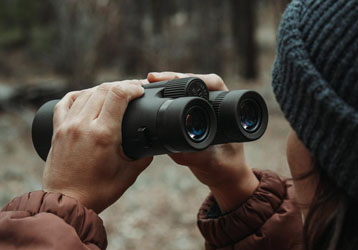
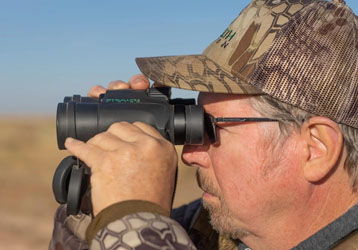
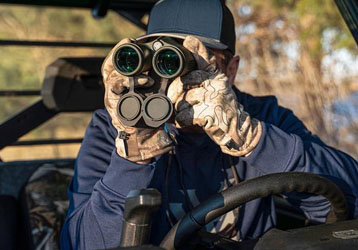
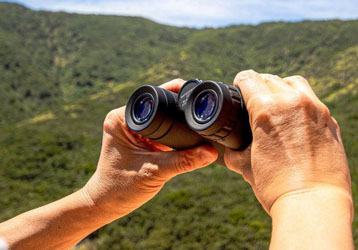
For general wildlife observation, binoculars or spotting scopes may be more appropriate depending on the viewing requirements.
31. Hunting Scope vs. Binoculars
Hunting Scope
High magnification options
Single optical channel
Compact optical structure
Reticle options
Binoculars
Two-eye viewing
Wide field of view
Comfortable observation
Suitable for wildlife watching
Both are important categories within outdoor optics.
32. Hunting Scope vs. Spotting Scope
A spotting scope is primarily designed for observation.
It often offers:
Higher magnification
Larger objective
Tripod mounting
Larger optical housing
A hunting scope generally emphasizes a more compact optical platform.
33. Professional Hunting Scope Manufacturer
When selecting a manufacturer, buyers should evaluate the supplier's complete technical capabilities.
Important areas include:
Optical Design
Mechanical Design
Lens Processing
Lens Coating
Reticle Development
Optical Assembly
Quality Inspection
Environmental Testing
A strong manufacturing system can improve product consistency.
34. OEM Hunting Scope Solutions
OEM allows brands to customize an existing optical platform.
Possible customization includes:
Brand logo
Packaging
Housing finish
Reticle
Magnification
Objective lens
Tube diameter
Illumination
OEM can help brands enter the market faster.
35. ODM Hunting Scope Solutions
ODM allows deeper customization.
A typical development process includes:
Market Research
→ Product Specification
→ Optical Design
→ Mechanical Design
→ Prototype
→ Performance Testing
→ Mass Production
ODM is suitable for brands looking to develop differentiated products.
36. Hunting Scope Quality Inspection
A professional manufacturer should establish a comprehensive quality-control system.
Optical Inspection
Image clarity
Magnification
Field of view
Reticle alignment
Optical axis
Mechanical Inspection
Turret movement
Focus adjustment
Structural integrity
Environmental Testing
Waterproof
Fog resistance
Temperature
Shock
Complete quality inspection helps maintain product consistency.
37. How to Choose a Hunting Scope Supplier
International buyers should evaluate:
Optical engineering capabilities
Product customization
OEM/ODM experience
Production capacity
Quality-control procedures
Technical documentation
Export experience
After-sales support
A reliable supplier should be able to provide consistent product quality and professional technical communication.
38. Hunting Scope Product Development
A professional optical product development process may follow:
Customer Requirements
↓
Market Research
↓
Optical Design
↓
Mechanical Design
↓
Prototype
↓
Testing
↓
Optimization
↓
Mass Production
↓
Final Inspection
This systematic process can improve both product performance and manufacturing consistency.
39. Future Trends in Hunting Optics
The next generation of outdoor optics may increasingly combine traditional optical systems with digital technologies.
Potential technologies include:
Digital display
Laser ranging
Electronic compass
Environmental sensors
Wireless connectivity
Digital image processing
Thermal imaging
Night vision
Smart optical platforms
This trend is creating new opportunities for integrated electro-optical solutions.
40. FAQ About Hunting Scopes
What is the best hunting scope?
There is no universal best scope. The ideal configuration depends on magnification, optical quality, objective lens, reticle, field of view, weight, and application.
Is higher magnification always better?
No. Higher magnification generally reduces field of view and exit pupil.
What is a 3-9×40 scope?
It is a variable-power scope offering 3× to 9× magnification with a 40mm objective lens.
What is a 4-16×44 scope?
It is a variable-power scope offering 4× to 16× magnification with a 44mm objective.
What is FFP?
FFP means First Focal Plane.
What is SFP?
SFP means Second Focal Plane.
What is FMC?
FMC means Fully Multi-Coated.
What is side focus?
Side focus is a side-mounted mechanism for focusing and parallax adjustment.
Is an illuminated reticle the same as night vision?
No. Reticle illumination and night vision are different technologies.
Conclusion
Modern hunting scopes combine optical engineering, mechanical precision, reticle technology, and environmental protection.
When evaluating an optical scope, buyers should consider the complete system:
Magnification
Objective Diameter
Field of View
Eye Relief
Exit Pupil
Optical Glass
Lens Coating
Reticle
FFP/SFP
Parallax
Waterproofing
Tube Diameter
Weight
For general-purpose optical applications, 3-9×40 and 4-12×40 configurations provide a practical balance between portability and magnification.
For higher magnification requirements, 4-16×44 and 6-24×50 configurations offer greater image enlargement.
For brands and distributors, an experienced hunting scope manufacturer can provide OEM and ODM services, including customized reticles, optical specifications, housing, branding, packaging, and product development.
The future of hunting optics will continue to develop toward higher optical clarity, better light transmission, lightweight construction, improved environmental protection, advanced reticle systems, and integrated digital electro-optical technology.