









Long-Range Rangefinder for Remote Target Observation: Technology, Measurement Stability and Professional Applications
Remote distance measurement is becoming increasingly important in outdoor observation, infrastructure management, forestry, construction, and environmental fieldwork. In many situations, measuring a distant target directly can be difficult because of terrain restrictions, physical obstacles, or limited accessibility.
A long-range rangefinder provides an efficient solution by allowing users to obtain distance information from a remote observation position.
Modern rangefinders combine optical viewing systems, laser measurement technology, electronic processing, and digital displays to support convenient target identification and distance measurement.
However, choosing the right instrument requires an understanding of practical measurement performance, target characteristics, optical quality, and environmental adaptability.
This guide explains how long-range rangefinders support remote observation and how users can improve measurement stability in different outdoor environments.
What Is a Long-Range Rangefinder?
A long-range rangefinder is an optical electronic device designed to measure the distance between the operator and a distant object.
Many modern instruments use laser measurement technology to calculate distance.
The device emits a laser signal toward a selected target and receives the returning reflection. Its internal measurement system processes the signal and displays the calculated distance.
Depending on the equipment configuration, additional functions may include:
Single-distance measurement
Continuous measurement
Angle measurement
Horizontal-distance calculation
Target priority selection
Optical magnification
Digital measurement display
These capabilities make long-range rangefinders suitable for professional fieldwork and general outdoor observation.
Why Remote Target Observation Matters
In outdoor environments, operators frequently need to observe objects that cannot be approached conveniently.
Examples include distant buildings, mountain landmarks, communication towers, trees, bridges, and infrastructure installations.
Remote target observation allows users to collect preliminary distance information while remaining at an accessible observation point.
This approach can improve operating efficiency and reduce unnecessary movement across large or difficult terrain.
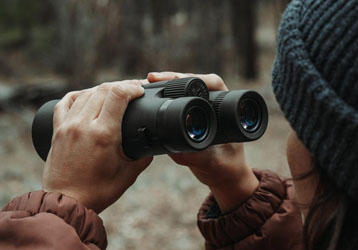
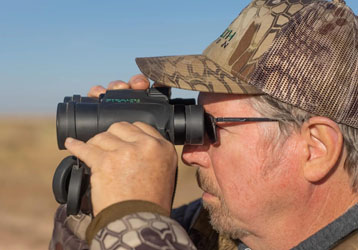
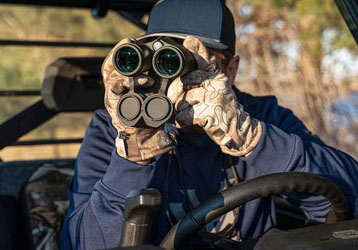
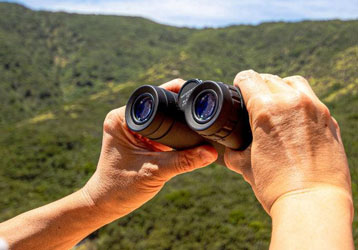
A long-range rangefinder combines target observation and electronic measurement in a single portable instrument, making it useful for various field applications.
Understanding Measurement Stability
Measurement stability refers to the consistency of distance readings obtained under comparable operating conditions.
Stable measurement is especially important when working with distant or relatively small targets.
Several factors can influence measurement consistency.
Instrument Movement
Small handheld movements may cause the aiming point to shift away from the intended target.
At extended distances, this effect becomes more noticeable.
Operators should maintain a steady observation position and use compatible support equipment when appropriate.
Target Characteristics
Different surfaces return laser signals differently.
Large and relatively reflective targets may be easier to measure than narrow, irregular, or poorly reflective objects.
Atmospheric Conditions
Fog, rain, dust, smoke, and atmospheric haze can interfere with laser transmission and reception.
These conditions may reduce practical measurement performance.
Target Identification
When multiple objects appear within the observation area, the instrument may receive reflections from different surfaces.
Careful target selection helps reduce unexpected readings.
The Importance of Optical Performance
Optical quality plays an important role in long-range target observation.
A clear viewing system helps users identify the intended measurement point and distinguish it from surrounding objects.
Optical Magnification
Magnification makes distant objects appear larger and can improve target recognition.
However, excessive magnification may make handheld movement more noticeable.
Field of View
Field of view determines how much of the surrounding environment is visible through the optical system.
A wider field of view can help operators locate targets more quickly.
Image Clarity
Clear optical observation supports more precise target identification, especially when measuring distant structures or natural objects surrounded by complex backgrounds.
Professional Applications of Long-Range Rangefinders
Infrastructure Inspection
Long-range rangefinders can support preliminary distance measurement during infrastructure observation.
Operators may use them to measure distances to communication towers, bridges, transmission structures, and other visible installations.
Remote measurement can improve fieldwork convenience when direct access is limited.
Forestry Management
Forestry environments frequently contain dense vegetation, uneven ground, and partially obstructed targets.
A rangefinder can help users measure distances to selected trees, forest boundaries, and visible landscape features.
Clear target identification is particularly important when branches and foliage create multiple potential measurement surfaces.
Construction and Engineering
Construction projects often involve large work areas and multiple reference points.
Long-range rangefinders can assist with preliminary site observation by providing distance information between visible objects.
For applications requiring certified survey accuracy, appropriate professional surveying instruments should be used.
Mountain and Terrain Observation
Mountain environments may contain distant landmarks, valleys, slopes, and substantial elevation differences.
A long-range rangefinder provides convenient line-of-sight distance information.
Models equipped with angle measurement may also support horizontal-distance calculations.
Outdoor Exploration
Outdoor observers may use rangefinders to estimate distances to natural landmarks and other visible objects.
Portable equipment is particularly useful during extended field activities.
How to Improve Long-Range Measurement Reliability
A consistent operating method can help improve measurement results.
Choose a clear target.
Select an object with a distinguishable measurement point.
Maintain a stable observation position.
Avoid unnecessary movement while aiming and measuring.
Check the measurement path.
Branches, fences, glass, and other obstacles may interfere with the laser signal.
Use the appropriate measurement mode.
Select a mode that matches the intended measurement task.
Repeat important measurements.
Compare multiple readings when results appear unusual.
Record relevant information.
Document the target description, measured distance, and environmental conditions when collecting field data.
Important Features to Consider When Selecting a Rangefinder
| Feature | Main Purpose | Practical Benefit |
|---|---|---|
| Long measurement range | Measures distant targets | Supports remote observation |
| Optical magnification | Enlarges target appearance | Improves target identification |
| Continuous measurement | Updates distance readings | Convenient for multiple observations |
| Angle measurement | Detects observation angle | Supports terrain-related calculations |
| Horizontal-distance calculation | Estimates horizontal separation | Useful in uneven terrain |
| Clear digital display | Presents measurement information | Improves operating convenience |
| Portable construction | Supports handheld use | Suitable for outdoor fieldwork |
| Environmental protection | Helps protect the instrument | Supports demanding applications |
Users should compare these features according to their actual working requirements.
Long-Range Rangefinder Buying Considerations
Before purchasing a long-range rangefinder, buyers should evaluate several important factors.
Intended Application
Determine whether the device will be used primarily for forestry, construction, infrastructure inspection, outdoor observation, or general distance measurement.
Practical Measurement Range
Consider the expected target distance and typical operating conditions.
Advertised maximum range should not be the only selection criterion.
Measurement Accuracy
Review the manufacturer's stated accuracy specifications and relevant testing conditions.
Optical Quality
Evaluate magnification, field of view, and image clarity.
Portability
Consider the instrument's weight, dimensions, and handling comfort.
Battery Performance
Review power specifications and expected operating duration.
Environmental Protection
Check the stated operating temperature and protection rating.
Technical Support
Clear product documentation, warranty information, and after-sales support are useful considerations for professional buyers.
Common Measurement Problems and Solutions
Inconsistent Distance Readings
Possible causes include handheld movement, target misalignment, or environmental interference.
Try stabilizing the instrument and repeating the measurement.
Difficulty Measuring Small Targets
Small objects may be difficult to isolate from the surrounding background.
Choose a clearer measurement point when possible.
Measurement Failure in Poor Weather
Fog, heavy rain, dust, and haze can reduce measurement performance.
Consider the environmental conditions and the instrument's operating limitations.
Unexpected Distance Results
Nearby branches, fences, or other objects may interfere with the measurement path.
Check the line of sight and verify that the intended target is being measured.
Maintenance Recommendations
Proper maintenance helps preserve optical clarity and instrument reliability.
Clean optical surfaces using suitable lens-cleaning materials.
Store the rangefinder in a protective case when it is not in use.
Follow the manufacturer's recommendations regarding battery care, charging, storage temperature, and environmental protection.
After outdoor use, inspect the instrument for dust, moisture, or other contamination.
Always follow laser safety instructions and avoid directing the laser toward people, vehicles, or aircraft.
Frequently Asked Questions
What is a long-range rangefinder used for?
It is used to measure distances to remote objects in outdoor observation, forestry, construction, infrastructure inspection, and other field applications.
Why do long-range measurement results sometimes vary?
Measurement variation may result from target characteristics, instrument movement, atmospheric conditions, or changes in the aiming point.
Can a long-range rangefinder measure distant buildings?
Many models can measure suitable building surfaces when the target is within the instrument's supported operating conditions.
Is optical magnification important?
Yes. Suitable magnification helps users identify distant targets, although it does not independently determine laser measurement accuracy.
Can rangefinders be used in mountainous environments?
Yes. Suitable devices can support distance observation in mountainous terrain. Models with angle measurement may provide additional functionality.
What should professional buyers consider?
Professional buyers should evaluate practical measurement range, accuracy specifications, optical performance, measurement functions, durability, and technical support.
Future Development of Long-Range Rangefinder Technology
Long-range rangefinder technology continues to benefit from advances in optical engineering, electronic signal processing, and portable instrument design.
Potential development areas include improved target detection, enhanced measurement processing, clearer digital displays, and more efficient power management.
Integration with digital field documentation systems may also help users organize measurement information more conveniently.
As outdoor measurement requirements continue to evolve, practical reliability and application-specific functionality will remain important considerations.
Conclusion
Long-range rangefinders provide a practical solution for remote target observation and distance measurement across a wide range of outdoor and professional applications.
Their performance depends on the combination of measurement technology, optical quality, target characteristics, environmental conditions, and operating techniques.
By selecting appropriate equipment and following consistent measurement practices, users can improve measurement efficiency and obtain more dependable distance information.