









What Does FMC Mean on Binoculars? A Guide to Fully Multi-Coated Optics
What Does FMC Mean on Binoculars?
FMC stands for Fully Multi-Coated.
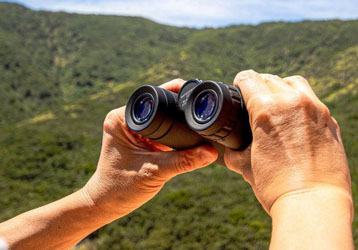
When a binocular is described as having FMC optics or Fully Multi-Coated lenses, it generally means that multiple optical surfaces have been treated with multiple layers of anti-reflective coating.
Lens coating is an important part of binocular optical design because uncoated glass surfaces can reflect part of the incoming light.
By applying suitable optical coatings, manufacturers can improve light transmission and reduce unwanted reflections.
FMC binoculars are commonly used for:
Bird watching
Wildlife observation
Hunting
Outdoor travel
Hiking
Nature observation
Sports viewing
Professional outdoor applications
Quick Answer
FMC means Fully Multi-Coated.
It refers to an optical coating configuration in which multiple optical surfaces receive multiple coating layers.
FMC coatings can help improve:
Light transmission
Contrast
Image clarity
Color appearance
Overall optical efficiency
However, FMC is only one component of binocular performance. Lens quality, prism material, optical design, alignment and manufacturing precision are also important.
Why Do Binoculars Need Lens Coatings?
When light passes through an optical lens, some of the light can be reflected from the glass surface.
This means not all incoming light reaches the observer's eye.
Optical coatings are designed to reduce these reflections and improve light transmission.
A simplified optical path is:
Light
↓
Objective Lens
↓
Optical Coatings
↓
Prism System
↓
Eyepiece
↓
Eye
Every optical surface can affect the amount of light transmitted through the system.
What Is Fully Multi-Coated Optics?
Fully Multi-Coated optics generally indicate that multiple optical surfaces have received multiple layers of anti-reflective coating.
The purpose is to improve transmission through the optical system.
For binocular manufacturers, coating technology is therefore an important part of optical engineering.
A professional binocular can combine:
ED Glass
FMC Coating
BAK4 Prism
Precision Optical Design
to create a complete optical system.
FMC vs Coated vs Multi-Coated
When comparing binocular specifications, buyers may see several coating terms.
Coated
Usually indicates that at least some optical surfaces have a coating.
Multi-Coated
Indicates that multiple layers of coating are applied to some optical surfaces.
Fully Multi-Coated
Generally indicates that multiple optical surfaces are treated with multiple coating layers.
For buyers, the exact coating specification should be confirmed with the manufacturer.
Why Is FMC Important for Outdoor Binoculars?
Outdoor observation can take place under different lighting conditions.
Users may observe subjects in:
Bright sunlight
Cloudy weather
Forest environments
Mountains
Open fields
Early morning
Late afternoon
Good optical transmission can help provide a clearer and more comfortable viewing experience.
FMC coatings are therefore commonly used in binoculars designed for outdoor observation.
FMC Binoculars for Bird Watching
Bird watchers often need to observe fine details from a distance.
Optical performance can affect the ability to distinguish:
Feather patterns
Bird colors
Eye details
Body markings
Movement
FMC coatings can contribute to improved light transmission and image contrast when combined with a well-designed optical system.
For serious bird watching, buyers should also consider:
Magnification
Field of view
Objective diameter
ED glass
Prism system
Eye relief
Close focus
FMC Binoculars for Wildlife Observation
Wildlife observation often requires long-distance viewing.
An optical system with suitable light transmission can help users observe animals and their surroundings more comfortably.
FMC binoculars can be combined with:
ED objective lenses
BAK4 prisms
Larger objective lenses
Higher magnification
Waterproof housings
The ideal combination depends on the application.
FMC Binoculars for Hunting
For outdoor hunting applications, optical performance is one factor to consider when selecting binoculars.
Users may need to observe subjects under changing light conditions.
Important specifications can include:
Optical coating
Objective diameter
Magnification
Field of view
Eye relief
Waterproof protection
Shock resistance
Product weight
FMC coating can be part of the optical system, while the complete binocular design determines the final viewing performance.
FMC Binoculars for Travel
Travel binoculars should balance optical performance and portability.
A compact FMC binocular can be useful for:
Tourism
Hiking
Mountain viewing
Nature observation
Scenic viewing
Outdoor exploration
For travelers, weight and dimensions can be just as important as optical specifications.
FMC and Image Brightness
Many buyers associate FMC with a brighter image.
The relationship is more complicated.
Optical brightness depends on multiple factors, including:
Lens transmission
Coating quality
Prism transmission
Objective diameter
Exit pupil
Optical design
Ambient light
Therefore, FMC coating can help improve light transmission, but it should not be treated as the only indicator of image brightness.
FMC and Image Contrast
Optical reflections can reduce contrast and create unwanted light within an optical system.
Appropriate anti-reflective coatings can help reduce these effects.
Higher contrast can make details easier to distinguish.
This can be useful when viewing:
Birds
Wildlife
Mountains
Landscapes
Buildings
Sports
Distant objects
FMC and Color Reproduction
Good optical transmission can also contribute to the overall appearance of colors.
For nature observation, natural-looking colors can be important.
For example, bird watchers may need to distinguish subtle differences between:
Blue
Green
Brown
Red
Yellow
However, color reproduction also depends on the optical glass, lens design and overall optical system.
FMC vs ED Glass
FMC and ED glass are different technologies.
FMC
Fully Multi-Coated
Primarily refers to optical surface coatings designed to improve light transmission and reduce reflections.
ED
Extra-Low Dispersion
Refers to optical glass designed to help control chromatic aberration.
A binocular can use both technologies.
For example:
ED Glass + FMC Coating + BAK4 Prism
can form part of a professional binocular optical system.
FMC vs BAK4 Prism
FMC coating and BAK4 prism also perform different functions.
FMC
Relates to optical surface coatings.
BAK4
Refers to optical glass commonly used in prism systems.
They are not competing specifications.
Instead, they can work together within the same binocular.
Do All FMC Binoculars Have the Same Optical Quality?
No.
The term FMC describes a coating configuration, but the final quality depends on many other factors.
Two binoculars can both be advertised as FMC while producing different viewing experiences.
Manufacturing quality can depend on:
Glass quality
Coating technology
Coating uniformity
Lens design
Prism quality
Optical alignment
Mechanical structure
Assembly precision
For B2B buyers, evaluating the complete product specification is important.
How to Choose FMC Binoculars
When selecting FMC binoculars, consider the following.
Magnification
Choose magnification according to observation distance and application.
Objective Lens
A larger objective lens can provide increased light-gathering capability but may increase size and weight.
Prism
Check the prism type and material.
BAK4 is commonly used in many outdoor binocular configurations.
ED Glass
For users who prioritize chromatic aberration control and image detail, ED glass can be an important consideration.
Field of View
A wider field of view can be useful when observing moving subjects.
Eye Relief
Longer eye relief can improve viewing comfort.
Waterproof Protection
Outdoor users should check the actual protection rating of the product.
Weight
Weight is especially important for hiking, travel and extended handheld observation.
FMC Binoculars for Different Applications
| Application | Important Optical Considerations |
|---|---|
| Bird Watching | Field of view, clarity, color reproduction |
| Wildlife Observation | Magnification, brightness, detail |
| Hunting | Low-light performance, durability, handling |
| Hiking | Weight, portability, optical clarity |
| Travel | Compact design, durability, comfort |
| Marine Observation | Waterproof protection, optical stability |
| Sports | Field of view, magnification, focus |
The appropriate configuration depends on the intended application.
How FMC Works With Modern Binocular Design
A modern binocular optical system may integrate several technologies.
For example:
Objective Lens
↓
ED Optical Glass
↓
FMC Coating
↓
BAK4 Prism
↓
FMC Eyepiece
↓
Eye
Each component contributes to the overall optical system.
This is why professional buyers should consider the complete specification rather than focusing on a single marketing term.
FMC Binoculars for International Distributors
For international distributors, product specifications should be clear and easy to compare.
A professional product page should include:
Magnification
Objective diameter
Prism type
Lens coating
Optical glass
Field of view
Eye relief
Close focus distance
Waterproof rating
Weight
Dimensions
Accessories
Clear technical information can reduce communication time between suppliers and buyers.
FMC Binoculars OEM
For private-label businesses, FMC binoculars can be developed with OEM services such as:
Logo customization
Product branding
Packaging customization
User manual customization
Accessory selection
Retail box design
OEM solutions allow distributors to build products under their own brand.
FMC Binoculars ODM
ODM can provide deeper customization.
Depending on the manufacturer's capabilities, ODM may include:
Optical configuration
Product appearance
Housing structure
Focusing mechanism
Accessories
Packaging
Product positioning
This can be useful for companies developing a differentiated binocular product line.
INJIE Optics FMC Binoculars
For INJIE Optics, FMC binoculars can be positioned as part of a broader outdoor optical product range.
Potential product categories include:
ED Binoculars
HD Binoculars
10×42 Binoculars
12×50 Binoculars
12×56 Binoculars
16×50 Binoculars
Bird Watching Binoculars
Wildlife Observation Binoculars
Hunting Binoculars
Each product page should provide verified specifications and clearly explain the intended application.
This helps distributors, importers and end users quickly identify the appropriate product.
Frequently Asked Questions
What does FMC mean on binoculars?
FMC means Fully Multi-Coated. It generally indicates that multiple optical surfaces have received multiple layers of anti-reflective coating.
Are FMC binoculars better?
FMC can improve optical transmission and reduce reflections, but overall binocular quality also depends on glass, prism, optical design and manufacturing precision.
What is the difference between FMC and ED?
FMC refers to optical coatings, while ED refers to Extra-Low Dispersion optical glass.
What is the difference between FMC and BAK4?
FMC describes optical coating technology. BAK4 is an optical glass material commonly used in prism systems.
Are FMC binoculars good for bird watching?
FMC binoculars can be suitable for bird watching because optical transmission and contrast are important for observing distant subjects and fine details.
Are FMC binoculars good for hunting?
They can be suitable for outdoor hunting-related observation, depending on the complete optical configuration and product design.
Does FMC make binoculars brighter?
FMC coatings can improve light transmission, but perceived brightness depends on the entire optical system and environmental lighting.
Should I choose FMC or ED binoculars?
They are not mutually exclusive. A binocular can use both ED glass and FMC coatings.
Can FMC binoculars be customized?
Depending on the manufacturer, OEM branding, packaging customization and ODM development may be available.
CTA
Looking for Professional FMC Binoculars?
If you are sourcing FMC binoculars, ED binoculars, BAK4 binoculars or outdoor observation products, our optical team can provide product specifications, model recommendations and OEM/ODM solutions.
Available support can include:
Product selection
Technical specifications
OEM branding
ODM development
Private-label packaging
Bulk purchasing
Product customization
Request a Quote
Get Product Specifications
Contact Our Optical Team