









Professional Applications of Long Range Laser Rangefinders in Outdoor and Industrial Measurement
Professional Applications of Long Range Laser Rangefinders
A long range laser rangefinder is a professional distance measurement device that uses laser technology to determine the distance between the instrument and a target.
Compared with simple short-distance measuring devices, long-range laser rangefinders are designed for applications where the target may be far away or difficult to access directly.
They can support professional users in:
Outdoor observation
Forestry
Power infrastructure inspection
Industrial inspection
Construction
Infrastructure observation
Geographic observation
Security observation
Field measurement
The actual suitability of a laser rangefinder depends on its measurement range, accuracy, optical system, target characteristics and operating environment.
Why Use a Long Range Laser Rangefinder?
Traditional physical measurement methods can become difficult when the target is located far away.
A laser rangefinder provides a non-contact method of obtaining distance information.
This can be useful when the target is:
Too far to reach
Located across difficult terrain
Positioned at height
Located near industrial equipment
Difficult to approach safely
The user can observe the target and obtain distance information without physically moving to the measurement point.
Long Range Laser Rangefinder for Outdoor Observation
Outdoor observation is one of the most common applications of professional laser rangefinders.
Users may need to measure the distance to:
Mountains
Buildings
Towers
Trees
Hills
Geographic features
Distant structures
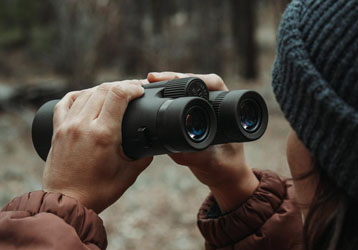
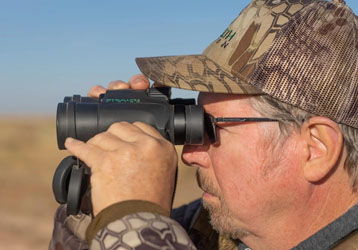
An integrated optical observation system can help users identify the intended target before taking a measurement.
Laser Rangefinder for Forestry
Forestry environments can be large, uneven and difficult to access.
A professional laser rangefinder can assist with field observation and distance-related tasks.
Potential applications include:
Tree distance measurement
Forest observation
Terrain observation
Field positioning
Distance estimation
Outdoor surveying support
Target characteristics can vary significantly in forest environments, so users should select products according to actual operating conditions.
Laser Rangefinder for Power Line Inspection
Power infrastructure can involve tall towers, long transmission corridors and distant equipment.
Laser rangefinders can support observation of:
Transmission towers
Power lines
Substations
Electrical infrastructure
Industrial equipment
Distance information can help professional personnel evaluate the relative position of distant structures.
The appropriate product should be selected based on the inspection environment and required measurement distance.
Laser Rangefinder for Industrial Inspection
Large industrial facilities may contain equipment and structures that are difficult to measure using conventional methods.
Long-range laser rangefinders can provide non-contact distance information for:
Large machinery
Industrial structures
Storage facilities
Processing equipment
Factory buildings
Infrastructure
The main benefit is the ability to measure a target without physically contacting it.
Laser Rangefinder for Infrastructure Inspection
Infrastructure projects can involve large distances and difficult-to-access locations.
Potential applications include:
Bridges
Towers
Buildings
Industrial facilities
Roads
Large structures
A long-range laser measurement device can provide useful distance information during field observation.
Laser Rangefinder for Construction
Construction professionals may use laser measurement equipment for various distance-related tasks.
Applications can include:
Site observation
Structural measurement
Building inspection
Distance checking
Equipment positioning
For construction environments, product selection should consider the required range and measurement accuracy.
Geographic and Terrain Observation
Laser rangefinders can also support geographic observation.
Users may measure the distance to:
Hills
Mountains
Cliffs
Buildings
Remote terrain
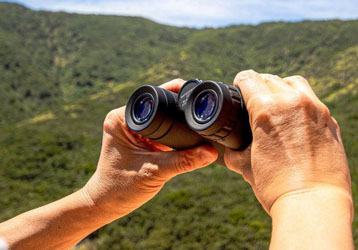
Optical observation combined with laser distance measurement can improve the efficiency of field operations.
Laser Rangefinder for Outdoor Research
Outdoor research may require repeated distance measurements across different environments.
A portable laser rangefinder can provide non-contact measurement information while reducing the need for physical access to distant targets.
Potential applications include:
Environmental observation
Geographic research
Forestry research
Field studies
Terrain observation
How Long Range Laser Rangefinders Work
A typical laser rangefinder works by transmitting a laser signal toward a target.
The basic process is:
Laser Transmission
↓
Target Reflection
↓
Signal Reception
↓
Signal Processing
↓
Distance Calculation
Many long-distance systems use time-of-flight measurement technology.
The system determines distance from information related to the laser signal's travel between the instrument and target.
Factors Affecting Long Range Measurement
Long-distance measurement performance depends on several factors.
Target Reflectivity
Different surfaces return different amounts of laser energy.
Target Size
Large targets may be easier to detect than very small distant targets.
Atmospheric Conditions
Fog, rain, dust and other conditions can affect laser transmission.
Beam Divergence
The laser beam expands as it travels, affecting the measurement area at longer distances.
Ambient Light
Strong background light can affect optical signal detection.
Optical System
Magnification and observation capability can influence target identification.
Long Range Laser Rangefinder and Target Identification
At long distances, identifying the correct target can be as important as obtaining the measurement itself.
For example, a distant target may be located near:
Trees
Buildings
Towers
Terrain
Other structures
An optical observation system can help the user locate and identify the desired measurement point.
This is particularly useful in outdoor environments.
Long Range Laser Rangefinder Measurement Accuracy
Measurement accuracy depends on:
Measurement technology
Signal processing
Optical alignment
Target characteristics
Environmental conditions
Measurement distance
Professional buyers should review the manufacturer's accuracy specification together with the testing conditions.
Optical Specifications to Consider
When selecting a professional long-range laser rangefinder, consider:
Magnification
Higher magnification can help observe distant targets.
Objective Diameter
The objective lens affects light collection and optical performance.
Field of View
A wider field of view can make target acquisition easier.
Eye Relief
Adequate eye relief can improve viewing comfort.
Optical Coating
Optical coatings can influence light transmission and image quality.
Laser Specifications to Consider
Important laser-related specifications may include:
Laser wavelength
Beam divergence
Pulse characteristics
Measurement technology
Laser safety classification
The correct laser configuration depends on the intended application.
Environmental Protection
Outdoor professional equipment may need protection against environmental conditions.
Depending on the product design, buyers may evaluate:
Waterproof performance
Dust protection
Operating temperature
Shock resistance
Portable housing design
Environmental requirements should be based on the actual application.
Portable Long Range Laser Rangefinder
Field professionals often need equipment that balances performance and portability.
A portable laser rangefinder should ideally provide:
Easy operation
Clear optical observation
Reliable distance measurement
Practical battery life
Durable construction
Appropriate environmental protection
Product size and weight are especially important for field applications involving long periods of operation.
Laser Rangefinder with Multiple Measurement Functions
Modern professional laser rangefinders may provide more than simple distance measurement.
Depending on the model, functions may include:
Distance measurement
Horizontal distance
Height measurement
Angle measurement
Speed measurement
Area calculation
Volume calculation
Direction measurement
The available functions depend on the product design.
Long Range Laser Rangefinder for Professional B2B Applications
For distributors, importers and professional equipment brands, product selection should focus on application requirements.
Important specifications include:
Measurement range
Accuracy
Laser wavelength
Beam divergence
Optical magnification
Objective diameter
Measurement modes
Battery system
Operating temperature
Environmental protection
Product weight
How to Choose a Long Range Laser Rangefinder
Before purchasing, define the actual working requirements.
Identify the Target Distance
Determine the typical and maximum expected measurement distance.
Identify the Target Type
Consider whether the targets are:
Large
Small
Reflective
Dark
Natural
Industrial
Evaluate the Environment
Consider:
Outdoor or indoor operation
Weather
Temperature
Visibility
Dust
Humidity
Determine Required Accuracy
Select a product according to the actual measurement tolerance required.
Evaluate Optical Performance
If distant targets need to be visually identified, consider magnification and objective lens specifications.
Long Range Laser Rangefinder Manufacturer
When sourcing from a professional manufacturer, B2B buyers should evaluate:
Optical engineering capability
Laser measurement technology
Product development
Manufacturing capability
Quality control
Product testing
OEM services
ODM services
Technical support
A manufacturer with integrated optical and electronic development capability can be valuable for customized projects.
OEM Long Range Laser Rangefinder
OEM services can allow distributors and brands to sell products under their own branding.
Possible services include:
Logo customization
Product labeling
Packaging design
User manual customization
Accessory customization
Private-label production
OEM requirements should be discussed before production.
ODM Long Range Laser Rangefinder
ODM solutions can offer deeper product customization.
Depending on the project, customization may include:
Product housing
Optical configuration
Measurement functions
Software interface
Product appearance
Branding
Packaging
The final configuration should be based on the target market and application.
INJIE Professional Laser Rangefinder Solutions
Professional optical brands such as INJIE can provide laser rangefinder solutions for different outdoor and professional measurement applications.
Potential application areas include:
Outdoor observation
Forestry
Power inspection
Industrial inspection
Infrastructure observation
Long-distance measurement
For B2B buyers, product selection should be based on verified technical specifications and actual application requirements.
Frequently Asked Questions
What is a long range laser rangefinder?
A long range laser rangefinder is a laser-based distance measurement device designed for measuring distant targets.
Where are long range laser rangefinders used?
They can be used for outdoor observation, forestry, power infrastructure inspection, industrial inspection, construction and geographic observation.
What affects long-distance laser measurement?
Target reflectivity, target size, atmospheric conditions, beam divergence, ambient light and optical performance can all influence measurement.
Can laser rangefinders be used for forestry?
Yes. Laser rangefinders can support distance measurement and field observation in forestry environments.
Can laser rangefinders be used for power inspection?
Yes. They can provide non-contact distance information for observing towers, infrastructure and equipment.
Why is optical magnification important?
Magnification can help users identify distant targets and select the intended measurement point.
What should B2B buyers consider?
Important specifications include measurement range, accuracy, optical performance, laser technology, environmental protection, battery system and product size.
Can laser rangefinders be customized?
Depending on the manufacturer, OEM and ODM customization may be available for branding, packaging, product configuration and other requirements.
Looking for a Long Range Laser Rangefinder Manufacturer?
If you are sourcing professional long range laser rangefinders, outdoor laser measurement equipment or customized optical distance measurement solutions, our team can help you select a suitable product according to your application.
We support:
Long-range measurement solutions
Product specification selection
OEM branding
ODM development
Private-label production
Custom packaging
Bulk orders
Technical support