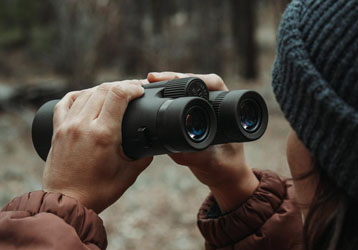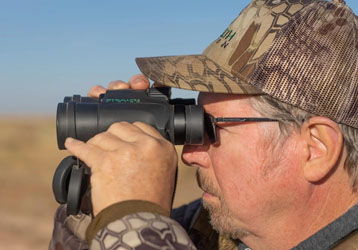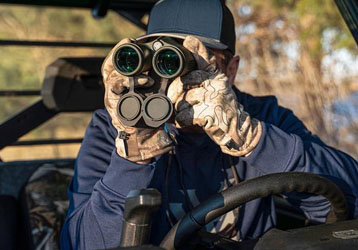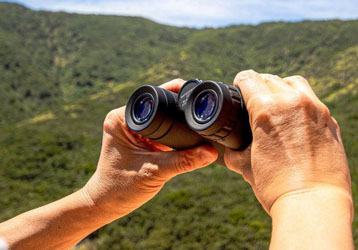










Long Range Laser Rangefinder for Outdoor Distance Measurement
Measuring distant targets can be challenging when the target cannot be approached directly.
A long range laser rangefinder provides a non-contact method for measuring the distance between the operator and a suitable target.
With optical observation and laser measurement technology, professional long-range rangefinders can support various outdoor applications.
Potential applications include:
Remote distance measurement
Outdoor observation
Forestry measurement
Infrastructure inspection
Building measurement
Tower measurement
Engineering field work
Utility inspection
For professional users, choosing the right combination of range, accuracy and optical performance is important.
What Is a Long Range Laser Rangefinder?
A long range laser rangefinder is a portable optical device designed to measure the distance to distant targets.
The device generally combines:
Optical Observation + Laser Measurement + Digital Processing
The operator observes the target through the optical system and activates the measurement function.
The device then calculates and displays the measured distance.
Some professional models may also provide:
Angle measurement
Height measurement
Horizontal distance
Vertical distance
Target-lock functions
Why Use a Long Range Laser Rangefinder?
Traditional measuring tools can be difficult to use when targets are far away.
For example, a user may need to measure:
A distant building
A tall tower
A utility pole
A tree
A mountain
A large industrial structure
A long-range laser rangefinder allows the operator to remain at a suitable observation point.
This can make remote measurement more convenient.
Long Distance Measurement
Long-range measurement is one of the main applications of professional laser rangefinders.
The effective measurement distance depends on multiple factors.
These include:
Target size
Target reflectivity
Surface material
Weather
Atmospheric conditions
Optical visibility
Operator aiming
Therefore, the maximum range stated by a manufacturer should be evaluated together with real application conditions.
Reflective and Non-Reflective Targets
Different targets can produce different measurement results.
Large targets with suitable reflective surfaces may be easier to measure.
Small, dark or irregular targets may be more difficult.
When evaluating a long-range rangefinder, users should test representative targets rather than relying only on laboratory conditions.
Optical Magnification
Optical magnification is important for long-distance target observation.
It can help users:
Locate distant targets
Identify target details
Select measurement points
Aim at the target
However, high magnification alone does not guarantee better performance.
Optical clarity, field of view and image stability should also be considered.
Field of View
Field of view determines how much of the scene can be observed through the optical system.
A wider field of view can make initial target acquisition easier.
A narrower field of view combined with higher magnification may provide more detailed observation.
The best configuration depends on the intended working distance.
Long Range Laser Rangefinder with Angle Measurement
Some professional rangefinders include angle measurement.
This can provide additional information when the target is located:
Above the operator
Below the operator
On a slope
On elevated terrain
Combining distance and angle information can support horizontal, vertical and height-related measurements.
Height Measurement
A multifunctional laser rangefinder may support height measurement.
Potential applications include:
Tree height
Building height
Tower height
Utility pole height
Structure height
Depending on the product, height measurement may use two or more reference points.
Horizontal Distance Measurement
The straight-line distance to a target is not always the same as its horizontal distance.
This difference becomes important when the target and operator are at different elevations.
A rangefinder with angle measurement can provide additional information for calculating horizontal distance.
Vertical Distance Measurement
Vertical distance represents elevation difference between two points.
It can be useful for selected applications involving:
Buildings
Towers
Trees
Slopes
Infrastructure
Professional users can select equipment based on their required measurement modes.
Long Range Rangefinder for Forestry
Forestry professionals may need to measure distant trees in complex terrain.
A long-range laser rangefinder can support:
Tree distance measurement
Tree height measurement
Forest survey
Target observation
Terrain reference measurement
Optical magnification can also help identify tree tops and other measurement points.
Long Range Rangefinder for Infrastructure
Large infrastructure may be difficult to approach.
Potential targets include:
Transmission towers
Communication towers
Bridges
Utility poles
Large buildings
Remote laser measurement can provide useful information during selected inspection and field assessment tasks.
Long Range Rangefinder for Construction
Construction and engineering teams may use laser rangefinders for:
Building distance measurement
Structure observation
Height measurement
Remote target measurement
Site assessment
A portable rangefinder can complement other professional measuring equipment.
Outdoor Measurement Applications
Long-range laser rangefinders can be used in many outdoor environments.
Potential applications include:
Mountains
Forests
Construction sites
Rural areas
Industrial facilities
Infrastructure projects
The product should be selected according to the specific environmental requirements.
Weather and Atmospheric Conditions
Long-distance laser measurement can be affected by environmental conditions.
Potential factors include:
Fog
Rain
Dust
Humidity
Strong sunlight
Atmospheric haze
These conditions can reduce target visibility and affect measurement performance.
Testing the equipment under realistic conditions is recommended.
Waterproof Long Range Laser Rangefinder
Outdoor users may require equipment that can handle moisture and dust.
Important features may include:
Waterproof protection
Dust resistance
Durable housing
Protective carrying case
Buyers should check the actual protection specifications before purchasing.
Temperature Performance
Outdoor field work may take place in different climates.
Users should check the manufacturer's specified operating temperature range.
This is particularly important for:
Mountain environments
Winter operations
Hot outdoor locations
Industrial field applications
Battery Life
Long-distance measurement equipment may be used for extended outdoor sessions.
Battery performance can therefore affect productivity.
Buyers should consider:
Battery capacity
Operating time
Charging method
Battery replacement
Automatic power-off
Portable Long Range Laser Rangefinder
Portability is important for users who move between multiple observation points.
A suitable design should balance:
Measurement performance
Optical performance
Product weight
Product size
Battery life
A compact rangefinder can be easier to carry during field operations.
How to Choose a Long Range Laser Rangefinder
Before purchasing, consider the following.
Measurement Range
Choose a range suitable for actual working distances.
Distance Accuracy
Check the required accuracy for the application.
Optical Magnification
Evaluate distant target visibility.
Field of View
Consider target acquisition and observation requirements.
Angle Measurement
Determine whether slope and angle measurement are required.
Height Measurement
Check whether the device supports height calculation.
Environmental Protection
Consider waterproof and dust-resistant performance.
Battery
Evaluate expected field operating time.
How to Test Long Range Measurement Performance
Professional buyers should test equipment with real targets.
Large Target Test
Measure buildings and large structures.
Small Target Test
Evaluate performance on smaller distant targets.
Long Distance Test
Test targets at different distances.
Height Test
Measure towers, trees or buildings with known reference information.
Angle Test
Test elevated and lower targets.
Repeatability Test
Measure the same target multiple times.
Outdoor Test
Evaluate performance under realistic weather conditions.
Long Range Laser Rangefinder for B2B Buyers
Professional rangefinders can be suitable for:
Optical equipment distributors
Survey equipment suppliers
Outdoor equipment companies
Engineering companies
Forestry equipment suppliers
Infrastructure contractors
B2B buyers should evaluate product performance together with manufacturing capability and after-sales support.
OEM Long Range Laser Rangefinder
OEM services allow distributors to sell products under their own brand.
Possible customization includes:
Brand logo
Product labels
Packaging
User manuals
Carrying cases
Accessories
This can help distributors build their own professional measurement product line.
ODM Long Range Laser Measurement Equipment
ODM development can be suitable for customers with specialized requirements.
Potential customization areas include:
Optical configuration
Measurement functions
Product housing
Display
User interface
Accessories
Packaging
Technical requirements should be discussed before product development.
How to Choose a Long Range Laser Rangefinder Manufacturer
When evaluating a manufacturer, buyers should consider:
Product development capability
Manufacturing capacity
Quality control
Sample testing
OEM capability
ODM capability
Technical support
Delivery capability
A reliable supplier should be able to provide clear product specifications and application support.
Frequently Asked Questions
What is a long range laser rangefinder?
It is a laser measurement device designed to measure distant targets without physical contact.
How far can a long range laser rangefinder measure?
The effective distance depends on the product, target characteristics and environmental conditions.
What affects long-distance laser measurement?
Target size, reflectivity, weather, atmospheric conditions and optical visibility can all affect performance.
Can a long range laser rangefinder measure height?
A suitable model with height measurement functionality can support height measurement.
Can it measure targets on slopes?
A model with angle measurement can provide additional information for measurements involving slopes and elevation differences.
Is optical magnification important?
Yes. Magnification can help users identify distant targets and select measurement points.
Can long range laser rangefinders be used outdoors?
Suitable models can support outdoor applications when their environmental specifications match the working conditions.
Can manufacturers provide OEM services?
Many professional manufacturers can provide OEM and ODM services depending on their capabilities.
Conclusion
A long range laser rangefinder provides a convenient non-contact solution for measuring distant targets.
By combining:
Long Distance Measurement + Optical Magnification + Angle Measurement + Height Measurement
professional users can obtain useful information for forestry, construction, infrastructure inspection and other outdoor applications.
When selecting equipment, buyers should evaluate:
Measurement Range + Accuracy + Optical Performance + Target Acquisition + Measurement Functions + Environmental Protection + Battery Life
For distributors and professional buyers, testing the product with real-world targets is recommended before placing a bulk order.