









HD Binoculars: A Complete Guide to Choosing High-Resolution Binoculars
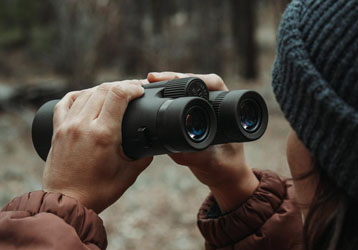
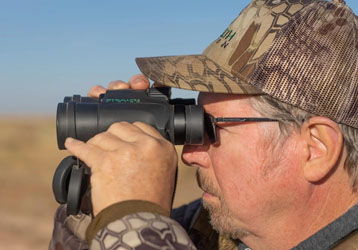
For outdoor travel, bird watching, wildlife observation, hunting, sports events, and nature exploration, a pair of HD binoculars that delivers clear, bright, and stable images can significantly improve the viewing experience.
With the continuous development of optical technology, modern high-definition binoculars are no longer focused only on higher magnification. Instead, they place greater emphasis on optical clarity, color reproduction, low-light performance, field of view, portability, and waterproof performance.
Therefore, choosing the right binoculars requires a comprehensive understanding of several important optical specifications.
What Are HD Binoculars?
HD binoculars generally refer to binoculars designed to provide high image resolution, good contrast, and natural color reproduction. Common search terms in the global market include HD Binoculars, High Definition Binoculars, High Resolution Binoculars, and Premium Binoculars.
It is important to understand that “HD” is not a single technical standard. The actual image quality of binoculars depends on a combination of optical and mechanical factors, including:
Optical glass quality
Objective lens diameter
Magnification
Prism material
Lens coating technology
Field of view
Exit pupil
Optical design
Mechanical structure and assembly precision
Therefore, when evaluating whether a pair of binoculars provides true high-definition viewing, users should consider the complete optical system rather than simply looking at the “HD” label.
Why Do HD Binoculars Provide Clearer Images?
The image quality of high-definition binoculars is usually the result of multiple optical components working together.
1. High-Quality Optical Glass
Optical glass is one of the key factors affecting binocular image quality.
Common prism glass types include BaK-4 and BK-7. BaK-4 has a relatively high refractive index and, when used in a well-designed optical system, can provide favorable light transmission and edge-of-field performance.
For users looking for high-quality HD binoculars, it is worth checking whether the product uses:
BaK-4 Prism + High-Quality Optical Glass
This combination is commonly found in binoculars designed for demanding outdoor observation.
2. FMC Fully Multi-Coated Optics
Lens coating technology is another important factor.
When light passes through multiple lenses and prisms, reflection can cause light loss. Fully Multi-Coated (FMC) optics use multiple anti-reflection coating layers on optical surfaces to help improve light transmission, brightness, and image contrast.
When selecting HD binoculars, users can look for specifications such as:
Fully Multi-Coated Optics
as well as appropriate prism coatings.
3. ED Extra-Low Dispersion Glass
For premium HD binoculars, ED (Extra-Low Dispersion) glass is another important feature to consider.
Different types of optical glass can produce chromatic aberration when viewing high-contrast subjects. For example, colored edges may appear around tree branches, buildings, or bird feathers.
ED glass is designed to reduce chromatic aberration and can help produce sharper images with more natural color reproduction.
Therefore, users interested in:
Bird Watching
Wildlife Observation
Long-Distance Observation
Nature Observation
Outdoor Exploration
may want to consider HD ED Binoculars.
How to Choose the Right HD Binocular Specifications
When shopping for binoculars, users often see specifications such as:
8×42, 10×42, 10×50, 12×50, and 12×56
The first number represents the magnification, while the second number represents the objective lens diameter.
For example:
10×42 Binoculars
provide 10× magnification and use a 42 mm objective lens.
8×42 HD Binoculars
8×42 is one of the most popular binocular configurations for outdoor observation.
It provides a practical balance between magnification, field of view, brightness, and portability.
8×42 binoculars are suitable for:
Bird watching
Hiking and travel
Wildlife observation
Outdoor exploration
Sports events
Landscape observation
General-purpose viewing
For users who need binoculars that can be comfortably held for extended periods, 8×42 HD binoculars are an excellent option.
10×42 HD Binoculars
10×42 binoculars provide higher magnification than 8×42 models while maintaining a relatively compact design.
They are suitable for:
Wildlife observation
Bird watching
Outdoor travel
Hunting observation
Sports events
Long-distance viewing
However, as magnification increases, hand movement can have a greater impact on image stability. Therefore, higher magnification does not necessarily mean better performance for every user.
10×50 HD Binoculars
With a 50 mm objective lens, 10×50 binoculars provide a larger optical aperture.
A larger objective lens can generally collect more light, although it may also increase the overall size and weight of the binoculars.
10×50 binoculars are particularly suitable for users who prioritize:
Brightness + Long-Distance Observation + Low-Light Performance
Typical applications include:
Dusk observation
Wildlife observation
Astronomy and stargazing
Outdoor hunting
Long-distance target observation
Why Is Field of View Important?
Many users focus only on magnification when buying binoculars and overlook the importance of Field of View (FOV).
Field of view refers to the area that can be seen through the binoculars.
In general, higher magnification tends to result in a narrower field of view. A wider field of view can be particularly useful when locating and tracking fast-moving subjects such as birds.
For example, when bird watching, a bird may suddenly fly out of a tree or across an open area. If the binoculars have a narrow field of view, it can be more difficult to quickly locate and follow the bird.
Therefore:
Bird Watching + Sports + Wildlife Observation → Wide Field of View
can be an important consideration.
What Does Exit Pupil Mean?
Exit pupil is another important specification when evaluating binoculars.
The calculation is simple:
Exit Pupil = Objective Lens Diameter ÷ Magnification
For example:
10×42 Binoculars:
42 ÷ 10 = 4.2 mm
8×42 Binoculars:
42 ÷ 8 = 5.25 mm
A larger exit pupil can provide a more comfortable and brighter viewing experience in lower-light conditions, depending on the observer's eye and the actual viewing environment.
This is another reason why choosing binoculars should not be based on magnification alone.
What Are HD Binoculars Used For?
1. Bird Watching
Bird watching is one of the most popular applications for HD binoculars.
Bird watchers often need to identify:
Feather details
Feather colors
Beak shape
Eyes
Movement
Surrounding habitat
Therefore, high-quality optical systems, wide field of view, and accurate color reproduction are particularly important.
2. Wildlife Observation
When observing wildlife in forests, grasslands, wetlands, mountains, and other natural environments, animals are often located at considerable distances.
High-definition binoculars allow users to observe animal appearance, behavior, and surrounding environments without getting too close to the subject.
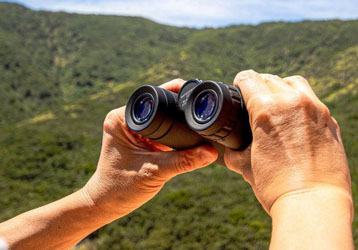
3. Outdoor Travel
For outdoor travelers, HD binoculars can be used to observe:
Mountains
Lakes
Coastlines
Buildings
Landscapes
Distant landmarks
For hiking and travel, lightweight and compact binoculars with waterproof construction can be especially practical.
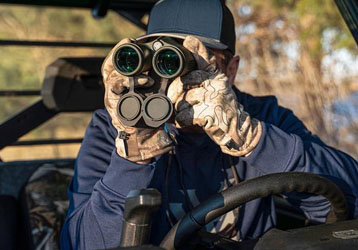
4. Hunting and Long-Distance Observation
For lawful hunting and outdoor observation activities, binoculars are primarily used for long-distance viewing and environmental observation.
These applications often place greater emphasis on:
High Resolution + Low-Light Performance + Long-Distance Viewing + Durable Construction
5. Sports Events
HD binoculars can help spectators observe athletes and sporting details at football, racing, tennis, athletics, and other large sporting events.
For sports viewing, a wider field of view can be particularly useful for following fast-moving subjects.
How to Choose the Right HD Binoculars?
Users can consider the following factors according to their intended application:
| Application | Recommended Specifications |
|---|---|
| General Outdoor Use | 8×42 |
| Bird Watching | 8×42 / 10×42 |
| Wildlife Observation | 10×42 / 10×50 |
| Long-Distance Observation | 10×50 / 12×50 |
| Low-Light Observation | Larger objective lens + quality coatings |
| Travel | Lightweight 8×42 or compact binoculars |
| Sports Events | 8×42 / 10×42 + wide field of view |
| Premium Bird Watching | ED glass + FMC + high-quality prisms |
The final choice should always consider the complete optical design rather than assuming that higher magnification automatically means better binoculars.
These keywords should be distributed naturally across product pages, category pages, blog articles, FAQs, application pages, and buying guides, rather than being concentrated in a single article.
FAQ: Frequently Asked Questions About HD Binoculars
What are HD binoculars?
HD binoculars are optical binoculars designed to provide high-resolution images, good contrast, accurate color reproduction, and improved viewing clarity through a combination of quality optics, prisms, and lens coatings.
Are higher magnification binoculars better?
Not necessarily. Higher magnification makes distant objects appear larger, but it can also reduce the field of view and make hand-held images more sensitive to movement. The best magnification depends on the intended application.
Is 8×42 good for bird watching?
Yes. 8×42 is a popular configuration for bird watching because it offers a good balance between magnification, brightness, field of view, and portability.
What does BaK-4 mean in binoculars?
BaK-4 refers to a type of optical glass commonly used for prisms. Its optical properties can provide favorable light transmission and image performance when incorporated into a properly designed optical system.
What does FMC mean on binoculars?
FMC stands for Fully Multi-Coated. It refers to multiple anti-reflection coating layers applied to optical surfaces to improve light transmission and image contrast.
Are ED binoculars better?
ED stands for Extra-Low Dispersion. ED glass is designed to reduce chromatic aberration and can improve image sharpness and color performance, especially in demanding observation conditions.
Conclusion
When choosing HD binoculars, users should not focus only on magnification. The overall optical system plays a much more important role in the viewing experience.
Key factors include:
Magnification, objective lens diameter, BaK-4 prisms, FMC multi-coated optics, ED low-dispersion glass, field of view, exit pupil, waterproof construction, and overall optical design.
For most outdoor users, 8×42 and 10×42 binoculars offer a practical balance between portability and optical performance. Users who prioritize low-light performance and long-distance observation may consider larger-aperture configurations such as 10×50 or 12×50 binoculars.
For binocular manufacturers and international optical brands, building a content cluster around:
HD Binoculars → Bird Watching Binoculars → Wildlife Binoculars → Hunting Binoculars → Outdoor Binoculars → ED Binoculars → BaK-4 Binoculars
can help create broader topical coverage for Google organic search and AI-powered search systems.