









Choosing the Best Laser Rangefinder for Professional Applications: A Complete Buyer's Guide
As laser measurement technology continues to advance, laser rangefinders have become indispensable tools across industries such as surveying, construction, forestry, utilities, security, and outdoor observation. With so many models available, selecting the right laser rangefinder can significantly improve measurement efficiency and operational accuracy.
This guide from INJIE Optics explains the most important features to consider when choosing a professional laser rangefinder and how the right solution can meet the demands of different industries.
Why Invest in a Professional Laser Rangefinder?
Unlike traditional measuring tools, professional laser rangefinders deliver fast, precise, and repeatable measurements while reducing manual errors. They also improve safety by allowing users to measure distant or difficult-to-access targets without physical contact.
Key benefits include:
Instant distance measurement
High measurement accuracy
Long-range performance
Compact and portable design
Reliable operation in challenging environments
Increased productivity for field work
1. Measurement Range
The first specification to consider is the maximum measurement distance.
Different applications require different capabilities:
| Application | Recommended Range |
|---|---|
| Golf & Outdoor Recreation | 600–1,000 m |
| Forestry | 1,000–2,000 m |
| Construction & Surveying | 1,500–3,000 m |
| Power Line Inspection | 2,000–5,000 m |
| Border Security & Observation | 5,000 m and above |
INJIE Optics offers models designed for both short-range precision and ultra-long-distance professional measurement.
2. Measurement Accuracy
Accuracy is essential for professional users.
A high-quality laser rangefinder should provide:
Stable measurement results
Fast target acquisition
Reliable performance over long distances
Minimal measurement deviation
Accurate data improves planning, reduces rework, and enhances operational confidence.
3. Optical Performance
A laser rangefinder is not only a measuring device—it is also an observation instrument.
Premium optical components provide:
Bright images
High contrast
Excellent color fidelity
Wide field of view
Comfortable long-term viewing
INJIE Optics integrates advanced multi-coated lenses and precision optical systems to ensure exceptional image quality.
4. Multiple Measurement Modes
Professional applications often require more than simple distance measurement.
Useful functions include:
Line-of-sight distance
Horizontal distance
Vertical height
Angle measurement
Continuous scan mode
Target priority mode
Speed measurement (available on selected models)
These intelligent modes improve efficiency across different work environments.
5. Durability and Environmental Protection
Field professionals work in rain, dust, heat, snow, and rugged terrain.
A reliable laser rangefinder should feature:
Waterproof construction
Dustproof sealing
Shock-resistant housing
Anti-slip rubber armor
Durable optical coatings
These features help extend product lifespan while ensuring dependable performance.
6. Ergonomic Design
Comfort plays an important role during extended field operations.
Professional users benefit from:
Lightweight construction
One-handed operation
Intuitive button layout
Fast measurement response
Easy-to-read display
Portable designs reduce user fatigue during long working hours.
7. Intelligent Connectivity
Modern laser rangefinders increasingly include digital connectivity features.
Advanced options may include:
Bluetooth communication
Mobile application support
GPS integration
Digital compass
Data storage
USB connectivity
Firmware updates
These functions simplify data management and improve workflow efficiency.
Industry Applications
Surveying and Mapping
Professional surveyors use laser rangefinders for:
Topographic surveys
Land measurement
Infrastructure planning
Boundary verification
Forestry Management
Applications include:
Tree height calculation
Forest inventory
Plantation management
Timber estimation
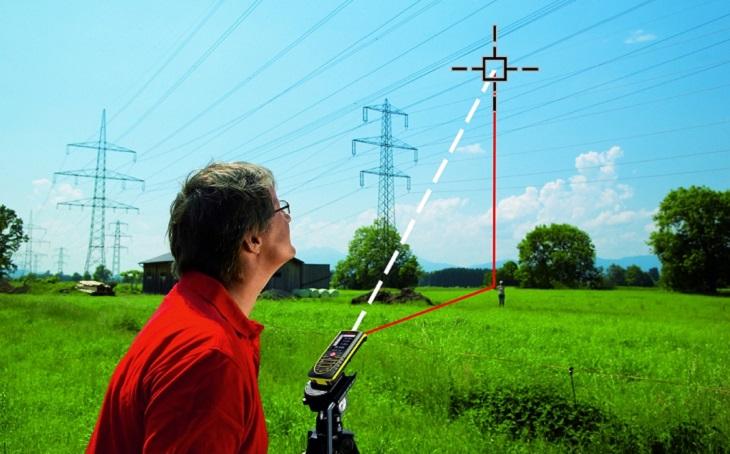
Power Utility Inspection
Utility engineers rely on laser rangefinders for:
Transmission line inspection
Pole height measurement
Tower distance calculation
Maintenance planning
Construction Engineering
Construction professionals use laser rangefinders for:
Site layout
Structural inspection
Building measurements
Equipment positioning
Security and Surveillance
Security personnel benefit from:
Perimeter monitoring
Target identification
Distance verification
Tactical observation
Outdoor Observation
Outdoor enthusiasts use laser rangefinders for:
Wildlife observation
Hiking
Camping
Nature photography
Adventure exploration
Why Choose INJIE Optics?
INJIE Optics is committed to delivering professional optical and laser measurement solutions for customers worldwide.
Our strengths include:
Advanced optical engineering
Precision laser measurement technology
OEM & ODM manufacturing services
Comprehensive quality management
Experienced R&D team
Global export capabilities
Responsive technical support
Whether you require standard products or customized solutions, INJIE Optics offers reliable laser rangefinders tailored to professional applications.
Future Trends in Laser Rangefinder Technology
As industries embrace digital transformation, laser rangefinders continue to evolve with smarter technologies, including:
AI-assisted target recognition
Real-time cloud data synchronization
Enhanced ballistic calculation
Integrated thermal imaging
Digital mapping support
Improved energy efficiency
Longer battery life
These innovations will further expand the capabilities of laser rangefinders across industrial and commercial sectors.
Conclusion
Selecting the right laser rangefinder is essential for achieving accurate measurements, improving efficiency, and ensuring reliable field performance. By evaluating measurement range, optical quality, durability, intelligent functions, and industry requirements, professionals can choose a solution that meets their operational needs.
With precision engineering, robust construction, and advanced optical technology, INJIE Optics Laser Rangefinders provide dependable performance for surveying, forestry, construction, utilities, security, and outdoor professionals around the world.
Frequently Asked Questions (FAQ)
What is the ideal measurement range for professional laser rangefinders?
It depends on the application. Forestry and surveying often require 1,000–3,000 meters, while utility inspection and long-range observation may require models capable of 5,000 meters or more.
Can laser rangefinders be used in rainy conditions?
Professional-grade models with waterproof and dustproof protection are designed to perform reliably in harsh outdoor environments.
Are laser rangefinders suitable for industrial inspections?
Yes. They are widely used for construction, infrastructure maintenance, utility inspection, engineering projects, and environmental monitoring.
Does INJIE Optics provide OEM and ODM services?
Yes. INJIE Optics offers customized branding, product development, and manufacturing solutions for distributors, wholesalers, and global business partners.