









The Ultimate Guide to Binocular Laser Rangefinders: Features, Applications, Benefits, and Buying Tips
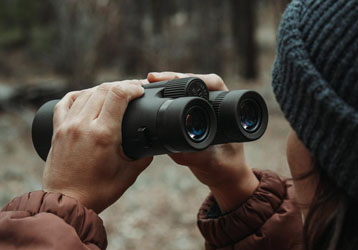
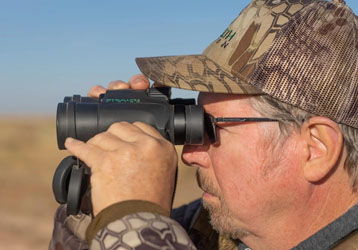
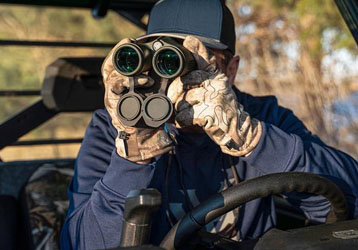
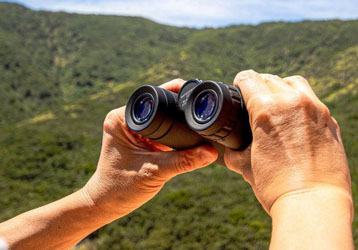
Binocular laser rangefinders have become one of the most valuable tools for professionals who require both high-quality observation and accurate long-distance measurement. By integrating premium binocular optics with advanced laser ranging technology, these devices enable users to identify distant targets while instantly calculating the exact distance.
Today, binocular laser rangefinders are widely used in power utility inspection, forestry management, industrial surveying, security monitoring, environmental protection, hunting, wildlife observation, marine patrol, emergency response, and outdoor recreation.
As technology continues to evolve, modern laser rangefinder binoculars now offer intelligent functions such as angle compensation, horizontal distance calculation, electronic compass, Bluetooth connectivity, GPS integration, and ballistic calculation, making them indispensable tools for professionals worldwide.
What Is a Binocular Laser Rangefinder?
A binocular laser rangefinder is an optical instrument that combines:
High-definition binocular optics
Laser distance measurement
Digital processing technology
Intelligent calculation algorithms
Unlike conventional binoculars, a laser rangefinder binocular allows users not only to observe distant objects but also to determine their precise distance within seconds.
Many professional models also calculate:
Horizontal distance
Vertical height
Angle
Speed (selected models)
Target direction
Ballistic information
This combination improves field efficiency while reducing the need for multiple devices.
How Does a Binocular Laser Rangefinder Work?
The ranging process is based on laser pulse technology.
The instrument emits an invisible laser beam toward the selected target. After the laser reflects from the object, the system measures the time required for the signal to return.
Using advanced timing algorithms, the processor instantly converts this information into an accurate distance measurement.
Modern processors can complete this calculation in fractions of a second, providing users with fast and reliable data in real time.
Major Components
A professional binocular laser rangefinder typically consists of:
Optical System
Responsible for image quality.
Common components include:
ED Glass
BAK4 Prism
FMC Lens Coating
Large Objective Lens
Eyepiece System
These elements determine brightness, sharpness, and color accuracy.
Laser Measurement Module
The ranging module includes:
Laser transmitter
Laser receiver
Signal processor
Distance calculation software
This system determines measurement speed and ranging accuracy.
Electronic System
Modern products integrate:
OLED display
Electronic compass
Angle sensor
Bluetooth module
GPS module
Data storage
USB-C charging
These intelligent features improve efficiency in professional applications.
Advantages of Binocular Laser Rangefinders
Superior Optical Performance
Compared with compact monocular rangefinders, binocular models provide:
Better viewing comfort
Wider field of view
Reduced eye fatigue
Improved target identification
Professionals who spend long hours in the field benefit significantly from two-eye observation.
Long-Distance Measurement
Professional binocular rangefinders can measure targets from several hundred meters to many kilometers, depending on the model and target reflectivity.
Long-range capability makes them suitable for:
Power transmission inspection
Forestry surveys
Border security
Marine observation
Industrial engineering
Multiple Measurement Modes
Professional models commonly support:
Straight-line distance
Horizontal distance
Vertical height
Angle measurement
Continuous scanning
Speed measurement
Area estimation (selected models)
Ballistic calculation
These functions reduce manual calculations and improve operational efficiency.
Industry Applications
Power Utility Inspection
Power companies use binocular laser rangefinders to inspect transmission lines, substations, towers, and vegetation clearance.
Advantages include:
Safer inspections
Faster measurements
Reduced climbing requirements
Improved maintenance planning
Forestry and Environmental Monitoring
Forestry professionals use these devices for:
Tree height measurement
Forest inventory
Wildlife observation
Fire prevention
Habitat assessment
Timber management
Laser measurement significantly improves survey efficiency compared with traditional manual methods.
Industrial Surveying
Industries benefiting from binocular laser rangefinders include:
Construction
Mining
Oil & Gas
Manufacturing
Infrastructure inspection
Geological exploration
Non-contact measurement enhances both safety and productivity.
Security and Surveillance
Security teams rely on binocular laser rangefinders to monitor:
Airports
Ports
Borders
Industrial parks
Critical infrastructure
Public events
Accurate distance information improves situational awareness and decision-making.
Hunting and Wildlife Observation
Hunters and wildlife researchers appreciate the ability to observe animals comfortably while obtaining accurate distance information without disturbing the environment.
Outdoor Recreation
Outdoor enthusiasts use binocular laser rangefinders during:
Hiking
Mountaineering
Camping
Birdwatching
Photography
Adventure travel
The combination of observation and ranging enhances navigation and exploration.
How to Select the Right Model
When purchasing a binocular laser rangefinder, consider the following factors:
Maximum ranging distance
Optical magnification
Objective lens diameter
ED glass quality
Prism type
Waterproof rating
Measurement accuracy
Battery life
Weight
Data connectivity
Available measurement modes
Environmental durability
Selecting the correct combination ensures long-term performance and value.
Why Choose INJIE Optics?
INJIE Optics develops professional optical and electro-optical products for customers around the world.
Our binocular laser rangefinders feature:
Premium optical engineering
Long-distance laser measurement
Intelligent measurement functions
Rugged outdoor construction
Stable performance in harsh environments
OEM & ODM manufacturing capabilities
Global technical support
Our products serve professionals across power utilities, forestry, industrial engineering, environmental monitoring, security, hunting, and outdoor exploration.
Future Trends
The next generation of binocular laser rangefinders will continue to integrate intelligent technologies, including:
AI-assisted target recognition
Digital image processing
Thermal imaging integration
GPS navigation
Cloud data synchronization
Wireless connectivity
Mobile application control
Smart inspection systems
These innovations will further improve efficiency and expand application possibilities across industries.
Conclusion
Binocular laser rangefinders have evolved into multifunctional professional tools that combine observation, measurement, and intelligent data processing in one compact device.
Whether used for utility inspection, forestry management, industrial surveying, security operations, hunting, or outdoor adventures, they provide greater accuracy, improved safety, and enhanced operational efficiency.
As industries increasingly adopt smart optical technologies, binocular laser rangefinders will continue to play a vital role in helping professionals make faster, safer, and more informed decisions.
INJIE Optics remains committed to delivering innovative optical solutions that enable users worldwide to See Farther. Measure Smarter. Perform Better.