









Binocular Laser Rangefinders for Forestry: Improving Forest Measurement, Wildlife Monitoring, and Sustainable Resource Management
Modern forestry requires accurate field data to support sustainable forest management, environmental protection, timber resource planning, and biodiversity conservation. Traditional measuring tools often require surveyors to physically approach trees or difficult terrain, making fieldwork time-consuming and sometimes unsafe.
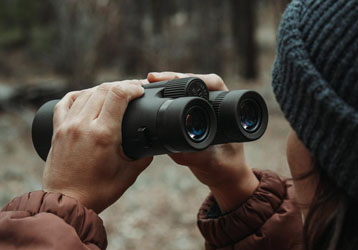
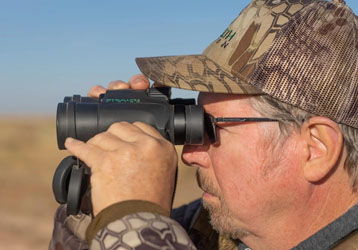
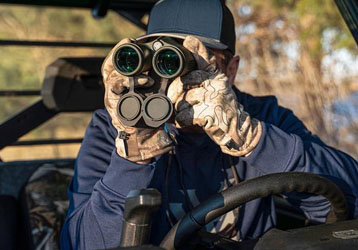
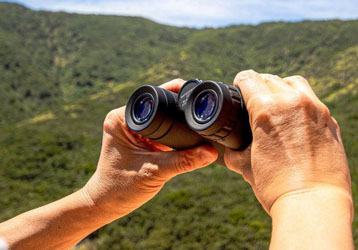
A binocular laser rangefinder provides an efficient alternative by combining premium optical observation with high-precision laser measurement. With a single device, forestry professionals can observe distant targets, measure distances, estimate tree heights, and assess terrain without direct contact.
Today, binocular laser rangefinders are widely used by forestry departments, environmental agencies, research institutions, conservation organizations, and private forest management companies worldwide.
Challenges in Modern Forestry
Forestry professionals work in complex natural environments where accurate measurements are essential for planning and decision-making.
Common challenges include:
Dense vegetation
Mountainous terrain
Limited accessibility
Long-distance observations
Variable weather conditions
Large survey areas
Time-consuming manual measurements
Reliable optical measurement equipment helps reduce field time while improving data accuracy.
Why Use Binocular Laser Rangefinders in Forestry?
Unlike conventional binoculars, binocular laser rangefinders provide both visual observation and real-time measurement.
Users can quickly determine:
Distance to trees
Tree height
Horizontal distance
Slope angle
Terrain elevation
Observation point location
These measurements improve survey efficiency while reducing physical effort.
Key Forestry Applications
Forest Inventory
Forest inventories require accurate measurements of tree locations, heights, and stand conditions.
Binocular laser rangefinders help survey teams:
Measure tree height
Estimate stand density
Assess canopy structure
Record survey data efficiently
The result is faster data collection with improved consistency.
Tree Height Measurement
Tree height is one of the most important indicators in forest management.
Using laser ranging combined with angle calculation, surveyors can estimate tree height without climbing or using measuring poles.
Applications include:
Timber valuation
Growth monitoring
Carbon stock estimation
Forest research
Timber Resource Assessment
Accurate distance and height measurements support better timber resource planning.
Forestry managers can evaluate:
Harvest areas
Tree spacing
Forest maturity
Resource distribution
Reliable field data contributes to sustainable harvesting practices.
Wildlife Observation
Forests provide habitats for numerous wildlife species.
Researchers and conservation teams use binocular laser rangefinders to observe animals from a safe distance while recording:
Observation distance
Habitat location
Movement patterns
Population monitoring data
The non-invasive nature of long-range observation minimizes disturbance to wildlife.
Forest Fire Prevention
Early detection and monitoring are essential for reducing wildfire risks.
Laser rangefinder binoculars support fire prevention by helping teams:
Monitor high-risk vegetation
Estimate firebreak distances
Assess terrain conditions
Observe smoke or fire activity from a safe location
These capabilities improve response planning and operational safety.
Benefits for Forestry Professionals
Accurate Long-Distance Measurement
Laser technology delivers precise measurements without requiring direct access to targets.
Improved Survey Efficiency
Observation and measurement are completed simultaneously, reducing time spent in the field.
Enhanced Safety
Surveyors can avoid steep slopes, unstable ground, and dense vegetation while collecting reliable data.
Reduced Equipment Requirements
One integrated device replaces multiple traditional tools, simplifying field operations.
Better Environmental Protection
Non-contact observation reduces disturbance to wildlife and sensitive ecosystems.
Recommended Features for Forestry Applications
Professional forestry users should consider binocular laser rangefinders equipped with:
Long-range laser measurement
ED optical glass
BAK4 prism system
Fully Multi-Coated lenses
Tree height measurement
Horizontal distance calculation
Continuous scan mode
Electronic compass
GPS compatibility
Bluetooth data transfer
IP67 waterproof construction
Fogproof optical system
Shock-resistant housing
Long battery life
These features provide reliable performance in demanding outdoor environments.
Why Choose INJIE Optics?
INJIE Optics develops professional optical instruments designed for forestry and environmental applications.
Our binocular laser rangefinders provide:
High-definition optical performance
Accurate long-distance laser measurement
Intelligent forestry measurement functions
Durable construction for outdoor environments
OEM & ODM customization services
Professional technical support for global partners
Our products support forestry professionals, researchers, environmental organizations, and government agencies in improving field efficiency and data accuracy.
Conclusion
Sustainable forest management depends on accurate field measurements and efficient survey methods.
Binocular laser rangefinders combine advanced optics with intelligent laser technology, enabling forestry professionals to measure trees, monitor wildlife, assess forest resources, and improve conservation efforts more efficiently than traditional methods.
As forestry management continues to adopt digital technologies, professional optical measurement equipment will play an increasingly important role in protecting natural resources and supporting sustainable development.
INJIE Optics is committed to providing innovative optical solutions that help forestry professionals observe farther, measure accurately, and manage forests more effectively.
Frequently Asked Questions
Can a binocular laser rangefinder measure tree height?
Yes. Models equipped with angle measurement and height calculation functions can estimate tree height accurately without physical contact.
Is a binocular laser rangefinder suitable for dense forests?
Yes. Professional models are designed for outdoor use and typically include waterproof, fogproof, and shock-resistant features for reliable performance in challenging environments.
What forestry tasks benefit most from laser rangefinder binoculars?
Typical applications include forest inventory, timber assessment, tree height measurement, wildlife observation, environmental monitoring, habitat surveys, and wildfire prevention.
Why choose INJIE Optics for forestry applications?
INJIE Optics offers professional-grade binocular laser rangefinders with advanced optical systems, intelligent measurement functions, durable construction, and OEM/ODM manufacturing services for global customers.