









How Laser Rangefinders Work: The Science Behind Precision Distance Measurement
Laser rangefinders have become indispensable tools in industries such as surveying, forestry, engineering, power inspection, public safety, wildlife observation, and industrial maintenance. Their ability to measure long distances quickly and accurately has transformed the way professionals collect field data.
But how does a laser rangefinder actually work? What technologies allow it to measure targets hundreds—or even thousands—of meters away with remarkable precision?
This article explains the working principles of laser rangefinders, the key components inside the device, and why INJIE Optics combines advanced optical engineering with intelligent laser technology to deliver reliable performance for professional users.
What Is a Laser Rangefinder?
A laser rangefinder is an optical-electronic instrument that measures the distance between the user and a target by emitting a laser pulse and calculating the time required for the reflected light to return.
Because light travels at a known speed, the device can calculate distance with exceptional precision in a fraction of a second.
Unlike tape measures or manual surveying methods, laser rangefinders offer:
Fast measurement speed
High precision
Long-distance capability
Non-contact operation
Portable design
These advantages make them suitable for a wide range of professional applications.
The Basic Working Principle
The most common ranging method used in professional laser rangefinders is the Time of Flight (ToF) principle.
The measurement process generally follows these steps:
Step 1 – Laser Emission
The laser transmitter emits a narrow pulse of laser light toward the selected target.
Step 2 – Target Reflection
When the laser beam reaches the target surface, part of the light is reflected back toward the instrument.
Reflective surfaces generally return stronger signals than dark or rough surfaces.
Step 3 – Signal Reception
A highly sensitive optical receiver detects the returning laser signal.
Advanced sensors help improve measurement reliability under different lighting conditions.
Step 4 – Distance Calculation
The internal processor calculates the travel time of the laser pulse.
The distance is determined using the formula:
Distance = (Speed of Light × Travel Time) ÷ 2
The division by two accounts for the round trip of the laser pulse.
Core Components of a Professional Laser Rangefinder
Laser Transmitter
The transmitter generates a focused laser pulse directed toward the target.
A high-quality transmitter contributes to:
Longer measurement range
Stable signal output
Faster response
Reliable performance
Optical Receiving System
The receiver collects the reflected laser signal.
Professional optical systems typically include:
Precision objective lenses
Optical filters
High-sensitivity detectors
Anti-interference technology
These components improve ranging performance in challenging environments.
Optical Viewing System
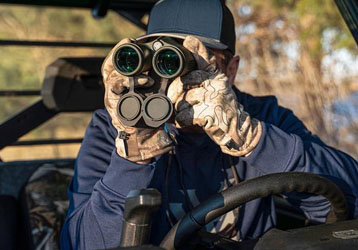
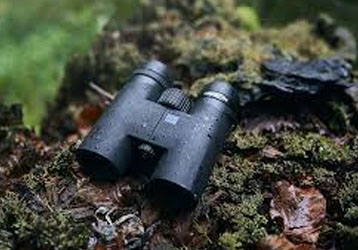
Most professional laser rangefinders also function as observation devices.
The optical system allows users to:
Locate distant targets
Improve aiming accuracy
Observe terrain clearly
Measure with greater confidence
INJIE Optics uses multi-coated optical lenses to enhance image brightness, contrast, and clarity.
Intelligent Processing Unit
Modern laser rangefinders incorporate high-speed processors that handle:
Distance calculations
Angle compensation
Height estimation
Continuous scanning
Target priority selection
Advanced algorithms help ensure stable performance even when environmental conditions change.
Factors That Affect Measurement Accuracy
Several factors influence laser ranging performance.
Target Reflectivity
Highly reflective surfaces generally provide stronger return signals than dark or matte surfaces.
Weather Conditions
Environmental factors such as:
Rain
Fog
Snow
Dust
may reduce effective measurement distance by scattering or weakening the laser signal.
Target Size
Larger targets typically reflect more laser energy, making them easier to measure accurately.
Small or irregular targets may require more precise aiming.
Ambient Lighting
Strong sunlight can introduce additional optical noise.
Professional optical coatings and advanced signal-processing algorithms help maintain performance under bright conditions.
Advanced Measurement Functions
Modern professional laser rangefinders provide much more than straight-line distance measurement.
Depending on the model, INJIE products may support:
Horizontal Distance Measurement
Useful for construction, forestry, and surveying.
Vertical Height Measurement
Helps estimate the height of trees, buildings, towers, and other structures.
Angle Measurement
Supports work on uneven terrain and infrastructure projects.
Continuous Scan Mode
Allows users to monitor changing distances while moving or tracking targets.
Speed Measurement
Available on selected models for specialized industrial or traffic-related applications.
Why Optical Quality Matters
Many buyers focus only on maximum ranging distance.
However, optical performance is equally important.
A professional optical system improves:
Target recognition
User comfort
Observation quality
Measurement success rate
INJIE Optics emphasizes the integration of premium optics with advanced laser technology to deliver dependable field performance.
Typical Applications
Laser rangefinders are widely used in:
Engineering and Construction
Site planning
Building measurement
Infrastructure inspection
Forestry
Tree height measurement
Forest inventory
Land management
Electrical Utilities
Transmission line inspection
Tower measurements
Vegetation clearance assessment
Security and Public Safety
Perimeter monitoring
Incident assessment
Field observation
Outdoor Recreation
Hiking
Wildlife observation
Camping
Nature photography
Future Trends in Laser Rangefinder Technology
Laser ranging technology continues to evolve through innovations such as:
AI-assisted target recognition
Bluetooth and Wi-Fi connectivity
Mobile application integration
Cloud-based measurement records
GPS positioning
Thermal imaging integration
Drone-assisted surveying
These technologies will make professional measurement faster, smarter, and more efficient.
Why Choose INJIE Optics?
INJIE Optics develops professional optical and electro-optical equipment for customers around the world.
Our product portfolio includes:
Multifunction Laser Rangefinders
Laser Rangefinder Binoculars
Thermal Imaging Cameras
Night Vision Devices
Digital Observation Systems
We also provide:
OEM & ODM Manufacturing
Private Label Services
Technical Support
Global Distribution Solutions
Our commitment to innovation and quality helps customers achieve reliable performance across a wide range of industries.
Frequently Asked Questions
Is laser ranging more accurate than manual measurement?
For many professional applications, laser rangefinders provide faster and more consistent distance measurements while reducing manual errors.
Can a laser rangefinder measure moving objects?
Many professional models include continuous scan modes, and some specialized models also support speed measurement.
Does weather affect laser ranging?
Yes. Heavy rain, fog, snow, or airborne dust may reduce the effective measurement range and signal quality.
Which industries benefit most from laser rangefinders?
Laser rangefinders are widely used in construction, surveying, forestry, utilities, security, industrial inspection, environmental monitoring, and outdoor activities.
Conclusion
Laser rangefinders combine optical engineering, precision electronics, and intelligent software to provide accurate, efficient, and non-contact distance measurement. Understanding how these devices work helps professionals choose equipment that matches their operational needs.
With advanced laser technology, premium optics, and continuous innovation, INJIE Optics delivers professional measurement solutions for customers across engineering, industry, public safety, and outdoor applications.
INJIE Optics — Advancing Precision Through Optical Innovation.