









Long-Range Rangefinder: A Practical Guide to Efficient Remote Distance Measurement
A long-range rangefinder is designed to help users obtain distance information from targets that are difficult or inconvenient to reach directly. With optical observation and electronic distance measurement combined in one compact device, it can support a wide range of outdoor and professional activities.
Remote distance measurement is useful when users need to understand the relationship between their observation position and a distant object. Buildings, trees, mountains, towers, infrastructure, and other outdoor targets can all become potential measurement points depending on the application.
This guide explains how to use a long-range rangefinder efficiently, what factors affect practical measurement, and how to select equipment for different working environments.
What Is Remote Distance Measurement?
Remote distance measurement refers to determining the distance between the observer and a target without physically reaching the target.
Traditional measuring methods often require the measuring tool to extend between two points. This approach works well for nearby objects but becomes impractical when the target is separated by a large open area, uneven terrain, water, vegetation, or other obstacles.
A long-range rangefinder provides a non-contact alternative.
The user can remain at the observation point, identify the target, aim the device, and obtain distance information through the electronic measurement system.
Basic Working Process
Although different products may have different interfaces, the general operating process is relatively simple.
Identify the Target
First, determine which object needs to be measured.
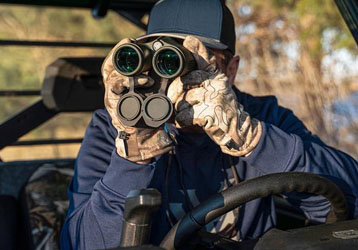
Observe Through the Optical System
Use the optical system to locate the target and distinguish it from nearby objects.
Aim at the Target
Align the device with a suitable surface or measurement point.
Activate Measurement
Press the measurement control to begin the distance calculation.
Check the Result
Review the displayed distance and confirm that it corresponds to the intended target.
Record the Information
When the measurement is part of professional field work, record the result together with relevant notes.
A consistent workflow can reduce unnecessary repeated measurements.
Why Target Identification Matters
At long distances, several objects may appear close together from the user's perspective.
For example, a distant building may have trees in front of it. A tower may be surrounded by poles or cables. A mountain slope may contain rocks, vegetation, and other terrain features.
The rangefinder measures the target selected by the measurement system, so the user must first identify the correct measurement point.
Good optical visibility therefore plays an important role in practical distance measurement.
Long-Range Rangefinder for Building Observation
Buildings are among the most convenient outdoor targets for long-range distance measurement.
The large surface area of a building can make it easier to identify and aim at from a distance.
Potential applications include:
Site observation
Construction support
Infrastructure inspection
Facility management
Outdoor planning
Preliminary distance assessment
When measuring buildings, users should select a clear surface that is not heavily obstructed by trees, vehicles, fences, or other objects.
Long-Range Rangefinder for Forestry
Forestry environments require careful target selection because vegetation can create a complex optical scene.
A user may need to measure the distance to a particular tree, forest boundary, slope, or other terrain feature.
When working in forests, users should pay attention to:
Tree density
Branch obstruction
Target visibility
Uneven ground
Weather conditions
Device stability
A compact rangefinder can be convenient for forestry professionals who frequently move between observation points.
Long-Range Rangefinder for Mountain Areas
Mountain environments often contain targets that are difficult to reach directly.
A rangefinder can provide useful distance information to:
Ridges
Hills
Rock formations
Slopes
Buildings
Trail landmarks
Because mountain observation often involves long sightlines, visibility and atmospheric conditions should be considered when interpreting measurement results.
Long-Range Rangefinder for Infrastructure Inspection
Infrastructure inspection can involve structures located at significant distances from the inspection team.
A rangefinder may support preliminary distance measurement for:
Utility structures
Communication towers
Bridges
Industrial facilities
Large buildings
Remote equipment
The ability to measure from a distance can reduce unnecessary movement between observation points.
Measuring Across Open Areas
Open fields, large yards, industrial sites, and other expansive environments are suitable applications for remote distance measurement.
In these situations, a rangefinder can help users quickly estimate the distance to structures or other clearly visible objects.
Compared with physically walking between measurement points, optical distance measurement can save time during preliminary field work.
Measuring Across Uneven Terrain
Uneven terrain can make conventional distance measurement more difficult.
Slopes, valleys, rocks, vegetation, and other obstacles may prevent users from establishing a direct physical measuring line.
A long-range rangefinder allows users to measure from their current position without needing to cross every part of the terrain.
This can be useful for outdoor field studies, construction planning, forestry work, and terrain observation.
Factors Affecting Practical Measurement
The theoretical measurement capability of a device does not always represent every real-world situation.
Practical performance can be influenced by:
Target Reflectivity
Different surfaces can interact differently with the measurement signal.
Target Size
Large targets are generally easier to identify and align than very small targets.
Atmospheric Conditions
Fog, haze, rain, dust, and other conditions may reduce visibility.
Ambient Light
Strong sunlight or changing illumination can influence target observation and display visibility.
Stability
Unstable aiming can make it more difficult to select the intended target.
Optical Quality
Clear optics help users identify and align distant targets.
Understanding these factors helps users operate the equipment more effectively.
How to Improve Long-Range Measurement Results
Users can follow several simple practices.
First, choose a clearly visible target.
Second, avoid aiming through unnecessary obstacles.
Third, keep the device stable.
Fourth, take an additional measurement when the result appears inconsistent with the visible target.
Fifth, record important measurements immediately.
These practices can improve the consistency of field operations.
The Role of Optical Magnification
Optical magnification can help users identify distant objects.
A target that appears very small to the naked eye may become easier to recognize through a suitable optical system.
However, magnification also makes hand movement more noticeable. Users should therefore combine magnified observation with stable handling.
The best optical configuration depends on the application, target distance, and typical environment.
Display Design and User Experience
Distance information needs to be easy to read after measurement.
A well-designed display can help users quickly understand the result without spending unnecessary time adjusting their viewing position.
Useful considerations include:
Clear information layout
Readable characters
Appropriate brightness
Simple operating controls
Easy-to-understand measurement feedback
These details can become especially important during repeated field measurements.
Portability for Outdoor Work
A long-range rangefinder is often carried from one location to another.
For mobile users, portability can affect how frequently the equipment is actually used.
Compact equipment can be convenient for:
Hiking
Field research
Forestry
Construction inspection
Infrastructure work
Outdoor observation
Users should consider the balance between optical performance, physical size, weight, and battery requirements.
Durability and Outdoor Conditions
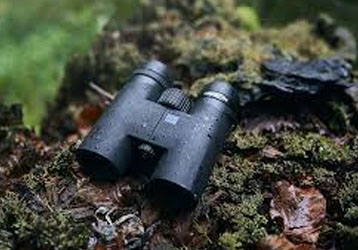
Field equipment may be exposed to dust, moisture, temperature changes, and accidental impacts.
A rangefinder intended for regular outdoor use should therefore be selected according to the expected working environment.
Users should also follow the manufacturer's recommendations regarding operating temperature, water exposure, storage, and cleaning.
Battery and Field Preparation
A rangefinder is only useful when it is ready to operate.
Before leaving for field work, users can check:
Battery status
Optical cleanliness
Measurement function
Buttons and controls
Protective accessories
Carrying case
For extended field sessions, suitable spare power arrangements can help prevent interruptions.
Choosing a Long-Range Rangefinder for Different Users
Different users may have different priorities.
Outdoor Observers
May prioritize optical clarity, compact size, and easy operation.
Forestry Professionals
May focus on portability, durability, and performance in vegetation-rich environments.
Construction Workers
May value fast measurements, simple controls, and practical field handling.
Infrastructure Inspectors
May prioritize reliable target identification and convenient remote measurement.
Field Researchers
May benefit from equipment that can be integrated into a broader documentation workflow.
There is no single configuration that meets every application equally, so the intended use should guide equipment selection.
Integrating Distance Measurement into Field Records
Distance measurements become more useful when they are connected with other field information.
A professional record may include:
Target description
Measured distance
Observation position
Date and time
Weather conditions
Photographs
Additional notes
Organizing information in this way makes it easier to review and compare field observations.
Long-Range Rangefinder and Digital Field Work
As field operations become increasingly digital, distance measurement can become part of a larger information system.
Users may combine rangefinder measurements with mobile devices, digital maps, photographs, inspection software, and project management tools.
This can help transform a simple distance measurement into structured field information.
Common Operating Mistakes
Several simple mistakes can reduce measurement efficiency.
Measuring Without Identifying the Target
The device may measure a nearby object instead of the intended target.
Holding the Device Unsteadily
Movement can make precise aiming more difficult.
Ignoring Weather Conditions
Poor visibility can affect target identification.
Dirty Optical Surfaces
Dust or fingerprints can reduce viewing clarity.
Failing to Confirm Results
A single measurement should be reviewed when the result appears inconsistent with the scene.
Avoiding these mistakes can make field measurement more efficient.
Maintenance and Storage
Proper maintenance can extend the useful life of the equipment.
Users should clean the optical surfaces carefully and avoid abrasive materials.
After use in wet conditions, the device should be dried according to the manufacturer's recommendations before long-term storage.
When not in use, storing the rangefinder in a protective case can reduce exposure to dust and accidental impact.
Future Development of Long-Range Measurement Technology
Long-range measurement technology is expected to continue developing around practical field requirements.
Future systems may provide:
Improved optical performance
Better target recognition
Faster measurement response
More efficient power management
Enhanced display systems
More compact designs
Greater digital integration
The development of the technology is likely to focus not only on measurement distance but also on the complete user experience.
Frequently Asked Questions
What is the main advantage of a long-range rangefinder?
It allows users to obtain distance information from remote targets without physically reaching them.
Can it be used in mountainous areas?
Yes. Mountain terrain is one of the situations where remote distance measurement can be useful, although visibility and atmospheric conditions should be considered.
Is optical quality important for a rangefinder?
Yes. Optical quality helps users locate, identify, and align distant targets before measurement.
Can rangefinders be used on construction sites?
They can provide convenient supplementary distance measurements during site observation and field work.
What can reduce measurement reliability?
Target size, surface characteristics, visibility, weather, atmospheric conditions, and device stability can all influence practical measurement.
How should users prepare before field work?
Check the battery, clean the lenses, test the measurement function, and ensure that the equipment and accessories are ready for the expected environment.
Conclusion
A long-range rangefinder provides an efficient way to obtain distance information from remote targets. Its value comes from the combination of optical observation, electronic measurement, portability, and practical field usability.
Successful long-distance measurement requires more than simply pointing the device at an object. Users should identify the correct target, maintain stable aiming, understand environmental conditions, and select equipment that matches the intended application.
For outdoor observation, forestry, construction, infrastructure inspection, mountain activities, and field research, long-range rangefinders can provide convenient distance information and support more organized field operations.