








Long-Range Rangefinder: Practical Solutions for Distance Measurement in Complex Environments
Distance measurement becomes more challenging when targets are far away or located in complex outdoor environments. Mountains, forests, construction areas, industrial sites, large buildings, and infrastructure facilities can all create different measurement conditions.
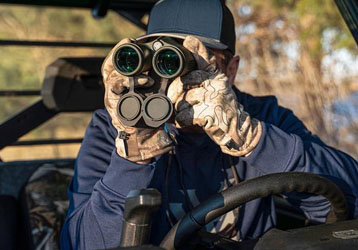
A long-range rangefinder provides a convenient solution by allowing users to measure distant targets from their current observation position. Instead of physically reaching the target, users can identify the object through the optical system and obtain distance information electronically.
For outdoor professionals and general users, understanding the relationship between target conditions, optical observation, environmental factors, and measurement methods can help improve the practical use of a long-range rangefinder.
Why Complex Environments Require Careful Measurement
An open field with a single large building is relatively easy to observe. A forest containing many trees, branches, and uneven terrain is much more complicated.
In complex environments, users may encounter:
Multiple targets at different distances
Small distant objects
Vegetation blocking the target
Uneven terrain
Atmospheric haze
Strong sunlight
Low-light conditions
Moving objects
Unstable observation positions
These factors can make target identification more difficult.
A good measurement process therefore begins with visual observation rather than immediately activating the measurement function.
The Role of a Long-Range Rangefinder
A long-range rangefinder is primarily designed to provide distance information to distant targets.
Depending on the product design, the device may combine:
Optical viewing
Laser distance measurement
Digital display
Target aiming
Portable housing
Electronic controls
The combination of these functions allows users to complete distance measurement without carrying large traditional measuring equipment.
Step-by-Step Measurement Process
A consistent operating process can help users work more efficiently.
Observe the Environment
First, look through the optical system and understand the entire scene.
Select the Target
Identify the exact object that needs to be measured.
Check the Measurement Path
Make sure unnecessary objects are not blocking the intended target.
Stabilize the Device
Hold the rangefinder firmly and reduce unnecessary movement.
Activate the Measurement
Start the distance measurement after the target has been properly aligned.
Verify the Result
Check whether the displayed distance is reasonable compared with the visible scene.
Record the Measurement
If the result is part of professional field work, record it with other relevant information.
Measuring Through Complex Landscapes
Long-distance targets are often located in environments containing multiple layers of objects.
For example, a building may be behind a group of trees. A communication tower may be surrounded by utility poles. A mountain slope may contain rocks and vegetation.
In these situations, the user should carefully determine which surface is the intended target.
Changing the observation angle slightly may sometimes provide a clearer view of the target.
Long-Range Rangefinder for Forestry
Forestry is a typical environment where long-distance observation and measurement can be useful.
A forest may contain hundreds of visually similar trees, making individual target selection important.
Potential forestry applications include:
Measuring distance to selected trees
Observing forest boundaries
Supporting terrain assessment
Recording field locations
Estimating distances between observation points
Because forestry work often involves walking through uneven outdoor environments, portability and ease of operation can be important.
Measuring Trees More Effectively
When measuring a tree, users should try to identify a clear portion of the intended tree.
Branches from nearby trees may overlap with the target and make visual identification more difficult.
If the view is unclear, moving to another observation position may provide a better line of sight.
The optical system should be used to confirm the target before measurement.
Long-Range Rangefinder for Mountain Observation
Mountain environments often contain long distances and difficult terrain.
A rangefinder can help users obtain distance information to:
Mountain ridges
Hillsides
Rock formations
Remote buildings
Observation points
Terrain landmarks
The device can provide information without requiring the user to travel directly to the target.
This can be particularly useful when terrain is steep or difficult to access.
Environmental Conditions and Measurement
Outdoor measurement is strongly connected to environmental conditions.
Fog
Fog can reduce visibility and make distant targets difficult to identify.
Rain
Rain can reduce optical clarity and change the appearance of distant surfaces.
Dust
Dust particles can reduce visibility across long sightlines.
Haze
Atmospheric haze can reduce contrast between distant objects and the background.
Bright Sunlight
Strong sunlight can make some targets difficult to distinguish and may affect display readability.
Understanding these conditions helps users interpret field performance realistically.
Target Size and Distance
Target size becomes increasingly important as measurement distance increases.
A large building may remain easy to identify at a long distance, while a narrow pole or small object may become difficult to locate.
For applications involving small distant targets, users may place greater importance on optical clarity and aiming stability.
Target Surface Characteristics
The surface of a target can also influence practical measurement.
Large solid surfaces provide clear measurement areas, while thin or partially obstructed objects may be more difficult.
Whenever possible, users should select a broad and clearly visible portion of the intended target.
Optical Quality and Distance Measurement
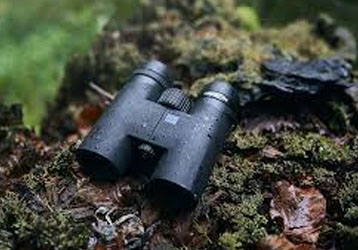
Although the laser system performs the electronic distance calculation, the optical system helps the user determine where the measurement should be taken.
Clear optics can make it easier to:
Find distant targets
Identify target edges
Separate foreground objects
Maintain alignment
Confirm measurement results
This is why optical performance remains an important consideration when choosing a long-range rangefinder.
Magnification and Stability
Magnification can make distant objects appear closer and easier to observe.
However, higher magnification can also make small hand movements more noticeable.
Users should therefore combine magnified viewing with stable handling.
A steady posture and controlled movement can help maintain the target within the viewing area.
Long-Range Measurement in Construction
Construction sites can contain large structures separated by significant distances.
A rangefinder may help with preliminary distance observation involving:
Building structures
Construction equipment
Site boundaries
Elevated components
Open working areas
Remote structures
The device can be particularly convenient when workers need quick information without setting up larger measurement equipment.
For formal surveying and high-precision engineering work, appropriate professional surveying instruments should still be used.
Infrastructure and Facility Inspection
Large infrastructure facilities often contain areas that are inconvenient to approach.
Examples include:
Bridges
Towers
Utility structures
Industrial facilities
Large storage buildings
Remote equipment
A long-range rangefinder can provide preliminary distance information from a convenient observation position.
This can support inspection planning and field documentation.
Long-Range Rangefinder for Outdoor Observation
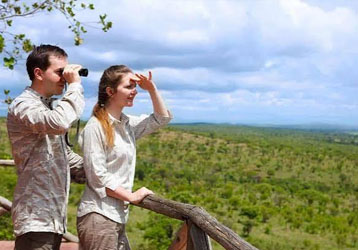
Outdoor observation covers a wide range of activities.
Users may measure distances to landmarks, terrain features, buildings, or other visible objects during:
Hiking
Nature observation
Outdoor exploration
Field research
Landscape study
General outdoor activities
A compact rangefinder can be carried as part of a broader optical equipment kit.
Improving Measurement Accuracy in Practice
Practical measurement results can be improved by using a repeatable process.
Select a Clear Target
Choose a target that is easy to identify and has a visible surface.
Stabilize the Device
Reduce hand movement before taking the measurement.
Avoid Unnecessary Obstacles
Try to avoid branches, poles, wires, or other objects that may interfere with target selection.
Repeat When Necessary
If the displayed result appears unusual, repeat the measurement.
Compare With the Scene
Use visual information to determine whether the measured distance makes sense.
These simple practices can improve measurement consistency.
Portable Design for Field Work
Portability can be particularly important when users move frequently.
A handheld long-range rangefinder should ideally be comfortable to carry and quick to access.
Useful design characteristics may include:
Compact size
Low carrying burden
Comfortable grip
Simple controls
Protective housing
Convenient storage
The ideal design depends on the working environment and frequency of use.
Battery Considerations
Outdoor users should pay attention to power management.
Before beginning work, check that the battery has sufficient capacity for the expected session.
For extended field operations, users may prepare a suitable backup power option.
Keeping the battery compartment clean and dry can also help maintain normal operation.
Device Protection
Outdoor equipment can encounter dust, moisture, accidental impacts, and temperature changes.
A protective case can help during transportation.
Users should also avoid leaving optical equipment exposed to unnecessary moisture or extreme environmental conditions for extended periods.
Following the product's operating and storage recommendations is important for long-term use.
Digital Measurement Records
Distance measurements are often more valuable when combined with other field information.
A measurement record can include:
Target description
Distance
Observation position
Date
Weather
Photographs
Field notes
Digital documentation can help users compare measurements taken during different site visits.
For professional teams, standardized records can also improve communication.
Choosing Equipment for Different Applications
The right long-range rangefinder depends on the user's actual needs.
For outdoor observation, optical clarity and portability may be important.
For forestry, durability and ease of handling can be useful.
For construction, quick measurement and simple controls may receive more attention.
For infrastructure inspection, target identification and reliable operation can be important.
Before purchasing equipment, users should consider the complete working environment instead of focusing on a single specification.
Common Questions About Long-Range Rangefinders
What can a long-range rangefinder measure?
It can measure the distance to many visible targets, including buildings, trees, terrain features, towers, and infrastructure objects, depending on the equipment and environmental conditions.
Does a distant target need to be large?
Not necessarily, but larger and clearer targets are generally easier to identify and aim at.
Can weather affect measurement?
Yes. Fog, rain, haze, dust, and other atmospheric conditions can affect visibility and practical measurement.
Is a rangefinder suitable for field work?
Yes. Portable rangefinders are commonly suited to situations where users need quick distance information while moving between observation locations.
Can a rangefinder replace surveying instruments?
For simple distance observations it can be useful, but specialized surveying instruments are more appropriate when a project requires formal surveying procedures or specific precision requirements.
Future Development of Long-Range Rangefinders
Future development is likely to focus on making distance measurement easier and more practical.
Potential improvements may include:
Better optical systems
More efficient measurement processing
Improved target recognition
Clearer displays
More compact housing
Better battery efficiency
Stronger environmental protection
Integration with digital field systems
As outdoor workflows become increasingly digital, distance measurement may become more closely connected with mapping, inspection records, and mobile applications.
Conclusion
Long-range rangefinders provide a practical method for obtaining distance information from remote targets. They are especially useful when direct measurement is difficult because of distance, terrain, vegetation, infrastructure, or other environmental obstacles.
The quality of a field measurement depends on more than the equipment itself. Target selection, optical clarity, environmental conditions, device stability, and operating technique all influence the practical result.
By selecting suitable equipment and following a consistent measurement process, users can make long-distance observation more efficient and incorporate distance information into outdoor and professional workflows.