









Long-Range Rangefinder: Improving Field Observation and Remote Distance Measurement
A long-range rangefinder is a useful tool for users who need to measure the distance to objects located far away. By combining optical observation with electronic distance measurement, this type of equipment can make remote distance measurement faster and more convenient.
In outdoor environments, users may need to measure buildings, trees, hills, utility structures, equipment, or other distant objects without physically reaching the target. A long-range rangefinder provides a practical solution for these situations and can support many types of field activities.
Understanding Long-Range Distance Measurement
Long-range distance measurement is different from measuring nearby objects.
When the target is close, the user can usually identify it easily and obtain a measurement with relatively little effort. As the target becomes farther away, visibility, target size, atmospheric conditions, and aiming stability become increasingly important.
A long-range rangefinder is designed to help users complete this process from a remote observation position.
The general workflow includes:
Finding the target
Observing the target through the optical system
Aligning the device
Activating the measurement function
Confirming the displayed distance
Recording the result when necessary
This simple workflow makes the equipment suitable for situations where speed and convenience are important.
Remote Target Observation
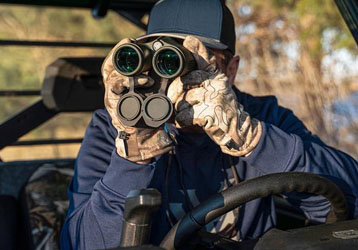
One of the major advantages of a long-range rangefinder is that users can observe a distant target without approaching it.
This can be useful when the target is:
Difficult to access
Located across uneven terrain
Behind a large open area
On a mountain slope
Inside a forest environment
Part of a large infrastructure site
Remote observation can reduce unnecessary movement and allow users to collect basic distance information from a safe and convenient observation position.
Target Selection and Measurement
Selecting the correct target is an important part of the measurement process.
A distant scene may contain multiple objects. For example, a user looking toward a construction site may see buildings, vehicles, poles, fences, and equipment at different distances.
If the wrong object is selected, the displayed distance may not represent the target the user intended to measure.
For this reason, users should first identify the target visually and then align the rangefinder carefully.
Measuring Large Outdoor Objects
Large objects are commonly used as distance-measurement targets because they are easier to identify at a distance.
Potential targets include:
Buildings
Towers
Large signs
Bridges
Utility structures
Mountain surfaces
Large trees
Industrial facilities
When the target occupies a clear position within the optical view, users can generally aim more easily and reduce confusion with nearby objects.
Measuring Smaller Targets
Small distant targets require more careful operation.
A small target may occupy only a limited portion of the optical field of view. Even slight hand movement can cause the aiming point to shift away from the intended object.
When measuring smaller targets, users can improve the process by keeping the device steady and taking additional measurements when necessary.
Optical clarity and suitable magnification can also help users locate and identify small targets.
The Importance of Optical Clarity
Distance measurement and optical observation are closely related in many handheld rangefinder applications.
The measurement system determines distance, while the optical system helps the user decide where to measure.
A clear optical image can help users:
Identify distant objects
Separate targets from background objects
Find the correct measurement point
Improve aiming consistency
Observe terrain details
For outdoor users, optical performance should therefore be considered alongside measurement capability.
Long-Range Rangefinder for Outdoor Exploration
Outdoor exploration often involves changing terrain and long viewing distances.
Hikers, field researchers, outdoor observers, and other users may need to determine the approximate distance to a landmark or terrain feature.
A compact long-range rangefinder can provide useful information without adding excessive equipment to a field kit.
Its portability is particularly valuable when users need to move between different observation locations.
Applications in Forestry
Forestry environments often contain large numbers of overlapping objects.
Trees can appear similar in size and shape, while branches and leaves may partially block the target.
A rangefinder can support field workers by providing distance information to selected trees or terrain features.
For forestry use, useful characteristics may include:
Clear optics
Compact construction
Easy controls
Stable measurement
Weather resistance
Reliable battery operation
The device can be used as a supplementary field measurement tool alongside other forestry equipment.
Applications in Construction
Construction sites often contain large structures and open working areas where rapid distance information can be useful.
A long-range rangefinder may support preliminary measurements involving:
Building structures
Site boundaries
Elevated components
Equipment locations
Large outdoor objects
Distances between observation points and structures
The convenience of handheld measurement can save time during routine site observation.
However, when official project surveying or highly precise positioning is required, specialized professional surveying equipment should be used according to project requirements.
Applications in Infrastructure Inspection
Infrastructure inspection may require workers to observe structures that are difficult to approach directly.
Examples include:
Communication towers
Utility facilities
Bridges
Industrial buildings
Remote structures
Large outdoor installations
A long-range rangefinder can provide preliminary distance information while the inspector remains at an accessible observation position.
This can be particularly useful during initial site assessment.
Environmental Factors That Influence Measurement
Long-distance measurement takes place in real outdoor environments rather than controlled laboratory conditions.
Several factors can influence practical performance.
Visibility
Clear visibility makes distant targets easier to locate and identify.
Atmospheric Haze
Haze can reduce contrast and make distant objects appear less distinct.
Rain and Fog
Moisture in the air can reduce visibility and make target identification more difficult.
Bright Sunlight
Strong ambient light may affect how easily the user can view the display or identify a low-contrast target.
Target Surface
Different target surfaces can produce different measurement conditions.
Understanding these factors helps users set realistic expectations for field operation.
Measurement Stability
Stable operation becomes increasingly important as the target distance increases.
When using a handheld device, users should maintain a comfortable grip and minimize unnecessary movement.
For repeated measurements, users can also choose a stable standing position or use available support.
The goal is to keep the optical view aligned with the intended target long enough to obtain a reliable measurement.
Improving Measurement Efficiency
Users who frequently measure multiple targets can improve efficiency by following a consistent workflow.
A practical process is:
Observe the entire scene.
Identify the required target.
Center the target in the optical view.
Stabilize the device.
Activate measurement.
Confirm the displayed result.
Record important information.
Move to the next target.
A consistent process reduces repeated aiming and unnecessary measurements.
Portability and Field Convenience
Long-range rangefinders are often carried during outdoor work, so physical design is an important consideration.
A practical field device should be comfortable to hold and easy to access when needed.
Important design considerations include:
Weight
Size
Grip design
Button placement
Display readability
Carrying options
Battery access
Protective construction
A device that is easy to carry may be more useful in real field conditions than equipment that is difficult to transport.
Battery Management
Battery performance is another important consideration for outdoor use.
Before beginning field work, users should check the battery status and make sure the equipment is functioning normally.
For extended field sessions, carrying a suitable backup power solution may be useful.
Good battery management can reduce interruptions and help users maintain a consistent workflow.
Maintaining Measurement Equipment
Regular maintenance helps protect both the optical and electronic components.
After field use, users should check for:
Dust
Moisture
Dirt
Scratches
Loose accessories
Battery problems
Optical surfaces should be cleaned carefully using appropriate lens-cleaning materials.
The device should also be stored in a dry and protected environment when not in use.
Choosing the Right Long-Range Rangefinder
There is no single configuration that is suitable for every application.
Users should first determine how the equipment will be used.
For outdoor observation, optical performance may be particularly important.
For construction or infrastructure work, fast measurement and easy operation may receive greater attention.
For forestry and field research, portability and environmental adaptability can become more important.
A practical selection process should therefore consider:
Typical target distance
Target size
Outdoor environment
Optical requirements
Measurement speed
Portability
Battery needs
Durability
Data-recording workflow
Long-Range Rangefinder Compared with Traditional Measurement Methods
Traditional measuring tools can be highly useful for nearby objects, but they become less convenient when the target is far away or difficult to access.
A handheld rangefinder can provide distance information without requiring a physical measuring line to reach the target.
This makes it especially useful for:
Large open spaces
Mountainous areas
Elevated structures
Remote objects
Preliminary field inspection
The two approaches can also be used together. A rangefinder can provide rapid preliminary measurements, while specialized equipment can be used later when detailed surveying is required.
Digital Field Documentation
Modern field work increasingly depends on organized digital records.
Users can record measurement results together with photographs, target descriptions, location information, and inspection notes.
This creates a more complete field record.
For professional teams, structured records can help simplify communication and make it easier to review previous measurements.
Future Development
Long-range rangefinder technology is continuing to develop around several practical objectives.
Future products may focus on:
Better optical clarity
Improved target identification
More convenient controls
Smaller form factors
Better battery efficiency
Improved display systems
More reliable outdoor operation
Integration with digital field applications
The development of rangefinder technology is not only about increasing maximum distance. Improving the overall user experience and making remote measurement easier are equally important.
Frequently Asked Questions
What is a long-range rangefinder?
It is a device designed to measure the distance between the user and a distant target, often combining optical observation with electronic distance measurement.
Where can a long-range rangefinder be used?
It can be used in outdoor observation, forestry, construction, infrastructure inspection, field research, terrain observation, and other distance-measurement applications.
Why is optical quality important?
Good optical quality helps users identify distant targets and align the device more accurately before taking a measurement.
Can weather affect long-range measurement?
Yes. Fog, rain, haze, dust, and other environmental conditions can affect visibility and practical measurement performance.
How can users improve measurement stability?
Users can hold the device with both hands, maintain a stable posture, minimize movement, and use a stable support when appropriate.
What should buyers consider?
Buyers should consider target distance, optical quality, portability, measurement performance, battery requirements, durability, ease of use, and the intended working environment.
Conclusion
A long-range rangefinder provides a practical method for obtaining distance information from remote targets. Its combination of optical observation and electronic measurement makes it useful for many outdoor and professional applications.
The best results come from using an appropriate target, maintaining stable aiming, understanding environmental conditions, and selecting equipment that matches the actual working environment.
Whether used for outdoor observation, forestry, construction, infrastructure inspection, or field research, a well-designed long-range rangefinder can become a useful part of a modern field measurement toolkit.