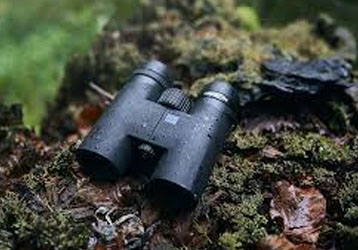










905nm vs. 1550nm Laser Rangefinders: Differences, Advantages, and Applications
Laser rangefinders have become essential tools across industries such as surveying, forestry, power utilities, industrial inspection, security, wildlife observation, and emergency response. However, one of the most common technical questions from buyers and engineers is:
Should I choose a 905nm laser rangefinder or a 1550nm laser rangefinder?
Although both technologies are designed for accurate distance measurement, they differ in wavelength, ranging capability, laser power, atmospheric performance, and typical applications.
Understanding these differences will help distributors, system integrators, OEM customers, and end users select the right laser ranging solution for their operational requirements.
Understanding Laser Wavelength
Laser wavelength refers to the distance between two successive peaks of a laser wave and is measured in nanometers (nm).
Among commercial laser rangefinders, the two most widely used wavelengths are:
905nm
1550nm
Each wavelength has its own advantages depending on the application.
What Is a 905nm Laser Rangefinder?
A 905nm laser rangefinder uses a semiconductor laser diode operating at approximately 905 nanometers.
Because of its compact design, mature manufacturing process, and cost efficiency, it has become the most widely used laser technology in commercial optical products.
Common applications include:
Outdoor recreation
Forestry
Construction
Surveying
Power inspection
Wildlife observation
Industrial measurement
Many handheld laser rangefinders and laser rangefinder binoculars on the market are based on 905nm technology.
Advantages of 905nm Technology
Compact Design
905nm laser modules are relatively small, making them ideal for lightweight handheld devices and binocular rangefinders.
Lower Manufacturing Cost
The technology is mature and widely available, helping manufacturers produce high-performance products at competitive prices.
Low Power Consumption
905nm modules generally require less power, contributing to longer battery life during outdoor operations.
Fast Measurement Speed
Professional 905nm rangefinders provide rapid measurement response, making them suitable for dynamic field environments.
Broad Commercial Availability
Because of its balance between performance and cost, 905nm technology is widely used across consumer and professional optical products.
Typical Applications of 905nm Laser Rangefinders
905nm laser rangefinders are well suited for:
Forestry
Tree height measurement
Forest inventory
Resource management
Construction
Site measurement
Building inspection
Infrastructure projects
Outdoor Activities
Hiking
Camping
Wildlife observation
Industrial Inspection
Facility maintenance
Equipment positioning
Engineering measurement
What Is a 1550nm Laser Rangefinder?
A 1550nm laser rangefinder uses a laser operating at approximately 1550 nanometers.
This wavelength is widely adopted in advanced industrial, aerospace, and specialized long-range optical systems because it allows higher transmitted pulse energy while remaining within internationally recognized eye-safety design limits when properly engineered.
1550nm technology is commonly found in:
Long-range observation systems
Border surveillance
Maritime monitoring
Defense-related optical systems
High-end industrial measurement platforms
Advantages of 1550nm Technology
Longer Measurement Potential
1550nm systems are often designed for significantly longer measurement distances than typical commercial 905nm products.
Better Atmospheric Performance
Under certain environmental conditions, 1550nm wavelengths may offer improved performance over long distances, particularly in demanding professional applications.
Actual performance depends on the complete optical design rather than wavelength alone.
Higher Laser Pulse Energy
Engineers can design 1550nm systems to transmit higher pulse energies while complying with applicable eye-safety standards, enabling longer operational ranges in specialized equipment.
Professional Long-Range Applications
1550nm technology is commonly selected for applications requiring extended observation distances and advanced optical performance.
Typical Applications of 1550nm Laser Rangefinders
Professional applications include:
Border Security
Long-distance observation and monitoring.
Maritime Surveillance
Ship identification and coastal monitoring.
Emergency Response
Remote incident assessment in large operational areas.
Industrial Infrastructure
Inspection of large facilities and long-distance engineering projects.
Scientific Research
Environmental monitoring and specialized measurement tasks.
905nm vs. 1550nm Comparison
| Feature | 905nm | 1550nm |
|---|---|---|
| Typical Product Size | Compact | Larger (varies by design) |
| Manufacturing Cost | Lower | Higher |
| Power Consumption | Lower | Higher (typical) |
| Commercial Availability | Very High | More Specialized |
| Typical Measurement Range | Short to Long | Long to Very Long |
| Outdoor Applications | Excellent | Excellent |
| Industrial Applications | Excellent | Excellent |
| Specialized Long-Range Systems | Limited | Excellent |
Note: Performance depends on the overall optical system, detector sensitivity, signal processing algorithms, target reflectivity, and environmental conditions—not solely on wavelength.
Eye Safety Considerations
Laser rangefinders designed for commercial and professional use should comply with applicable international laser safety standards.
When selecting a product, consider:
Laser safety classification
Manufacturer compliance documentation
User operating instructions
Intended application
Always operate laser equipment according to the manufacturer's safety guidelines and avoid intentionally directing the beam toward people or aircraft.
Which Technology Should You Choose?
Choose 905nm If You Need:
Portable handheld devices
Cost-effective solutions
Forestry applications
Construction measurement
Surveying
Outdoor recreation
General industrial inspection
Choose 1550nm If You Need:
Very long-range measurement
Advanced industrial applications
Maritime observation
Large-scale infrastructure monitoring
Specialized professional optical systems
Why Choose INJIE Optics?
INJIE Optics develops professional optical and electro-optical products for customers worldwide.
Our product portfolio includes:
Multifunction Laser Rangefinders
Laser Rangefinder Binoculars
Thermal Imaging Cameras
Night Vision Devices
Professional Optical Instruments
Our engineering team continuously improves laser ranging technology, optical design, and intelligent measurement algorithms to meet the needs of professional users.
OEM & ODM Manufacturing Services
INJIE Optics provides flexible manufacturing solutions for global partners.
Our services include:
OEM Manufacturing
Private label production
Logo customization
Packaging design
User manual customization
ODM Development
Optical system design
Hardware customization
Software integration
Industrial design
Function optimization
Frequently Asked Questions
Is a 1550nm laser rangefinder always better than a 905nm model?
Not necessarily. The best choice depends on your required measurement range, budget, size constraints, and application. Many professional users achieve excellent results with 905nm systems.
Are 905nm laser rangefinders suitable for industrial applications?
Yes. They are widely used in construction, forestry, utilities, surveying, and industrial inspection.
Does wavelength alone determine ranging performance?
No. Performance also depends on optical quality, detector sensitivity, signal processing, atmospheric conditions, and target reflectivity.
Does INJIE Optics support customized laser rangefinder development?
Yes. INJIE Optics offers OEM and ODM services for professional laser measurement equipment tailored to customer requirements.
Conclusion
Both 905nm and 1550nm laser rangefinder technologies play important roles in modern optical measurement. While 905nm systems are widely used for portable and cost-effective professional equipment, 1550nm systems are often selected for specialized long-range applications.
Choosing the right wavelength requires evaluating your operational needs, measurement distance, environmental conditions, and product integration requirements.
With continuous innovation in optical engineering and laser technology, INJIE Optics delivers reliable laser measurement solutions that support professionals across engineering, forestry, industrial inspection, utilities, security, and outdoor applications.
INJIE Optics — Advancing Professional Laser Measurement Through Optical Innovation.