









Hunting Binoculars: How to Choose the Right Binoculars for Outdoor and Wildlife Observation
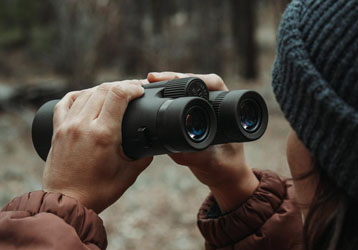
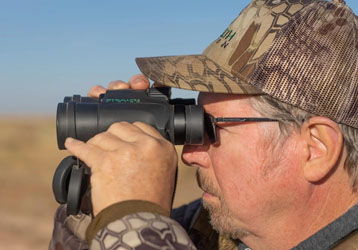
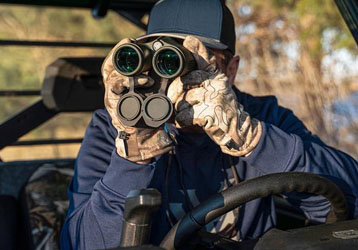
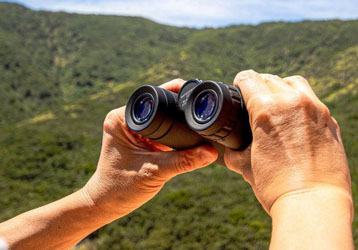
Hunting and wildlife observation often require clear long-distance vision, especially in forests, mountains, grasslands, and open terrain. A quality pair of hunting binoculars can help users observe distant animals, identify terrain features, and evaluate targets without moving closer.
Modern hunting binoculars combine high-quality optical glass, advanced lens coatings, ergonomic design, waterproof protection, and durable construction. Some professional models may also integrate laser rangefinding, ballistic calculation, or digital functions.
This guide explains the key features of hunting binoculars and how to select the right optical configuration for different outdoor environments.
What Are Hunting Binoculars?
Hunting binoculars are outdoor optical instruments designed for long-distance observation and wildlife viewing.
Typical applications include:
Hunting
Wildlife observation
Forest exploration
Mountain observation
Outdoor scouting
Nature photography support
Long-distance terrain observation
The main purpose is to provide a magnified and detailed view while allowing users to observe with both eyes.
Why Binoculars Are Important for Outdoor Observation
Outdoor environments can cover large areas, and wildlife may remain far away from the observer.
Binoculars can help users:
Locate distant objects
Observe animal movement
Identify terrain features
Monitor open areas
Reduce the need to approach wildlife
A good optical system can improve observation efficiency while maintaining a comfortable viewing experience.
What Magnification Is Best for Hunting Binoculars?
Common configurations include:
8×42
10×42
10×50
12×50
12×56
8×42 Hunting Binoculars
8×42 binoculars offer a balanced combination of:
Image stability
Field of view
Optical brightness
Portability
They are suitable for general outdoor observation and woodland environments.
10×42 Hunting Binoculars
10×42 binoculars provide additional magnification while remaining relatively compact.
They are suitable for:
Mountain hunting
Open terrain
Wildlife observation
Long-distance viewing
10×50 Hunting Binoculars
The larger 50 mm objective lens can provide greater light-gathering capability.
This configuration may be useful for:
Early morning observation
Evening observation
Open terrain
Long-distance wildlife viewing
The larger objective lens also increases size and weight.
Why Objective Lens Diameter Matters
The objective lens is the large front lens of a binocular.
Common sizes include:
32 mm → 42 mm → 50 mm → 56 mm
A larger objective lens can collect more light, potentially improving low-light viewing.
However:
Larger objective lens = More light collection + Larger size + Higher weight
Therefore, choosing a 50 mm or 56 mm objective lens is not always necessary.
For mobile outdoor use, 42 mm binoculars often provide a good balance between performance and portability.
Field of View for Hunting
Field of view describes how much terrain can be seen through the binoculars.
A wider field of view can make it easier to:
Locate animals
Track moving wildlife
Scan terrain
Observe larger areas
In forests and dense vegetation, a wider field of view can be particularly useful.
For long-distance observation in open terrain, users may place greater emphasis on magnification and image detail.
ED Glass Hunting Binoculars
ED (Extra-low Dispersion) glass is commonly used in premium optical systems.
It is designed to reduce chromatic aberration and improve color accuracy.
ED binoculars can be especially useful for:
Wildlife observation
Mountain landscapes
High-contrast scenes
Long-distance viewing
For users who want clearer details and improved color reproduction, ED optical systems are an important specification to consider.
Optical Coatings
High-quality optical coatings help improve light transmission and reduce unwanted reflections.
Professional binoculars may use:
Fully multicoated lenses
Phase-corrected prism coatings
Dielectric prism coatings
Good optical coatings can contribute to:
Better brightness
Higher contrast
Improved color reproduction
Clearer images
Hunting Binoculars for Low-Light Conditions
Wildlife activity can occur during early morning and evening.
Low-light performance depends on several factors:
Objective lens diameter
Magnification
Exit pupil
Optical transmission
Lens coatings
Sensor or image-processing technology in digital systems
For example:
8×42 → 5.25 mm exit pupil
10×50 → 5.0 mm exit pupil
A larger exit pupil can provide a comfortable viewing experience when ambient light is limited, although overall image brightness also depends on optical transmission and the observer's eyes.
Waterproof and Fogproof Hunting Binoculars
Outdoor environments can expose binoculars to:
Rain
Snow
Fog
Humidity
Dust
Temperature changes
For demanding outdoor applications, waterproof and fog-resistant construction can improve equipment reliability.
Many professional binoculars use sealed optical systems with nitrogen or other dry-gas purging to reduce internal fogging.
Users should check the manufacturer's actual environmental protection specifications.
Rugged Design for Outdoor Use
Hunting and outdoor observation can involve difficult terrain.
A durable binocular may feature:
Rubber armor
Reinforced housing
Scratch-resistant lenses
Waterproof construction
Secure grip
Shock-resistant mechanical design
An ergonomic body is particularly important when binoculars are used for extended observation.
Hunting Binoculars with Laser Rangefinder
Advanced optical systems can combine binoculars with a laser rangefinder.
This creates a multifunctional observation device capable of providing:
Optical Observation + Magnification + Distance Measurement
A laser rangefinder binocular can be useful for users who need to determine the approximate distance to a distant object.
Depending on the product, advanced systems may also integrate:
Angle measurement
Environmental sensors
Bluetooth
Digital displays
Ballistic calculation
For professional applications, users should select features according to their actual requirements and local regulations.
Binoculars vs. Monoculars for Outdoor Observation
| Feature | Binoculars | Monocular |
|---|---|---|
| Viewing | Two eyes | One eye |
| Comfort | Generally higher for extended viewing | Compact and simple |
| Depth Perception | Natural binocular viewing | Limited |
| Portability | Larger | Smaller |
| Long Observation | Comfortable | Can be convenient |
| Outdoor Use | Excellent | Excellent |
Binoculars are often preferred for extended observation because both eyes can be used simultaneously.
Choosing Hunting Binoculars for Different Environments
Forests
Recommended characteristics:
8× magnification
32–42 mm objective lens
Wide field of view
Short close-focus distance
Lightweight design
Mountains
Useful features include:
10× or higher magnification
42–50 mm objective lens
ED glass
High optical resolution
Waterproof construction
Open Grasslands
Consider:
10×42
10×50
12×50
Higher magnification can be useful for long-distance observation.
Low-Light Environments
Consider:
42–56 mm objective lens
Good optical coatings
Large exit pupil
High-quality glass
8×42 vs. 10×42 Hunting Binoculars
| Feature | 8×42 | 10×42 |
|---|---|---|
| Magnification | 8× | 10× |
| Objective Lens | 42 mm | 42 mm |
| Image Stability | Better | More sensitive to movement |
| Field of View | Generally wider | Generally narrower |
| Long-Distance Detail | Good | Better |
| Forest Observation | Excellent | Very Good |
| Open Terrain | Excellent | Excellent |
| Portability | Very Good | Very Good |
For general-purpose outdoor observation, 8×42 binoculars are a versatile choice.
For longer-distance observation, 10×42 binoculars provide additional magnification.
How to Choose Professional Hunting Binoculars
Before purchasing binoculars, consider the following:
1. Application
Determine whether you primarily need the binoculars for:
Forest observation
Mountain observation
Wildlife watching
Long-distance viewing
Travel
2. Magnification
Choose moderate magnification for handheld use.
3. Objective Lens
Balance brightness with weight and portability.
4. Optical Glass
Consider ED glass if image quality and chromatic aberration control are important.
5. Coatings
Fully multicoated optics can improve optical transmission.
6. Environmental Protection
For outdoor use, consider waterproof and fog-resistant construction.
7. Ergonomics
A comfortable focus wheel and secure grip can make a significant difference during long observation sessions.
How Manufacturers Improve Binocular Quality
Professional binocular production requires precision at multiple stages.
Optical Assembly
Objective lenses, prisms, and eyepieces must be correctly aligned.
Prism Alignment
Accurate prism positioning is essential for producing properly merged images.
Coating Technology
High-quality coatings improve optical transmission and contrast.
Mechanical Testing
Manufacturers may conduct:
Focus testing
Alignment testing
Waterproof testing
Impact testing
Environmental testing
Final Inspection
Each binocular should undergo appropriate quality inspection before packaging and shipment.
OEM and ODM Hunting Binoculars
For outdoor brands, distributors, wholesalers, and retailers, OEM and ODM binocular manufacturing can provide customized product solutions.
Possible customization options include:
Brand logo
Housing color
Product specifications
Packaging
Accessories
User manual
Product design
A professional binocular factory can provide integrated services from optical design and mechanical development to assembly, testing, packaging, and export.
Future Development of Hunting Binoculars
The future of outdoor binoculars is moving toward multifunctional optical systems.
Potential technologies include:
Rangefinder Integration
Binoculars can combine observation and distance measurement.
Digital Display
Important information can be displayed directly within the optical system.
Image Stabilization
Stabilization technology can help reduce image shake at higher magnifications.
Thermal Imaging
Thermal sensors can provide heat-based observation in low-light environments.
AI Recognition
AI may assist with:
Animal identification
Object classification
Target tracking
Image analysis
Conclusion
Hunting binoculars are an important part of professional outdoor optical equipment. The right binoculars can provide clear, stable, and comfortable long-distance observation in forests, mountains, grasslands, and other outdoor environments.
When selecting binoculars, users should consider more than magnification. Important factors include objective lens diameter, field of view, ED glass, optical coatings, exit pupil, waterproof protection, weight, ergonomics, and the intended observation environment.
For general outdoor use, 8×42 and 10×42 binoculars offer a practical balance between magnification, image stability, optical performance, and portability. For long-distance or low-light observation, larger objective lenses such as 50 mm or 56 mm may be considered.
With the development of laser rangefinding, image stabilization, thermal imaging, digital displays, and AI, modern binoculars are evolving from traditional optical instruments into multifunctional outdoor observation systems.