









How to Choose Binoculars for Hiking and Travel: A Complete Guide to Compact Outdoor Optics
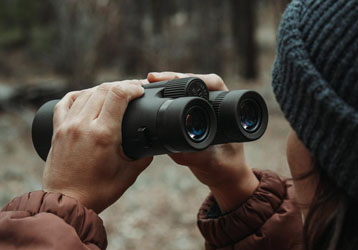
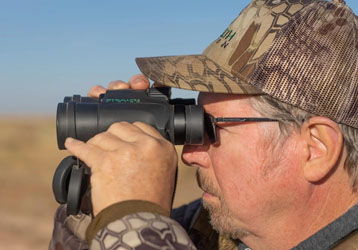
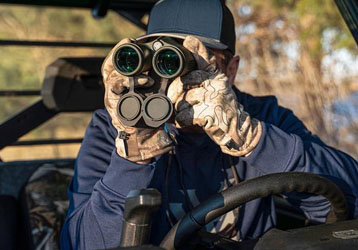
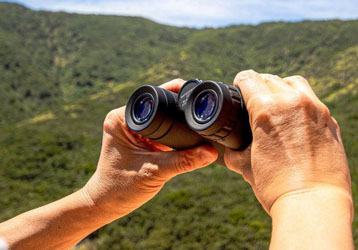
Hiking and travel often require lightweight equipment that can provide clear views without adding unnecessary weight to a backpack. Compact binoculars for hiking and travel are ideal for observing mountains, landscapes, wildlife, architecture, coastlines, and other distant objects during outdoor activities.
Compared with large professional binoculars, compact models focus more on portability, comfortable handling, optical clarity, durability, and weather resistance.
For travelers, hikers, bird watchers, and outdoor enthusiasts, choosing the right binocular configuration can make outdoor observation more enjoyable and convenient.
Why Carry Binoculars When Hiking or Traveling?
A landscape may look impressive with the naked eye, but distant details can be difficult to see.
Binoculars can help users observe:
Mountain peaks
Wildlife
Birds
Waterfalls
Coastal scenery
Historic buildings
Sports events
Distant landmarks
Because binoculars are lightweight and easy to use, they can provide an optical advantage without requiring complex equipment.
What Makes Good Travel Binoculars?
Travel binoculars should balance several factors:
Optical Performance + Compact Size + Lightweight Design + Durability
Important features include:
Moderate magnification
Compact objective lens
Wide field of view
Lightweight body
Waterproof protection
Comfortable grip
Easy focusing
A compact binocular that is easy to carry may be more useful than a larger binocular with higher specifications that users rarely want to carry.
Popular Compact Binocular Configurations
8×25 Binoculars
8×25 binoculars are small and lightweight.
They are suitable for:
City travel
Hiking
Sightseeing
Concerts
Casual nature observation
Their compact size makes them convenient for everyday carrying.
10×25 Binoculars
10×25 binoculars provide higher magnification while maintaining a compact form.
They can be useful for:
Long-distance sightseeing
Mountain observation
Travel
Outdoor events
However, higher magnification can make image movement more noticeable.
8×32 Binoculars
8×32 binoculars provide a balance between compactness and optical performance.
They can be suitable for:
Bird watching
Hiking
Wildlife observation
Travel
Nature exploration
For users who want better optical performance than very small pocket binoculars, 8×32 is an attractive configuration.
8×25 vs. 8×32 Travel Binoculars
| Feature | 8×25 | 8×32 |
|---|---|---|
| Magnification | 8× | 8× |
| Objective Diameter | 25 mm | 32 mm |
| Size | Very Compact | Compact |
| Weight | Generally Lower | Slightly Higher |
| Light Gathering | Lower | Higher |
| Portability | Excellent | Very Good |
| Hiking | Excellent | Excellent |
| Travel | Excellent | Excellent |
| Low-Light Use | Limited | Better |
For users who prioritize minimum size, 8×25 is a practical option.
For users who want a better balance between portability and optical performance, 8×32 can be a better choice.
Why Weight Matters for Hiking
When hiking for several hours, every item in a backpack contributes to overall load.
Heavy binoculars may become uncomfortable when:
Walking long distances
Climbing mountains
Traveling between locations
Carrying additional camera equipment
Compact binoculars can be easier to access and use frequently.
The best hiking binocular is therefore not necessarily the largest or most powerful model—it is the one that provides the right balance between performance and portability.
Field of View for Hiking and Travel
A wide field of view is useful when observing:
Large landscapes
Moving wildlife
Birds
Mountain scenery
City architecture
A wider field of view also makes it easier to locate a subject quickly.
For travel, where users may switch rapidly between close and distant subjects, a practical field of view can improve the overall viewing experience.
Close Focus for Nature Observation
Travel binoculars may also be used to observe nearby objects.
A short close-focus distance can be useful for:
Flowers
Birds
Butterflies
Insects
Plants
Architectural details
Therefore, users who enjoy nature observation should pay attention to the close-focus specification.
ED Glass for Premium Travel Binoculars
Some premium compact binoculars use ED (Extra-low Dispersion) glass.
ED glass is designed to reduce chromatic aberration and improve color reproduction.
This can be valuable when observing:
Mountain landscapes
Birds
Wildlife
High-contrast objects
Distant scenery
For users who prioritize optical quality, ED glass can be an important feature.
Optical Coatings for Clearer Images
Optical coatings influence light transmission and contrast.
Travel binoculars may feature:
Coated optics
Multicoated optics
Fully multicoated optics
High-quality coatings can help reduce reflections and improve the amount of light transmitted through the optical system.
This can contribute to clearer and brighter images.
Waterproof Binoculars for Hiking
Hiking environments can change quickly.
Users may encounter:
Rain
Fog
Snow
Humidity
Dust
Waterproof or water-resistant binoculars can provide additional protection during outdoor activities.
For demanding environments, users should check the specific waterproof rating and testing standards provided by the manufacturer.
Fogproof Binoculars for Travel
Moving between different temperatures can cause condensation.
For example:
Cold outdoor environment → Warm indoor environment
or
Air-conditioned vehicle → Hot outdoor environment
A sealed and dry-gas-purged optical system can help reduce internal fogging.
This is particularly useful for travelers who frequently move between different climates.
Compact Binoculars for Different Travel Scenarios
City Travel
Recommended:
8×25
10×25
Compact roof-prism design
Applications include:
Architecture
Landmarks
Observation towers
Sporting events
Mountain Hiking
Recommended:
8×32
8×42
Waterproof housing
Wide field of view
These configurations provide a useful balance between portability and outdoor optical performance.
Wildlife Travel
Recommended:
8×32
8×42
10×42
Important features include:
Good optical resolution
Wide field of view
ED glass
Waterproof construction
Coastal Travel
Recommended:
8×32
8×42
Waterproof housing
Good optical coatings
For more demanding marine environments, specialized marine binoculars may be preferable.
Roof Prism Binoculars for Travel
Roof prism designs are widely used in compact binoculars.
Their relatively straight optical path allows manufacturers to create:
Slim bodies
Compact dimensions
Comfortable handling
Portable designs
This makes roof prism binoculars particularly suitable for hiking and travel.
Binocular Ergonomics
Optical quality is important, but physical design also affects usability.
Useful ergonomic features include:
Large Focus Wheel
Allows quick and precise focus adjustment.
Rubber Armor
Provides additional protection and improves grip.
Twist-Up Eyecups
Allows users to adjust viewing position according to personal preference.
Diopter Adjustment
Helps compensate for differences between the user's eyes.
Balanced Weight
Reduces fatigue during long observation sessions.
Binoculars for Backpacking
Backpacking often requires even more careful weight management.
A suitable backpacking binocular should ideally be:
Compact
Lightweight
Durable
Weather resistant
Easy to access
A compact 8×25 or 8×32 binocular can be a practical solution.
For users who prioritize optical performance over minimum weight, 8×42 models can also be considered.
Common Mistakes When Buying Travel Binoculars
Choosing Excessive Magnification
Very high magnification can make handheld viewing difficult.
Ignoring Weight
A binocular that feels comfortable for five minutes may feel heavy after several hours.
Choosing Only by Price
Low-cost binoculars may have compromises in:
Optical coatings
Alignment
Focus mechanisms
Mechanical durability
Ignoring Weather Resistance
Outdoor equipment should be selected according to the expected environment.
Focusing Only on Objective Lens Size
Larger lenses can improve light collection but increase size and weight.
How to Maintain Hiking and Travel Binoculars
Proper maintenance can help extend the service life of optical equipment.
Keep Lenses Clean
Use an appropriate lens-cleaning method to remove dust and fingerprints.
Avoid Abrasive Materials
Do not use rough cloths or inappropriate cleaning materials on optical surfaces.
Store in a Dry Environment
Avoid prolonged exposure to excessive humidity.
Use Protective Caps
Lens caps can help prevent dust and scratches.
Check the Housing
After outdoor use, inspect the binoculars for dirt, moisture, or damage.
Professional Manufacturing of Travel Binoculars
The quality of binoculars depends on both optical design and manufacturing precision.
Professional binocular manufacturers may provide:
Optical design
Mechanical design
Lens assembly
Prism alignment
Optical coating
Waterproof testing
Focus testing
Packaging
OEM/ODM customization
For international distributors and outdoor brands, OEM/ODM manufacturing can provide customized binocular solutions.
OEM and ODM Compact Binoculars
Customization options may include:
Brand logo
Housing color
Product configuration
Packaging design
Accessories
Carrying case
Neck strap
User manual
A professional binocular factory can help brands develop products for:
Outdoor markets
Travel markets
Bird watching
Wildlife observation
Sports events
Tourism
Future Trends in Travel Binoculars
The next generation of binoculars is likely to combine traditional optics with advanced technology.
Potential developments include:
Lightweight Materials
Magnesium alloy and advanced polymers can help reduce weight.
ED Optical Systems
Improved optical glass can enhance image quality.
Image Stabilization
Electronic or optical stabilization can improve handheld viewing at higher magnifications.
Digital Connectivity
Future binoculars may integrate:
Bluetooth
Wi-Fi
GPS
Digital displays
Smart Observation
AI-based systems may assist with:
Object recognition
Bird identification
Wildlife classification
Image recording
Conclusion
Compact binoculars for hiking and travel provide an easy way to explore distant scenery, wildlife, architecture, and natural landscapes.
When selecting travel binoculars, users should consider:
Magnification
Objective lens diameter
Field of view
Weight
Close-focus distance
Optical coatings
ED glass
Waterproof protection
Ergonomic design
For lightweight travel, 8×25 and 10×25 binoculars offer excellent portability. For users who want a stronger balance between optical performance and compactness, 8×32 binoculars are an excellent option. For more demanding outdoor observation, 8×42 and 10×42 binoculars provide additional light-gathering capability and versatility.
As optical technology develops, travel binoculars are becoming lighter, clearer, more durable, and smarter, making them valuable equipment for modern hiking, tourism, wildlife observation, and outdoor exploration.