









Long-Range Rangefinder Technology: Improving Distance Measurement in Outdoor Environments
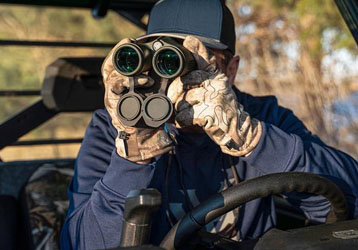
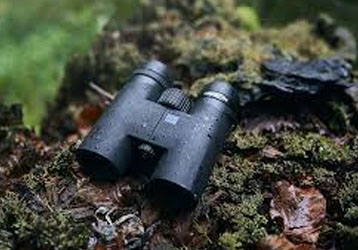
Long-range rangefinders are becoming increasingly useful for applications that require fast and convenient measurement of distant targets. By combining laser distance measurement technology with optical observation, these devices allow users to obtain distance information without physically approaching the target.
From outdoor exploration and engineering inspection to construction, forestry, facility management, and terrain observation, long-range rangefinders can provide valuable assistance in situations where traditional measurement methods are inconvenient.
The Basic Principle of Long-Range Distance Measurement
A laser rangefinder works by transmitting a laser signal toward a selected target.
When the laser reaches the target surface, part of the signal is reflected back toward the device. The internal electronic system detects the returned signal and processes the measurement information.
The rangefinder then calculates the distance and presents the result on the display.
This process allows users to obtain distance information quickly while remaining at a safe and convenient observation position.
Why Long-Range Rangefinders Are Useful
The main advantage of a long-range rangefinder is remote measurement.
When a target is located across a large field, behind difficult terrain, or in an area that is inconvenient to access, directly measuring the distance can be challenging.
A handheld long-range rangefinder can simplify the process by allowing the operator to measure from a suitable location.
This can reduce unnecessary movement and make field measurements more efficient.
Measuring Different Types of Targets
Different targets can produce different measurement results.
Buildings
Large buildings usually provide clearly defined surfaces that can be used as measurement targets. Their walls, roofs, or other visible structural areas can serve as reference points depending on the application.
Trees and Forest Targets
Trees can be used as distance reference targets during forestry and outdoor observation. However, leaves, branches, and surrounding vegetation may make target selection more challenging.
Mountains and Terrain
Large terrain features can provide useful measurement references for outdoor observation and field activities.
Atmospheric visibility becomes particularly important when measuring very distant terrain.
Industrial Structures
Towers, storage facilities, large buildings, and other industrial structures may require remote distance assessment during inspection or maintenance planning.
The Importance of Target Visibility
Target visibility is one of the key factors in practical long-distance measurement.
Even when a rangefinder has a high theoretical measurement capability, the operator still needs to identify and aim at the intended target.
A clear optical system can make target identification easier.
For distant objects, optical magnification can help the user distinguish the target from surrounding structures or landscape features.
Long-Range Rangefinder for Field Inspection
Field inspection often requires professionals to move between different locations and collect information quickly.
A compact rangefinder can be carried with other inspection equipment and used whenever distance information is needed.
This makes long-range rangefinders suitable as auxiliary tools for:
Infrastructure inspection
Construction site evaluation
Facility management
Power facility observation
Outdoor engineering work
Terrain assessment
Forestry operations
Long-Range Rangefinder for Outdoor Travel
Outdoor travelers may encounter mountains, valleys, buildings, roads, and other distant landmarks.
A rangefinder can provide useful information about the distance to a visible object.
Because handheld devices are relatively compact, they can be carried as part of outdoor equipment without significantly increasing the overall load.
Measurement Range and Real-World Conditions
The advertised measurement range of a rangefinder is normally based on specific testing conditions.
Actual measurement performance can change depending on:
Target reflectivity
Target size
Weather
Atmospheric visibility
Ambient light
Target position
Device stability
Operator aiming accuracy
Therefore, users should evaluate the expected working environment rather than relying only on a maximum range specification.
Why Target Reflectivity Matters
Laser measurement depends on receiving a reflected signal from the target.
Surfaces with different colors, textures, and materials can reflect laser signals differently.
A highly visible and suitable target can generally provide a more reliable measurement than a small or poorly visible target.
When possible, users should select a clear target surface with sufficient size.
How Ambient Light Affects Observation
Strong ambient light can make distant objects more difficult to see through an optical system.
This is particularly noticeable when observing small targets against a bright background.
A well-designed optical system can improve visibility and make target identification more convenient.
Device Stability During Long-Range Measurement
Small movements become increasingly noticeable when aiming at distant objects.
If the device moves slightly while the operator is attempting to measure a distant target, the measurement point may shift.
For this reason, stable handling is important.
Users can improve stability by maintaining a comfortable grip, supporting the device when necessary, and avoiding sudden movements while measuring.
Portable Design for Professional Applications
Portability is important when the rangefinder needs to be carried across large outdoor areas.
A compact device can be stored in a tool bag or carried together with other field equipment.
For professionals who perform repeated measurements throughout the day, reduced size and weight can improve overall working convenience.
Durability for Outdoor Use
Outdoor equipment may be exposed to dust, moisture, temperature changes, and accidental impacts.
When choosing a rangefinder for field applications, users should consider the construction quality and environmental protection of the device.
A durable housing can provide additional protection during transportation and outdoor operation.
Digital Displays and User Experience
Modern rangefinders generally use digital displays to present measurement information.
A clear display allows users to quickly read the result without complicated calculations.
For outdoor operation, display readability is particularly important because ambient lighting conditions can change throughout the day.
A simple interface can also reduce the time required to operate the device.
Long-Range Rangefinder Selection Checklist
Before purchasing a long-range rangefinder, users can evaluate the following factors:
Measurement capability:
Determine the typical distance that needs to be measured.
Optical performance:
Consider whether distant targets can be clearly observed.
Target type:
Identify the surfaces and objects that will normally be measured.
Environmental conditions:
Consider whether the device will be used in rain, dust, fog, bright sunlight, or other challenging environments.
Portability:
Choose a size and weight suitable for the intended application.
Operation:
A simple interface can make repeated measurements more efficient.
Battery performance:
For extended outdoor work, sufficient battery capacity can be important.
Long-Range Rangefinder Maintenance Tips
Proper maintenance can help preserve device performance.
Keep the optical lens clean and use appropriate cleaning materials when removing dust or fingerprints.
Avoid storing the device in environments with excessive moisture or extreme temperatures unless the equipment is specifically designed for such conditions.
When transporting the rangefinder, a protective case can help reduce the risk of scratches or accidental impacts.
The Future of Long-Range Measurement Equipment
Long-range measurement technology is moving toward greater integration.
Future devices may combine distance measurement with advanced optical systems, digital data storage, wireless communication, angle measurement, and intelligent target recognition.
These functions could allow users to collect more field information with a single compact device.
The development of lightweight electronics and improved optical components is also expected to make professional measurement equipment more portable.
Frequently Asked Questions
What is the main function of a long-range rangefinder?
Its main function is to measure the distance between the device and a remote target without requiring the operator to physically approach the target.
What can be measured with a long-range rangefinder?
Depending on the device and application, users can measure distances to buildings, terrain, trees, towers, industrial structures, and other visible targets.
Why is optical quality important?
Optical quality helps users identify and aim at distant targets. Clear observation can make long-distance measurement easier and more efficient.
Can weather affect measurement?
Yes. Fog, rain, snow, dust, haze, and strong atmospheric conditions can affect target visibility and practical measurement performance.
Is a long-range rangefinder suitable for professional work?
It can be used as an auxiliary tool in many professional environments. However, applications requiring regulated surveying accuracy should use equipment that meets the relevant professional requirements.
Conclusion
Long-range rangefinder technology provides a convenient solution for measuring distant targets in outdoor and professional environments.
Its combination of laser measurement, optical observation, portability, and digital operation makes it useful for engineering inspection, construction, forestry, outdoor observation, terrain assessment, and other applications.
To achieve better practical results, users should consider not only the maximum measurement range but also target visibility, optical performance, environmental conditions, device stability, portability, and measurement requirements.
With continued development in optical and digital technologies, long-range rangefinders are expected to become more compact, intelligent, and versatile, providing increasingly convenient solutions for remote distance measurement.