









Long-Range Rangefinder for Remote Measurement: Technology, Applications, and Field Use Guide
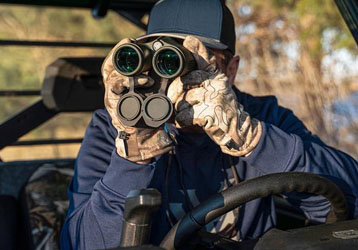
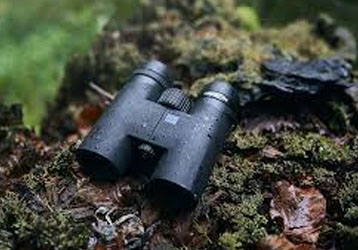
Long-range rangefinders are practical tools for measuring distant targets in outdoor and professional environments. By combining optical observation with laser distance measurement, these devices allow users to obtain distance information without physically approaching the target.
Today, long-range rangefinders are used in outdoor observation, forestry, construction, infrastructure inspection, engineering support, terrain assessment, and various field measurement applications. Understanding the technology, application scenarios, and operating methods can help users choose and use the right equipment more effectively.
What Is a Long-Range Rangefinder?
A long-range rangefinder is a distance measurement device designed to determine the distance between an observation position and a remote target.
Many modern rangefinders use laser measurement technology. The device sends a laser signal toward the target, receives the reflected signal, and processes the returned information to calculate the distance.
The measurement result is then displayed electronically, allowing users to obtain distance information quickly.
Compared with traditional tape measures or other physical measuring tools, a long-range rangefinder can be more convenient when the target is far away or difficult to access.
Main Components of a Long-Range Rangefinder
A typical long-range rangefinder may contain several important systems.
Optical System
The optical system helps users locate and identify distant targets.
Good optical clarity is particularly important when the target is small or located far from the operator.
Laser Measurement System
The laser system is responsible for transmitting the measurement signal and receiving the reflected signal.
The quality of the measurement system can influence the stability and consistency of distance readings.
Digital Processing System
Internal electronic processing converts the received measurement information into a readable distance value.
Modern devices may also include additional functions for displaying or storing measurement information.
Display
The display provides measurement results and other operating information.
A clear display can make the device easier to operate in outdoor environments.
Why Long-Range Measurement Is Useful
Many outdoor tasks involve targets that cannot be easily reached.
For example, a user may need to determine the distance to a remote building, mountain, tree, bridge, tower, or other structure.
Physically approaching the target may require considerable time or additional equipment.
A long-range rangefinder allows the measurement to be performed from the current observation position.
This can simplify fieldwork and reduce unnecessary movement.
Long-Range Rangefinder for Mountain Observation
Mountain environments often contain distant targets and complex terrain.
A rangefinder can help users obtain distance information about:
Mountain ridges
Slopes
Rock formations
Valleys
Trails
Observation points
Remote structures
Because mountain targets can be located at different elevations, users should understand that the measured straight-line distance may differ from horizontal distance.
For professional terrain analysis, additional surveying information may therefore be required.
Applications in Forestry
Forestry operations can involve large areas, dense vegetation, and difficult terrain.
Long-range rangefinders can support preliminary distance measurements during:
Forest observation
Tree distance measurement
Field route planning
Terrain assessment
Remote target observation
Forest infrastructure inspection
When measuring trees, users should try to select a visible section of the trunk or another suitable target.
Dense leaves and branches can interfere with the laser path and may affect measurement results.
Construction and Engineering Applications
Construction and engineering teams may use long-range rangefinders during site visits and preliminary assessment.
Potential applications include:
Measuring the distance between structures
Checking remote construction areas
Supporting site planning
Observing existing facilities
Estimating distances across large sites
Collecting preliminary field information
A rangefinder can be especially useful when a target is located across an open construction area or another difficult-to-access location.
For precision surveying, however, users should select professional measurement equipment that meets the technical requirements of the project.
Infrastructure Inspection
Large infrastructure can include structures that are difficult or inconvenient to approach.
Examples include:
Bridges
Towers
Utility structures
Industrial facilities
Roads
Large outdoor installations
A long-range rangefinder can provide preliminary distance information while the operator remains at an observation point.
This can make field inspection more efficient and provide useful information for subsequent inspection procedures.
Measuring Different Types of Targets
Different target surfaces can produce different measurement results.
Large Buildings
Large buildings are often relatively easy to identify and can provide broad measurement surfaces.
Trees
Trees can be measured when a suitable section of the trunk or target area is clearly visible.
Mountains
Large mountain features can provide useful targets for outdoor distance observation.
Towers and Structures
Tall structures may provide suitable measurement points when they are clearly visible.
Small Distant Objects
Small targets can be more challenging because even a small aiming movement may cause the laser to hit a nearby object.
Users should therefore pay particular attention to target alignment.
Factors Affecting Measurement Performance
The actual performance of a long-range rangefinder depends on more than the device itself.
Target Reflectivity
The surface characteristics of the target influence the returned laser signal.
Highly reflective surfaces may provide stronger returns, while dark or irregular surfaces can be more challenging.
Target Size
Larger targets are generally easier to measure than small distant objects.
Atmospheric Conditions
Fog, rain, dust, smoke, and haze can affect long-distance measurement.
Ambient Lighting
Strong sunlight can make target identification and display reading more difficult.
Measurement Angle
The angle between the device and target can influence the practical measurement result.
Device Stability
A stable position can help reduce aiming errors.
Improving Measurement Accuracy in the Field
Users can follow several simple practices to improve measurement consistency.
First, select a clear target with a suitable surface.
Second, keep the rangefinder stable while measuring.
Third, make sure there are no obstacles between the device and the target.
Fourth, repeat the measurement when the target is particularly distant or environmental conditions are difficult.
Finally, compare unexpected readings with additional observations instead of immediately treating a single measurement as definitive.
Portability and Outdoor Design
Because rangefinders are often used in the field, portability is an important consideration.
A practical outdoor rangefinder should be comfortable to carry and operate.
Useful design characteristics may include:
Compact housing
Lightweight construction
Comfortable grip
Easy controls
Clear display
Durable exterior
Efficient battery operation
Users who frequently travel through mountains or forests may place greater importance on size and weight.
Professional inspection teams may place greater emphasis on durability and long-term operating convenience.
Selecting the Right Long-Range Rangefinder
Before selecting a device, define the main application.
Consider Measurement Distance
Determine the typical distance between the operator and the target.
Consider Target Type
Identify whether the device will primarily measure buildings, trees, mountains, infrastructure, or other objects.
Consider Optical Performance
Clear optics are important when distant targets need to be identified precisely.
Consider Environmental Conditions
If the equipment will be used outdoors, consider exposure to rain, dust, sunlight, temperature changes, and other environmental factors.
Consider Portability
A compact design can be beneficial for users who carry the device over long distances.
Consider Battery Performance
Long operating time can be useful during extended field activities.
Rangefinder and Field Documentation
Distance measurement can become more useful when combined with field documentation.
Users may record measurement information together with:
Photos
Site notes
Inspection records
Location information
Digital maps
Project documentation
This approach can help organize field information and make later analysis easier.
For businesses conducting repeated inspections, standardized measurement procedures can also help different operators collect information in a more consistent way.
Daily Maintenance
Proper maintenance can help protect both the optical and electronic components.
Users should:
Keep the lenses clean
Avoid touching optical surfaces unnecessarily
Protect the device from strong impacts
Keep the housing free from excessive dust
Store the device in a suitable environment
Check the battery before field operations
Follow recommended operating instructions
After outdoor activities, it is useful to inspect the device for moisture, dust, and physical damage.
Future Trends in Long-Range Rangefinders
Long-range measurement technology continues to develop toward greater integration and convenience.
Future products may increasingly combine:
Improved optical systems
More intelligent target recognition
Enhanced measurement processing
Digital data storage
Wireless connectivity
Mobile applications
Improved displays
Automated measurement assistance
The integration of optics, laser technology, electronics, and software may create more efficient solutions for professional fieldwork.
Frequently Asked Questions
What is a long-range rangefinder used for?
It is used to determine the distance between the user and a remote target. Common applications include outdoor observation, forestry, construction, infrastructure inspection, and field measurement.
How does a laser rangefinder measure distance?
The device sends a laser signal toward a target and analyzes the returned signal to calculate the distance.
Can a rangefinder measure trees?
Yes. Trees can be suitable measurement targets when a clear and appropriate section of the tree is visible.
Can it be used for construction?
Yes. A long-range rangefinder can support preliminary construction-site measurement, remote observation, and distance estimation.
Does weather affect measurement?
Yes. Fog, rain, dust, smoke, snow, and atmospheric haze may affect visibility and laser measurement performance.
What is important when choosing a long-range rangefinder?
Users should consider measurement requirements, target characteristics, optical quality, environmental conditions, portability, battery performance, display design, and intended application.
Conclusion
Long-range rangefinders provide a convenient solution for measuring distant targets without requiring users to physically approach them. Their combination of optical observation and laser distance measurement makes them useful across many outdoor and professional applications.
Whether used for forestry, mountain observation, construction, infrastructure inspection, or general field measurement, a suitable long-range rangefinder can help users collect distance information more efficiently.
The best equipment choice depends on the actual application rather than maximum range alone. Target characteristics, weather conditions, optical performance, device stability, portability, and operating requirements should all be considered.
As laser measurement and digital technologies continue to develop, long-range rangefinders are expected to provide increasingly integrated solutions for remote distance measurement and field observation.