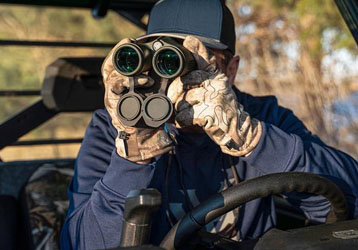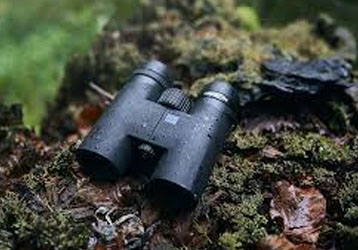










Long-Range Rangefinder for Professional Field Measurement: A Complete Guide to Remote Distance Measurement
Long-range rangefinders are widely used when accurate and convenient distance information is needed without physically approaching a distant target. With optical observation, laser measurement, and digital processing integrated into a compact device, a long-range rangefinder can support many outdoor and professional activities.
From construction sites and forestry operations to mountain observation, infrastructure inspection, and field research, remote distance measurement provides a practical way to collect information efficiently. This article explains the main features, applications, operating considerations, and selection factors of long-range rangefinders.
What Is a Long-Range Rangefinder?
A long-range rangefinder is a portable device designed to measure the distance between the operator and a remote target.
Most modern laser rangefinders use a laser signal to determine distance. The device sends a laser toward the selected target, receives the returning signal, and processes the information to calculate a distance value.
The result is then presented through a digital display.
This method allows users to obtain distance information while remaining at a convenient observation position.
Why Use a Long-Range Rangefinder?
Traditional measurement methods often require direct access to the target.
This can become difficult when the target is:
Far away
Located across uneven terrain
Surrounded by obstacles
Difficult to approach
Located inside a large site
Positioned at a different elevation
A long-range rangefinder can reduce the need for physical movement and make preliminary distance measurement faster.
For outdoor professionals, this can be especially useful when multiple remote targets need to be checked during the same field operation.
Main Advantages of Remote Distance Measurement
Long-range measurement equipment provides several practical benefits.
Fast Measurement
A distance reading can usually be obtained shortly after the target is identified and measured.
Remote Operation
The operator can measure the target without walking directly to it.
Portable Design
Handheld rangefinders can be carried during outdoor activities and field inspections.
Optical Target Identification
The optical system allows the user to observe the target before measurement.
Flexible Applications
The same type of equipment can be used for outdoor observation, construction support, forestry, infrastructure inspection, and other applications.
How Laser Distance Measurement Works
Laser distance measurement is based on sending a signal toward a target and analyzing the returning signal.
The internal system processes the returned information and calculates the distance.
Although the basic principle is straightforward, actual measurement performance depends on many conditions.
These include:
Target surface
Target size
Target distance
Weather
Visibility
Ambient light
Measurement angle
Device stability
Therefore, practical performance should always be evaluated in relation to the intended working environment.
Optical Performance and Long-Distance Observation
Optical quality is particularly important for long-range applications.
When a target is far away, users need to identify the correct object before taking a measurement.
A clear optical system can make it easier to distinguish:
Buildings from surrounding structures
Individual trees
Mountain features
Towers
Utility facilities
Other distant targets
A rangefinder that combines effective optical observation with distance measurement can therefore provide a more convenient field experience.
Long-Range Rangefinder for Construction
Construction sites often contain large open areas where direct measurement can be inconvenient.
A rangefinder can support preliminary measurement of:
Building distances
Site boundaries
Remote structures
Existing facilities
Construction areas
Large outdoor spaces
For example, an operator can remain at one side of a site and obtain distance information toward a visible structure.
This can reduce unnecessary movement and improve the efficiency of preliminary site assessment.
For applications requiring certified surveying accuracy, professional surveying instruments should still be used according to project requirements.
Long-Range Rangefinder for Forestry
Forestry environments create different measurement challenges.
Trees can be located at different distances, while branches, leaves, terrain, and changing light may interfere with target identification.
A long-range rangefinder can support:
Tree distance measurement
Forest observation
Field route planning
Remote target identification
Terrain assessment
Forest infrastructure inspection
When measuring a tree, selecting a clear portion of the trunk can help reduce the possibility of measuring nearby branches or vegetation.
Mountain and Outdoor Applications
Mountain environments are another important application area for long-range measurement.
Outdoor users may need to determine the distance to:
Mountain ridges
Slopes
Rock formations
Valleys
Trails
Remote buildings
Observation points
A rangefinder can provide objective distance information instead of relying entirely on visual estimation.
However, users should understand that measured straight-line distance may differ from horizontal distance when the target is significantly higher or lower than the observation position.
Infrastructure Inspection
Infrastructure inspection can involve large structures that are difficult to approach.
Potential applications include:
Bridge observation
Tower inspection
Utility structure assessment
Road infrastructure observation
Industrial facility inspection
Large equipment observation
A long-range rangefinder can provide preliminary distance information from a suitable observation position.
This can be useful for planning subsequent inspection activities and organizing field notes.
Factors That Affect Long-Range Measurement
Maximum measurement capability is influenced by the target and environment.
Target Reflectivity
The surface of the target affects the strength of the returning laser signal.
Bright or reflective surfaces may provide stronger returns than dark or irregular surfaces.
Target Size
Large targets are generally easier to measure than small objects.
At long distances, even a small aiming error can cause the laser to hit a nearby object.
Weather Conditions
Fog, rain, snow, dust, and atmospheric haze can affect both target visibility and laser transmission.
Ambient Light
Strong sunlight may make distant targets more difficult to identify visually.
Device Stability
Small hand movements can have a greater effect when measuring distant targets.
Keeping the device stable is therefore important.
How to Improve Measurement Consistency
Users can follow several practical steps.
Choose the target carefully.
Select a clearly visible surface with sufficient size.
Keep the device stable.
Use a steady grip and avoid unnecessary movement during measurement.
Check the measurement path.
Make sure branches, glass, cables, or other obstacles are not interfering with the laser path.
Repeat unusual readings.
If a result appears inconsistent with the surrounding environment, take another measurement.
Consider environmental conditions.
Poor visibility or strong atmospheric interference may require additional measurements.
Selecting a Long-Range Rangefinder
Different users have different measurement requirements.
Before selecting equipment, consider the following factors.
Typical Measurement Distance
Determine the normal working distance rather than focusing only on the maximum advertised range.
Target Type
Consider whether the device will mainly be used for buildings, trees, mountains, infrastructure, or other objects.
Optical Performance
Clear optics are valuable when identifying distant targets.
Measurement Stability
Stable readings are important for repeated field measurements.
Portability
A compact device can be more convenient for hiking, forestry, and field inspection.
Environmental Protection
For outdoor work, users should consider the expected exposure to moisture, dust, temperature changes, and physical impacts.
Battery Life
Extended field operations require dependable power.
Long-Range Rangefinder for Field Teams
For professional teams, measurement equipment should fit into an established field workflow.
A typical workflow may include:
Identify the measurement target.
Select a suitable observation position.
Observe the target through the optical system.
Stabilize the device.
Activate the measurement function.
Check the displayed result.
Repeat the measurement if necessary.
Record the distance together with other field information.
This process can help create more consistent measurement records between different operators.
Combining Distance Measurement With Field Data
Modern fieldwork increasingly involves digital documentation.
A distance reading can be recorded together with:
Photographs
Location information
Inspection notes
Project numbers
Site descriptions
Digital maps
Maintenance records
This can make the measurement more useful than simply viewing a number on the display.
For businesses conducting repeated inspections, organized digital records can also help compare information collected during different field visits.
Maintenance of Long-Range Rangefinders
Regular maintenance can help maintain reliable operation.
Users should clean optical surfaces with suitable lens-cleaning materials and avoid abrasive objects.
The device should also be protected from unnecessary impacts.
After outdoor use, inspect the equipment for:
Dust
Moisture
Scratches
Housing damage
Battery problems
Contamination around optical components
When storing the device for an extended period, choose a dry and suitable environment.
Long-Range Rangefinder for Different Industries
The flexibility of remote measurement allows rangefinders to support multiple industries.
Construction
Useful for preliminary site measurements and remote structure observation.
Forestry
Useful for tree and terrain distance estimation.
Engineering
Useful for remote target measurement and field assessment.
Infrastructure
Useful for observing bridges, towers, roads, and large structures.
Outdoor Research
Useful for collecting distance information during field activities.
Property and Facility Inspection
Useful for preliminary assessment of large buildings and facilities.
Future Development of Long-Range Rangefinder Technology
Long-range rangefinder technology is moving toward greater integration between optics, laser systems, electronics, and software.
Future devices may focus on:
Better target recognition
Improved optical clarity
More stable measurement
Intelligent data processing
Wireless connectivity
Mobile device integration
Digital record management
More efficient battery systems
Compact professional designs
These developments may allow rangefinders to become part of broader digital field measurement systems.
Frequently Asked Questions
What is a long-range rangefinder?
A long-range rangefinder is a device designed to measure the distance to remote targets, commonly using laser-based measurement technology.
What is the difference between a standard rangefinder and a long-range rangefinder?
The main difference is the intended measurement environment and target distance. Long-range models are designed with greater emphasis on distant target observation and measurement.
Can a long-range rangefinder measure buildings?
Yes. Buildings with clear and suitable surfaces can be measured remotely.
Can it be used in forests?
Yes. Long-range rangefinders can support forestry observation and tree distance measurement, although vegetation may interfere with the measurement path.
Does target color affect laser measurement?
Target surface characteristics can influence the returned signal. Dark or irregular surfaces may be more challenging than large, reflective surfaces.
Is a rangefinder useful for infrastructure inspection?
Yes. It can provide convenient preliminary distance information for bridges, towers, utility structures, roads, and other large facilities.
What is the most important factor when choosing one?
The most important consideration is whether the device matches the actual application. Measurement distance, target type, optical performance, environmental conditions, portability, and required accuracy should all be evaluated together.
Conclusion
A long-range rangefinder provides a convenient method for collecting distance information from remote targets. Its combination of optical observation and laser measurement makes it suitable for a wide variety of outdoor and professional applications.
For construction, forestry, mountain observation, engineering, infrastructure inspection, and field research, remote distance measurement can reduce unnecessary movement and improve the efficiency of preliminary fieldwork.
When choosing a long-range rangefinder, users should consider the complete operating environment rather than focusing only on maximum measurement distance. Optical clarity, target characteristics, measurement stability, environmental conditions, portability, battery performance, and data requirements can all influence the practical value of the equipment.
With continued development in laser measurement, optical technology, and digital processing, long-range rangefinders are becoming increasingly useful tools for modern remote measurement and field observation.