









Traffic Speed Monitoring Equipment for Smart Cities: Features and Selection Guide
Smart cities depend on reliable transportation information to understand traffic conditions, plan infrastructure improvements, and support more efficient road management. Traffic speed monitoring equipment provides valuable information about how vehicles move through urban streets, intersections, highways, and other transportation corridors.
Modern monitoring solutions may use radar speed sensors, laser speed measurement devices, fixed roadside sensors, or video-based traffic analytics. Depending on the equipment design, these technologies can collect individual speed readings, monitor traffic over time, or provide data for integration with a broader traffic management platform.
However, selecting suitable equipment involves more than comparing advertised measurement ranges. Project planners must consider the monitoring objective, operating environment, data requirements, connectivity, installation costs, and applicable regulations.
This guide explains the main types of traffic speed monitoring equipment, their role in smart city traffic management, and the practical considerations involved in selecting and deploying a suitable solution.
1. What Is Traffic Speed Monitoring Equipment?
Traffic speed monitoring equipment refers to devices and systems designed to measure, record, or analyze the speed of vehicles traveling on roads.
A basic solution may provide individual speed measurements during a field survey. A more advanced system may use fixed sensors and software to collect data over extended periods and present results through a monitoring dashboard.
The equipment can support several transportation activities, including:
Urban traffic surveys and road planning
Highway speed monitoring
Traffic flow and congestion analysis
Evaluation of road design changes
Transportation research
Vehicle speed testing
Smart city traffic data collection
Selected traffic management and enforcement applications, where legally authorized
Different projects require different levels of functionality. A temporary survey may need portable equipment, while a citywide monitoring project may require permanently installed sensors, communication infrastructure, and centralized data management.
The first step is to identify what the project needs to measure and how the collected information will be used.
2. Why Speed Monitoring Matters in Smart Cities
Vehicle speed is one of several indicators used to understand traffic conditions. When collected consistently and interpreted alongside other information, speed data can help transportation teams identify patterns and evaluate road operations.
Understanding traffic flow
Repeated speed measurements can help reveal changes in traffic conditions throughout the day. When combined with traffic volume and other observations, the results may help analysts investigate recurring slowdowns or differences between locations.
Supporting road planning
Transportation planners can use speed distributions and related survey results to study how vehicles move along different road sections.
Such data may support decisions about road layouts, traffic control, and future monitoring needs. Conclusions should also consider road geometry, traffic demand, crash history, and other relevant evidence.
Evaluating transportation projects
Before-and-after measurements can help assess changes following road modifications or traffic management interventions.
For the comparison to be meaningful, the observation periods and collection procedures should be sufficiently consistent. Changes in weather, traffic volume, construction activity, and equipment configuration should also be considered.
Improving information for traffic operators
Where suitable equipment supports timely data transmission, monitoring platforms can display recent measurements and historical trends. This can help operators understand traffic conditions without manually collecting every reading.
Speed information is most useful when it is accurate, relevant to the decision being made, and clearly presented.
3. Main Types of Traffic Speed Monitoring Equipment
Different technologies offer different measurement capabilities. Their suitability depends on the target vehicles, site conditions, collection duration, and required data output.
Radar speed sensors
Radar sensors use reflected radio waves to estimate the speed of moving vehicles. They may be designed for handheld use, roadside installation, vehicle-mounted operation, or integration into a larger traffic monitoring system.
Potential benefits include flexible deployment options and suitability for a variety of traffic measurement applications.
Before selecting a radar system, review its detection method, intended operating environment, target-selection behavior, installation requirements, and ability to record or export measurements.
Radar products vary significantly, so the capabilities of one model should not be assumed to apply to another.
Laser speed measurement devices
Laser-based devices estimate speed using changes in measured distance over time. Some are designed for operator-directed measurements of individual vehicles.
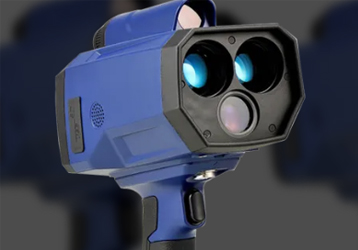
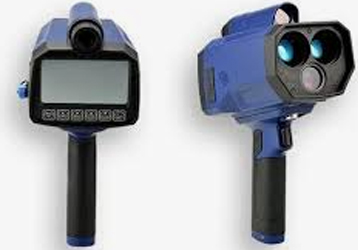
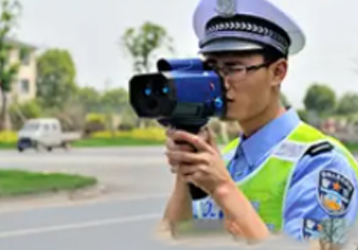
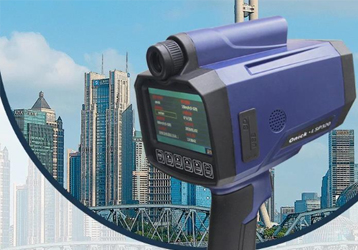
Portable laser speed meters can be useful for targeted field surveys, vehicle testing, and applications that require flexible positioning.
A handheld laser device is not necessarily suitable for unattended, continuous monitoring. Buyers should confirm whether the intended model supports automatic recording, data storage, remote communication, or fixed installation.
Fixed roadside sensors
Fixed sensors can collect observations at a particular road location over an extended period.
Depending on the technology, these sensors may provide vehicle speed estimates, counts, classification information, or other traffic data. Their output and accuracy depend on the sensor design and installation conditions.
Site assessment is important because lane configuration, mounting position, obstructions, environmental exposure, and maintenance access can influence system performance.
Video-based traffic monitoring
Video analytics use camera images and software to detect vehicles and estimate movement.
A video-based system may combine speed estimates with traffic counts, vehicle classification, and movement analysis. It can be useful where a project requires several types of traffic information from the same observation area.
Performance may be affected by camera placement, image resolution, lighting, weather, occlusion, and calibration. Video-based speed estimates should be validated when the project requires a defined level of accuracy.
Video systems may also capture identifiable information, so privacy and data security should be addressed during project design.
4. Comparing Monitoring Technologies
Selecting a technology should begin with the data requirements rather than a preference for a particular device type.
| Technology | Typical use | Main consideration |
|---|---|---|
| Handheld radar device | Operator-directed field measurements | Operator procedure and target conditions |
| Handheld laser device | Selective speed measurement | Targeting technique and operating conditions |
| Fixed radar sensor | Ongoing roadside monitoring | Mounting, coverage, and model capabilities |
| Fixed traffic sensor | Repeated observations at a defined location | Installation and maintenance requirements |
| Video analytics | Traffic speed estimates and visual traffic analysis | Image quality, calibration, and privacy |
| Integrated monitoring system | Combining measurements and reporting | Compatibility, data quality, and lifecycle cost |
These categories are not interchangeable. A device designed for selective measurements may not provide continuous data, while a fixed sensor may not offer the portability needed for temporary surveys.
A project specification should clearly state whether it requires individual readings, aggregated speed statistics, continuous monitoring, vehicle classification, or other outputs.
5. Important Features to Evaluate
Traffic speed monitoring equipment should be evaluated against practical performance requirements.
Measurement capability
Check the manufacturer's stated measurement range, accuracy specifications, target conditions, and operating limitations.
The required performance depends on the application. A short-term research survey and a regulated enforcement application may have different requirements.
Data recording
Determine whether the equipment records individual measurements, timestamps, measurement locations, or additional fields.
If a project requires historical analysis, verify how records are stored and whether data can be exported in a usable format.
Continuous monitoring
Some equipment is designed for individual measurements, while other systems can operate automatically for extended periods.
Confirm the intended operating mode, power requirements, storage capacity, and maintenance schedule before choosing equipment for long-term deployment.
Communication interfaces
Connected equipment may support wired interfaces, wireless communication, or network-based data transmission.
Check the specific interface and protocol documentation. Do not assume that every device can connect directly to an existing city traffic platform.
Environmental suitability
Outdoor equipment may be exposed to rain, dust, temperature changes, vibration, direct sunlight, or other environmental factors.
Review the product's environmental specifications and installation instructions for the intended site.
Maintenance and technical support
Consider inspection requirements, verification procedures, software updates, spare parts, training, and service availability.
A system that is inexpensive to purchase may have higher long-term costs if it requires frequent intervention or specialized maintenance.
6. Integrating Speed Monitoring into Smart City Systems
An intelligent traffic management platform may combine data from multiple sensors and transportation applications. Speed monitoring equipment can serve as one source of information within this larger system.
Successful integration requires attention to both technical compatibility and data consistency.
Standardize data fields
Before combining information from different devices, define common fields for speed, units, timestamps, location identifiers, and other relevant measurements.
For example, speed values recorded in kilometers per hour should not be combined with values in miles per hour without appropriate conversion.
Confirm interface compatibility
Review the equipment's communication options, supported protocols, file formats, and software dependencies.
Where a system must connect to an existing platform, request technical documentation and test the integration before full deployment.
Establish data quality checks
Connected systems should identify missing records, duplicate entries, communication interruptions, and unexpected values where possible.
Data quality rules should be documented so that different locations follow consistent processing procedures.
Plan storage and access
Determine where measurements will be stored, who can access them, how backups are maintained, and how long records should be retained.
Where data contains identifiable information, access controls and retention practices should follow applicable legal requirements.
Test the complete workflow
A successful connection does not necessarily mean the entire system is working correctly. Test whether measurements are recorded, transmitted, displayed, stored, and exported as expected.
A pilot deployment can reveal compatibility issues before the system is expanded.
7. Using Speed Data for Traffic Analysis
Traffic speed monitoring becomes more valuable when the collected information is analyzed systematically.
Average and median speed
Mean speed provides the arithmetic average of valid observations. Median speed identifies the middle value in the ordered dataset.
Both statistics can help describe traffic behavior, but neither fully describes the distribution of speeds.
Percentile speed
Percentile statistics, including the 85th-percentile speed, are used in many traffic studies.
The 85th-percentile speed represents a value at or below which approximately 85% of observations fall, based on the chosen calculation method.
Its meaning depends on the survey context and applicable engineering guidance. It should not be used alone to determine whether a road is safe or to justify a particular intervention.
Speed distribution
A histogram or frequency table can show how observations are distributed across speed ranges.
This may reveal variation that is hidden by a single average. Where traffic conditions or vehicle categories differ substantially, separate analysis may be appropriate.
Time-based comparisons
Measurements collected across different periods can help identify recurring patterns. For reliable comparison, record the date, observation period, location, collection method, and relevant traffic conditions.
A difference between two datasets does not automatically prove that a particular road change caused the difference. Appropriate study design and supporting evidence are needed for causal conclusions.
8. Installation Considerations for Roadside Equipment
Installation affects both measurement quality and long-term reliability.
Start with a site assessment that considers road geometry, lane configuration, mounting options, target visibility, power supply, network coverage, and maintenance access.
For fixed sensors, follow the manufacturer's mounting and alignment instructions. Where calibration or verification is required, complete the applicable procedures and retain the results.
The installation plan should also address environmental exposure, cable routing, equipment protection, and access for inspection or repair.
For connected equipment, verify that data transmission works reliably from the actual installation location. Network performance in an office or laboratory may not reflect conditions at the roadside.
Finally, document the installation position, device configuration, commissioning checks, and maintenance responsibilities. These records can help technicians diagnose issues and keep future measurements consistent.
9. Data Quality, Privacy, and Regulatory Compliance
Traffic monitoring systems should be designed to produce reliable information and manage collected data responsibly.
Measurement quality depends on appropriate equipment, suitable installation, consistent operating procedures, and regular verification where applicable.
When unusual values appear, investigate their possible causes before removing them from the dataset. Preserve original records and document data-cleaning decisions.
Privacy considerations are especially important for systems using cameras, license plate recognition, or location-linked vehicle records. Requirements vary by jurisdiction and purpose. Organizations should establish appropriate controls for collection, access, storage, retention, and deletion.
For enforcement or other regulated uses, verify that the equipment, measurement process, and evidence handling satisfy applicable local requirements. The ability to measure vehicle speed does not automatically mean that a device is approved for every enforcement application.
10. How to Choose Equipment for a Smart City Project
A practical procurement process should begin with a written list of operational requirements.
Step 1: Define the objective. Decide whether the system is intended for temporary surveys, continuous monitoring, traffic research, or another application.
Step 2: Specify the required measurements. Identify accuracy expectations, observation periods, vehicle categories, and any necessary speed statistics.
Step 3: Determine the installation method. Compare portable equipment with fixed roadside systems according to site conditions and monitoring duration.
Step 4: Confirm data output and integration. Verify supported file formats, interfaces, communication protocols, and compatibility with existing software.
Step 5: Evaluate environmental requirements. Check the operating conditions and protection specifications for the planned location.
Step 6: Assess the total cost. Include equipment, installation, training, maintenance, connectivity, software, and data management.
Step 7: Request a demonstration or pilot test. Where practical, test the system under representative operating conditions and confirm that it meets the written requirements.
Step 8: Verify approvals. Check any applicable certifications or legal requirements for the intended use.
A structured procurement process makes it easier to compare suppliers objectively and reduces the risk of selecting equipment that cannot meet the project's real needs.
11. Common Challenges and Practical Solutions
Incomplete traffic records
Missing data can result from equipment outages, obstructed targets, or communication failures. Monitor completeness and establish a documented procedure for identifying gaps.
Inconsistent measurements
Different devices or collection procedures may produce results that are difficult to compare. Standardize methods and verify equipment suitability before combining datasets.
Difficult system integration
Different interfaces and data formats can create additional engineering work. Confirm compatibility early and conduct a complete workflow test.
Unexpected maintenance costs
Installation access, replacement components, software support, and environmental exposure can affect operating costs. Include these factors in the procurement assessment.
Misinterpretation of speed statistics
A single statistic cannot describe every aspect of traffic behavior. Use distributions, sample sizes, observation context, and other relevant information when interpreting results.
Insufficient documentation
Without clear records of equipment settings, installation details, and data-processing rules, the results may be difficult to reproduce. Maintain technical documentation throughout the project lifecycle.
Frequently Asked Questions
What is traffic speed monitoring equipment?
It is equipment designed to measure or record vehicle speeds. Depending on the product, it may be portable, fixed, manually operated, or integrated into an automated traffic monitoring system.
Which equipment is suitable for smart city traffic management?
The choice depends on the project. Radar sensors, laser speed measurement devices, fixed traffic sensors, and video analytics may all be appropriate for specific applications. Data requirements, operating conditions, installation needs, and compatibility should guide selection.
Can traffic speed monitoring equipment provide real-time data?
Some systems support automatic data transmission and near-real-time display, while others are intended for manual measurements or later data transfer. The specific product capabilities must be confirmed before purchase.
Can speed monitoring equipment connect to a traffic management platform?
Integration may be possible when the equipment and platform support compatible interfaces and data formats. A technical review and pilot test can help confirm compatibility.
What should buyers consider when selecting equipment?
Important factors include measurement capability, data storage, connectivity, environmental suitability, maintenance, software compatibility, support, total operating cost, and regulatory requirements.
Is vehicle speed data enough to evaluate road safety?
No. Speed data is one source of evidence. A broader assessment may also require crash history, road geometry, traffic volume, visibility, pedestrian and cyclist conditions, and other contextual information.
How often should traffic monitoring equipment be checked?
Inspection and verification frequency depends on the device, manufacturer's instructions, operating conditions, and applicable standards. Follow the documented maintenance schedule and retain relevant records.
Conclusion
Traffic speed monitoring equipment can provide valuable information for smart city transportation planning, road surveys, and traffic management. Radar, laser, fixed sensors, and video analytics offer different capabilities, and the appropriate choice depends on the project's monitoring objectives and operating conditions.
Reliable implementation requires clear technical requirements, suitable installation, consistent data collection, appropriate system integration, and ongoing quality management.
For transportation authorities, engineering teams, and equipment buyers, a structured selection process and a practical pilot test can help ensure that the chosen solution provides useful data and integrates effectively with existing workflows.
By treating measurement quality, data compatibility, privacy, and maintenance as essential project requirements, organizations can make better use of traffic speed information and support more informed transportation decisions.