









Laser Speed Measurement Device for Vehicle Testing: Features, Accuracy and Applications
Accurate vehicle speed measurement is an important part of automotive testing, transportation research, road safety studies, and vehicle performance evaluation. Whether engineers are testing vehicles on a controlled track or researchers are collecting traffic data, reliable speed information helps them understand vehicle behavior and evaluate testing results.
A laser speed measurement device offers a non-contact approach to measuring the speed of a target vehicle. By using laser-based measurement technology, suitable systems can collect speed readings without requiring a sensor to be physically attached to the vehicle. This can be useful in testing environments where flexibility, portability, and efficient data collection are important.
However, selecting a suitable device involves more than comparing the maximum measurement range or reading a product specification sheet. Test conditions, target characteristics, measurement geometry, device configuration, and data recording requirements can all influence the results.
This guide explains how laser speed measurement devices work, where they can be used in vehicle testing, which factors affect measurement accuracy, and how testing teams can evaluate equipment before purchasing it.
What Is a Laser Speed Measurement Device?
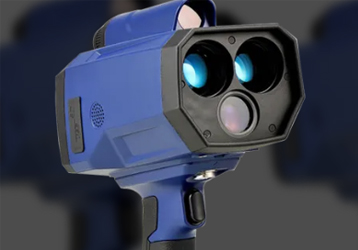
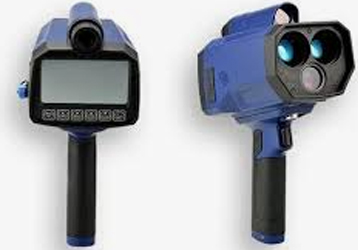
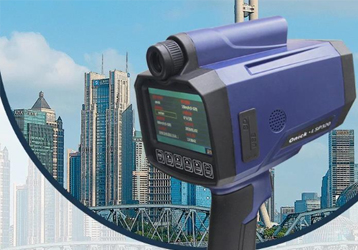
A laser speed measurement device is an instrument designed to determine the speed of a moving target using laser-based sensing technology. Depending on its design, the device may use changes in the distance between the instrument and the target over time to calculate speed.
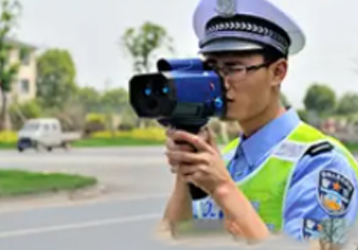
Unlike contact-based measurement systems, a laser speed measurement device can operate from a suitable observation position without requiring direct physical contact with the vehicle. This makes it useful for certain outdoor tests, vehicle evaluations, and temporary measurement tasks.
Typical applications include:
Vehicle performance testing in controlled environments
Automotive research and development
Traffic speed surveys
Fleet and commercial vehicle assessments
Transportation engineering studies
Evaluation of vehicle movement in designated test areas
Not every laser instrument supports every application. Buyers should confirm whether the selected device is intended for stationary observation, moving-platform operation, laboratory use, outdoor testing, or another specific measurement environment.
How Does Laser Speed Measurement Work?
Laser speed measurement generally relies on obtaining distance-related information and analyzing how that information changes over time. The exact operating principle depends on the instrument's design.
Laser-Based Distance Measurement
Some systems obtain successive distance measurements to a target. If the distance changes over a known time interval, the system can calculate a component of the target's velocity.
For example, when a vehicle moves relative to a stationary instrument, the measured distance may increase or decrease. By processing a series of distance readings, the device can estimate the target's speed under appropriate measurement conditions.
The relationship between distance change and speed can be expressed simply as:
Speed = Change in distance / Elapsed time
This simplified relationship describes the basic concept. Actual instruments may apply additional processing, filtering, timing methods, and calibration parameters to generate a speed reading.
Doppler-Based Laser Measurement
Some laser speed instruments use Doppler-based techniques to determine velocity from changes in the returned optical signal. The implementation depends on the equipment's optical design and signal-processing method.
These instruments should not automatically be treated as equivalent to every laser rangefinder. A distance-measuring instrument and a purpose-built laser speed measurement system may have different capabilities, update rates, processing methods, and intended applications.
Before purchasing equipment, users should verify the measurement principle and confirm that it matches their testing requirements.
Why Use Laser Technology for Vehicle Testing?
Laser-based speed measurement can provide several practical benefits when the instrument is suitable for the target and environment.
Non-Contact Measurement
The device can measure a vehicle from a suitable position without installing a sensor directly on the vehicle. This may reduce setup work for temporary tests and help researchers measure vehicles that are difficult to instrument.
Flexible Testing Arrangements
Portable instruments can be useful when measurements need to be performed at different locations. Depending on the model, a testing team may move the equipment between a test track, a designated road section, or another controlled measurement area.
Focused Target Measurement
Some laser systems use a narrow measurement beam to obtain readings from a selected target. Proper aiming and target selection are important, especially when several vehicles or reflective objects are present in the measurement area.
Efficient Data Collection
Depending on the model, the device may display readings directly or support electronic data transfer. Digital output can help testing teams record measurements, compare test runs, and integrate results into a broader data-analysis workflow.
These benefits depend on actual product capabilities. Buyers should confirm the supported output interfaces, data format, operating distance, update frequency, and measurement modes before making a decision.
Main Applications in Vehicle Testing
1. Automotive Research and Development
Automotive engineers may need speed information when evaluating vehicle behavior under defined test conditions. A suitable laser speed measurement device can provide an external measurement reference for selected experiments.
Testing teams should establish a repeatable procedure that defines the target vehicle, measurement location, observation position, environmental conditions, and data-recording method. Consistent procedures make it easier to compare results across multiple test runs.
2. Vehicle Performance Evaluation
Vehicle performance studies may examine acceleration, speed stability, or changes in vehicle movement during a test. A single speed reading may be insufficient to characterize the complete test, so the required sampling frequency and measurement interval should be considered in advance.
If the project requires continuous speed profiles or synchronized measurements from multiple instruments, buyers should verify that the selected system supports these functions. Some handheld instruments are designed for individual readings rather than continuous research data acquisition.
3. Commercial Vehicle Testing
Commercial vehicles may be evaluated for operational performance, maintenance purposes, or specific engineering studies. In these situations, the measurement setup should account for vehicle size, target surface, observation angle, and the distance between the instrument and the vehicle.
The selected instrument should be suitable for the expected target speed and operating environment. If the vehicle will be measured under changing weather or lighting conditions, the supplier should explain the device's limitations and recommended operating procedure.
4. Traffic Surveys and Transportation Research
Traffic researchers may collect vehicle speed data to understand traffic patterns, compare road sections, or support transportation planning. Laser speed measurement can be useful in selected observational studies where non-contact measurement is preferred.
For meaningful comparisons, researchers should document the survey location, observation period, target-selection method, and environmental conditions. The measurement method should also be appropriate for the study's sampling requirements.
Traffic research, private vehicle testing, and official enforcement are different use cases. A device suitable for research does not automatically meet the requirements for legally enforceable speed measurement.
5. Controlled Test Track Operations
Test tracks provide a more controlled environment for many vehicle experiments. Testing teams can define observation positions, establish clear target paths, and reduce interference from unrelated moving objects.
Even in a controlled setting, the measurement procedure should be checked for repeatability. Equipment positioning, mounting stability, target alignment, and data synchronization may influence the usefulness of the recorded results.
Key Factors That Affect Measurement Accuracy
Measurement accuracy is central to vehicle testing. A device's stated specification is only one part of the overall measurement process.
Target Alignment and Observation Angle
The angle between the instrument's measurement direction and the vehicle's direction of movement can affect the relationship between measured velocity and actual vehicle speed.
When a device measures only the component of velocity along its observation direction, an unsuitable angle can result in a lower measured component than the vehicle's actual speed. This is commonly described as a cosine effect.
Testing teams should follow the manufacturer's positioning instructions and document the geometry of the measurement setup. If precise comparison is required, the angle and measurement method should be included in the test procedure.
Target Surface and Reflectivity
Laser signals interact with target surfaces differently depending on surface material, shape, reflectivity, and orientation. A suitable target area can improve the consistency of returned signals, while an unsuitable surface may lead to weak or unstable readings.
Users should follow the device's guidance on target selection and avoid assuming that all vehicle surfaces produce equivalent measurement conditions.
Environmental Conditions
Rain, fog, airborne particles, strong sunlight, and other environmental conditions may influence optical measurement performance. The degree of impact varies with device design and operating conditions.
For outdoor tests, teams should review the specified environmental limits and record relevant conditions when comparing results from different sessions.
Instrument Stability
Unintended movement, vibration, or unstable support can affect measurement quality. A stable tripod or mounting system may help maintain consistent alignment during repeated tests.
For handheld measurements, operator technique and the ability to maintain the required aiming position may influence repeatability. The appropriate setup depends on the instrument and the testing objective.
Calibration and Verification
Calibration status and measurement verification are important when test results will inform engineering decisions. Users should review the manufacturer's calibration recommendations and any applicable quality-management requirements.
Where traceability is required, the testing organization should determine whether calibration by a qualified laboratory is necessary and whether the documentation meets the relevant standard.
A displayed reading should not be considered automatically accurate merely because the instrument is digital or laser-based.
A Practical Procedure for Vehicle Speed Testing
A consistent testing procedure can improve the quality and usefulness of collected measurements.
Step 1: Define the Test Objective
Determine what the project needs to measure. The objective may involve an individual speed reading, a series of measurements, a comparison between vehicles, or a broader traffic survey.
The test objective determines the required measurement range, update rate, accuracy, data output, and equipment configuration.
Step 2: Select the Appropriate Device
Compare the instrument's supported speed range, operating distance, measurement method, response time, display, power supply, and environmental specifications with the project requirements.
If the device will be used with external software or data-acquisition equipment, verify interface compatibility before purchase.
Step 3: Establish a Safe Measurement Position
Choose a location that provides a suitable view of the target and does not interfere with vehicle movement. Follow site safety procedures and the manufacturer's operating instructions.
Testing should take place in an authorized and controlled area, with suitable precautions for personnel, vehicles, and nearby equipment.
Step 4: Check the Instrument
Inspect the device, battery level, mounting arrangement, and relevant configuration settings. Confirm that the instrument is operating within its specified conditions and that any required verification has been completed.
Step 5: Align With the Target
Position the instrument according to the manufacturer's guidance. Confirm that the intended vehicle can be distinguished from nearby targets and that the measurement geometry is appropriate for the test.
If the test requires a defined observation angle or distance, document those parameters so the setup can be repeated.
Step 6: Perform the Measurement
Follow the device's operating procedure to collect readings. Where the project requires repeated observations, use a consistent approach and record unexpected readings rather than silently removing them.
For experiments that require a continuous speed curve, ensure that the instrument supports the necessary acquisition mode instead of assuming that a device designed for spot readings can provide continuous data.
Step 7: Record the Results
Store the measurements with relevant test information, such as date, time, test location, target description, instrument identification, configuration, and environmental conditions.
For electronic output, verify that the data transfer process preserves units, timestamps, and other important fields.
Step 8: Review and Validate the Data
Check the recorded values for missing entries, inconsistent units, unusual readings, and possible setup errors. If the results will be compared with a reference instrument, make sure the devices measure the same target under sufficiently comparable conditions.
Document the measurement method and any known limitations before using the results in a report.
Important Features to Compare Before Purchasing
Choosing a laser speed measurement device should begin with the intended application rather than a single headline specification.
Measurement Range
Confirm the usable measurement range for the intended target and environment. A manufacturer's maximum range may depend on target characteristics and favorable conditions, so it should not be interpreted as a guaranteed range for every vehicle.
Supported Speed Range
Check the minimum and maximum supported speeds and confirm that the device is designed for the type of vehicle testing planned.
Accuracy and Repeatability
Accuracy describes how close a measurement is to the relevant reference value, while repeatability describes the consistency of repeated measurements under comparable conditions.
Review the manufacturer's test conditions, stated uncertainty or tolerance, verification method, and supporting documentation. These details are more useful than relying on a general claim that a device is highly accurate.
Measurement Update Rate
The required update rate depends on the test. A device intended for occasional readings may be suitable for basic surveys but unsuitable for experiments that need detailed speed changes over time.
Data Output and Integration
Some testing projects require only a display. Others need USB, serial communication, wireless transfer, or a software-compatible data format.
Confirm the exact interfaces and protocols supported by the product. Do not assume that a physically compatible connector guarantees software compatibility.
Portability and Power Supply
For field testing, consider device weight, battery life, charging requirements, mounting options, and transport protection.
For stationary test facilities, other factors may be more important, including integration with existing equipment and long-term operating stability.
Environmental Protection
Review the stated operating temperature, ingress protection, storage conditions, and other environmental limits where applicable.
The instrument should be suitable for the actual testing environment rather than merely for an ideal laboratory setting.
Documentation and Technical Support
Useful documentation may include operating instructions, technical specifications, calibration information, interface descriptions, and maintenance recommendations.
For specialized applications, ask the supplier to clarify limitations and provide the information needed to evaluate suitability before placing an order.
Laser Speed Measurement Device vs. Other Testing Methods
Laser-based instruments are one option among several vehicle speed measurement technologies.
Radar-based devices use radio-frequency signals and may be suitable for particular traffic monitoring or speed measurement tasks. Photogate systems measure movement through defined detection points and can be useful in controlled experiments. Video-based systems estimate speed from image sequences, often using a calibrated observation area or other reference information. Vehicle-mounted sensors can provide data directly from the vehicle when suitable interfaces and instrumentation are available.
Each method has different installation needs, operating principles, data capabilities, and limitations.
A laser device may be attractive when non-contact observation and portability are priorities. A photogate arrangement may be preferable for a small controlled test, while a vehicle-mounted system may be better when detailed onboard data is needed.
The best option depends on the required measurement uncertainty, sampling rate, test conditions, available budget, and data-processing workflow.
Common Mistakes to Avoid
Several avoidable mistakes can reduce the value of vehicle speed testing.
Choosing equipment based only on maximum range: A long stated range does not necessarily mean the instrument will meet the project's accuracy or update-rate requirements.
Ignoring measurement geometry: An unsuitable observation angle can affect the measured velocity component.
Assuming all laser devices measure speed: Some instruments primarily measure distance and may not support the required speed-measurement function.
Overlooking data integration: A device may produce useful readings but still be unsuitable if its output cannot be incorporated into the testing workflow.
Failing to document test conditions: Results are difficult to reproduce or compare when important setup details are missing.
Confusing technical capability with legal approval: Equipment used for official traffic enforcement may be subject to jurisdiction-specific approval, certification, testing, and operational requirements. These must be verified separately.
Frequently Asked Questions
What is a laser speed measurement device used for?
It can be used for selected vehicle testing, automotive research, traffic surveys, and other applications that require non-contact speed measurement. Suitability depends on the device's specifications and the testing procedure.
Can a laser speed measurement device measure a moving vehicle?
Yes, if the instrument is specifically designed to measure vehicle speed and the target and operating conditions fall within its supported range. A basic laser distance meter should not be assumed to provide vehicle speed measurements.
What affects laser speed measurement accuracy?
Important factors include target alignment, observation angle, target surface characteristics, environmental conditions, instrument stability, calibration status, and the measurement method used.
Is a handheld device suitable for automotive testing?
It may be suitable for portable field measurements or individual readings. Testing projects that require continuous acquisition, synchronization, or automated data logging may need a more specialized system.
Can measurement results be transferred to a computer?
Some devices support digital data output, but the available interface and communication protocol vary by model. Confirm the exact connection method and data format with the supplier.
How should buyers compare different models?
Compare the supported speed range, operating distance, measurement method, stated accuracy, repeatability, update rate, output interfaces, environmental limits, documentation, and after-sales technical support.
Can a laser speed measurement device be used for official enforcement?
That depends on the device and the applicable jurisdiction. Technical measurement capability alone does not establish legal approval for enforcement. Buyers should verify the relevant regulatory and certification requirements before selecting equipment for that purpose.
Conclusion
A laser speed measurement device can be a practical solution for vehicle testing when non-contact measurement, flexible positioning, and efficient data collection are important. Its usefulness depends on more than the technology itself: the instrument must match the test objective, measurement range, required accuracy, operating environment, and data-processing needs.
Before purchasing equipment, testing teams should evaluate the measurement principle, target alignment requirements, update rate, output interfaces, calibration documentation, and environmental specifications. A repeatable procedure and complete test records are equally important for producing useful results.
By matching equipment capabilities with clearly defined testing requirements, automotive engineers, researchers, and transportation professionals can make more informed decisions and establish a more reliable vehicle speed measurement workflow.