








Vehicle Speed Testing Equipment: Measurement Methods and Selection Guide
Vehicle speed testing is an important part of automotive engineering, transportation research, vehicle performance evaluation, and traffic monitoring. Reliable speed data helps engineers understand vehicle movement, evaluate test results, compare operating conditions, and improve the quality of transportation studies.
Vehicle speed testing equipment includes a range of instruments and measurement systems designed to determine how fast a vehicle is moving. Depending on the application, these systems may use laser technology, radar sensing, optical detection, video analysis, wheel-based sensors, or other measurement methods.
Choosing the right equipment requires a clear understanding of the testing objective. A portable instrument used to collect individual speed readings may have very different requirements from a fixed monitoring system or a laboratory setup designed to record detailed speed changes over time.
This guide explores common vehicle speed measurement methods, important equipment features, data collection practices, system integration, and practical selection criteria for testing professionals and equipment buyers.
What Is Vehicle Speed Testing Equipment?
Vehicle speed testing equipment refers to instruments and systems used to measure, record, or analyze the speed of moving vehicles. The equipment may operate independently or as part of a larger testing and data acquisition system.
Some devices provide a speed reading directly on a display. Others transmit measurement data to a computer, controller, or traffic management platform for further processing.
Depending on the design, vehicle speed testing equipment may be used in:
Automotive research and development
Vehicle performance testing
Traffic surveys and transportation studies
Industrial vehicle testing
Fleet monitoring and operational analysis
Controlled test track experiments
Engineering laboratories and quality control environments
Not every instrument is appropriate for all these applications. Buyers should verify the supported measurement range, operating conditions, data output capabilities, and intended use before selecting a device.
Common Types of Vehicle Speed Testing Equipment
Different technologies offer different advantages. Understanding their operating principles helps testing teams identify a suitable solution.
1. Laser Speed Measurement Equipment
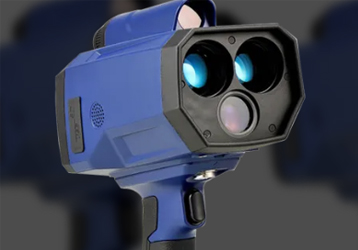
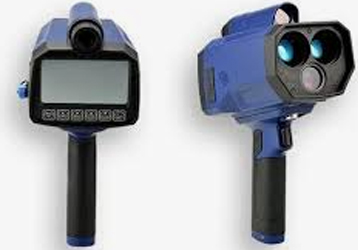
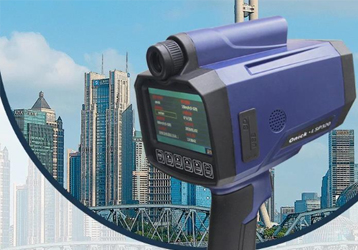
Laser speed measurement equipment uses laser-based sensing methods to determine the speed of a target vehicle. Depending on the instrument design, the system may analyze changes in measured distance over time or use another optical velocity measurement technique.
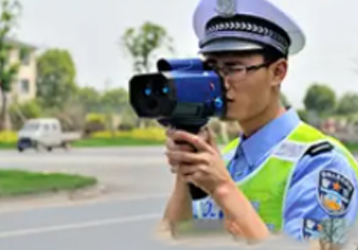
Laser-based instruments can be useful when non-contact measurement and flexible positioning are important. Portable models may be convenient for temporary tests, field measurements, or applications where installing equipment on the vehicle is undesirable.
When evaluating laser equipment, consider:
Supported speed range
Operating distance under specified conditions
Measurement principle
Target alignment requirements
Reading frequency and response time
Data output and recording options
Environmental operating limits
A laser distance meter should not automatically be considered a vehicle speed tester. Buyers must confirm that the specific model supports speed measurement and is suitable for the intended testing procedure.
2. Radar Speed Measurement Equipment
Radar speed measurement equipment uses radio-frequency signals to estimate the speed of a moving target. Radar technology is used in a variety of traffic monitoring, vehicle testing, and speed detection applications.
Radar systems may be designed for handheld operation, fixed installation, or integration into a broader monitoring system. Their suitability depends on factors such as target conditions, the radar configuration, the operating environment, and the required data output.
When comparing radar and laser instruments, do not rely on a simple claim that one technology is always more accurate. Performance depends on the individual product, measurement setup, target selection, and test conditions.
3. Optical Sensor Systems
Optical sensor systems detect vehicle movement using light-based sensing arrangements. Some setups use two or more detection points separated by a known distance. The system records when the vehicle passes each point and calculates speed from the distance and elapsed time.
These arrangements can be useful in controlled experiments where the measurement path and sensor positions can be defined precisely.
For example, if a vehicle passes two detection points with a known separation, the time difference between detections can be used to calculate average speed over that section. The accuracy of the result depends on sensor positioning, timing performance, and the exact point at which each detection occurs.
4. Video-Based Speed Measurement Systems
Video-based systems analyze recorded or live images to estimate vehicle movement and speed. Depending on the design, they may use image tracking, calibrated reference distances, timestamps, or other computer vision techniques.
Video systems can provide useful visual context alongside speed data. However, accurate measurement requires suitable calibration, stable image geometry, reliable timing, and appropriate processing methods.
Lighting conditions, image quality, camera positioning, vehicle occlusion, and the calibration process may affect the results. Buyers should determine whether the system has been validated for the intended application.
5. Vehicle-Mounted Speed Sensors
Vehicle-mounted sensors measure speed-related information directly from a vehicle or its components. Examples include wheel-speed sensors, shaft-speed sensors, and other sensors used in vehicle control or testing systems.
These sensors can be appropriate when a project requires continuous onboard data or synchronized measurements from multiple vehicle systems.
However, the measured quantity and its relationship to actual vehicle speed must be understood. Wheel slip, tire characteristics, sensor configuration, signal processing, and calibration can influence the result.
How Vehicle Speed Is Measured
The measurement process varies according to the technology and equipment configuration.
Distance and Time Measurement
One basic approach is to measure the time a vehicle takes to travel a known distance. Average speed can then be calculated using:
Speed = Distance / Elapsed Time
For example, if a vehicle travels between two defined measurement points, the distance between those points and the elapsed travel time can be used to determine average speed over that section.
This method is conceptually straightforward, but the measurement quality depends on accurate distance definition, consistent detection points, and reliable timing.
Laser-Based Velocity Measurement
A laser speed instrument may process successive distance observations or use a dedicated optical velocity measurement method. The instrument's internal processing converts the received signal into a speed result.
Users should consult the manufacturer's documentation to understand the measurement principle, supported operating conditions, and limitations. Not all laser instruments use the same method.
Radar-Based Measurement
Radar systems transmit and receive radio-frequency signals and process changes associated with a moving target. Depending on the system, the result may be affected by target direction, alignment, reflections, and the presence of other moving objects.
Correct positioning and appropriate operating procedures help ensure that the measurement represents the intended vehicle.
Sensor Signal Processing
Vehicle-mounted and industrial systems may derive speed from sensor pulses, rotational movement, or other measured signals. These signals are processed according to the system's configuration and calibration parameters.
For engineering tests, it is important to confirm what the sensor measures directly and how the system converts that signal into vehicle speed.
Applications of Vehicle Speed Testing Equipment
Automotive Research and Development
Automotive engineers use speed measurements to evaluate vehicle behavior under defined test conditions. Depending on the project, speed data may be compared with acceleration, braking, powertrain, or other test information.
A suitable measurement system should match the required sampling rate, uncertainty, synchronization, and data storage needs.
Vehicle Performance Evaluation
Performance testing may involve observing vehicle speed during acceleration, constant-speed operation, deceleration, or other controlled scenarios.
A single reading may be sufficient for a basic check, while detailed testing may require continuous measurement and synchronized data recording. Before selecting equipment, define whether the test needs spot measurements, average speed, or a complete speed-time profile.
Traffic Flow Research
Transportation researchers collect speed information to study traffic patterns, compare locations, or evaluate changes in road conditions.
For useful comparisons, researchers should document the observation period, location, measurement setup, vehicle selection method, and relevant environmental conditions. The sampling approach should be appropriate for the research question.
Industrial Vehicle Testing
Industrial environments may include forklifts, transport vehicles, automated guided vehicles, or other specialized equipment. Speed measurement can support testing, process evaluation, and selected safety-related studies.
The measurement device must be suitable for the vehicle type, expected operating conditions, and relevant workplace requirements.
Quality Control and Engineering Laboratories
Testing laboratories may use speed measurement systems to verify performance under repeatable conditions. Consistent setup, documented procedures, and appropriate calibration help make the results more useful for quality assurance.
If test results will be used for formal acceptance or compliance decisions, the measurement process should follow the applicable standards and documented requirements.
Key Features to Evaluate Before Purchasing
Measurement Range
Confirm that the instrument supports the expected speed range and operating distance. Published maximum values may depend on specific target characteristics or favorable conditions.
Ask the supplier for relevant operating limits rather than assuming that a headline specification applies to every test environment.
Measurement Accuracy and Uncertainty
Review the stated accuracy, measurement uncertainty, verification procedure, and test conditions. Accuracy claims should be supported by technical documentation that matches the intended use.
Repeatability is also important. A device that produces similar readings under comparable conditions may be useful for repeated tests, but repeatability alone does not prove that the readings are close to the true value.
Sampling Rate and Response Time
The required sampling rate depends on the testing objective. Occasional speed readings and continuous vehicle dynamics analysis place different demands on the equipment.
If the project requires a speed-time curve, synchronized data, or detailed analysis of rapid changes, confirm that the system supports the necessary acquisition frequency and recording mode.
Data Storage and Export
Some instruments store measurements internally, while others transmit data to external equipment. Common requirements include timestamped records, exportable files, and integration with analysis software.
Before purchasing, verify the available output formats, communication protocols, storage capacity, and software requirements.
Portability and Installation
Portable equipment can be useful for field measurements and temporary tests. Fixed systems may be more appropriate for continuous observation or repeated measurements at the same location.
Consider device weight, mounting options, setup time, power requirements, and whether the installation will interfere with the test environment.
Environmental Suitability
Outdoor and industrial applications may expose equipment to temperature changes, dust, moisture, vibration, or other challenging conditions.
Review the manufacturer's operating and storage limits, enclosure rating where applicable, and recommendations for protecting the equipment during use.
Calibration and Technical Support
For engineering applications, buyers should understand how the device is calibrated, how measurement performance is verified, and what documentation is available.
Depending on the application, calibration traceability or independent verification may be required. Ask the supplier about service intervals, repair options, replacement parts, and technical support.
How to Build a Reliable Vehicle Speed Testing Workflow
Equipment selection is only one part of a successful testing process. A well-defined workflow helps ensure that the resulting data is consistent and useful.
Step 1: Define the Measurement Objective
Determine whether the project requires individual readings, average speed over a defined distance, continuous speed data, or a larger traffic dataset.
Clarify the required speed range, measurement uncertainty, sampling rate, and reporting format.
Step 2: Select a Compatible Measurement Method
Compare laser, radar, optical, video-based, and vehicle-mounted methods against the project's requirements. Consider installation limitations, target conditions, budget, and the need for supporting data.
Step 3: Prepare the Testing Area
Choose a suitable measurement location and establish a safe operating procedure. Make sure the setup does not obstruct vehicle movement or expose personnel to unnecessary risks.
Where relevant, define the measurement distance, observation angle, target path, and instrument mounting position.
Step 4: Inspect and Configure the Equipment
Check the device condition, power supply, settings, mounting arrangement, and communication connections. Complete any required verification before collecting test data.
Step 5: Collect Measurements Consistently
Follow the same measurement procedure for each test run where comparison is important. Record unexpected readings and note any interruptions, setup changes, or environmental factors that could influence the results.
Step 6: Record Supporting Information
A useful dataset should contain more than a list of speed values. Depending on the application, record timestamps, test location, target identification, equipment identification, configuration, and relevant environmental conditions.
Step 7: Validate and Analyze the Data
Check for missing records, inconsistent units, duplicate entries, and unusual readings. Compare results with a suitable reference where required.
Any filtering or exclusion of data should be documented so that the analysis remains transparent and reproducible.
Integrating Speed Testing Equipment With Data Systems
Modern testing projects may require speed measurements to be combined with information from other instruments or software platforms.
For example, an automotive research team may want to compare vehicle speed with acceleration, engine parameters, braking measurements, or video footage. A traffic research project may need to transfer readings into a database for statistical analysis.
Before integration, verify:
Available communication interfaces
Supported data formats and protocols
Timestamp resolution and synchronization
Sampling frequency and data throughput
Software and operating-system compatibility
Data export and backup procedures
Physical connection compatibility does not guarantee that two systems can exchange information correctly. Confirm the actual protocol and test the integration before deploying the equipment in a critical workflow.
Common Selection Mistakes
Focusing Only on Price
A low purchase price may not reflect the total cost of ownership. Installation, accessories, software, calibration, maintenance, and operator training can all affect the long-term cost.
Choosing the Wrong Measurement Method
A handheld instrument intended for occasional readings may not support continuous acquisition. A fixed sensor may be unsuitable for a project that requires frequent relocation.
Ignoring Data Requirements
If the project requires automated analysis, confirm that the equipment can provide the required data. Manual transcription may increase workload and introduce avoidable errors.
Overlooking Operating Conditions
An instrument should be evaluated under the conditions in which it will actually be used. Temperature, target characteristics, mounting stability, and environmental interference may influence performance.
Assuming All Equipment Has the Same Approval Status
A device suitable for research or private testing may not meet the requirements for official traffic enforcement. Applicable approval, certification, and legal requirements must be checked separately for the intended jurisdiction and use.
Frequently Asked Questions
What is the best equipment for measuring vehicle speed?
There is no single best option for every application. Laser devices, radar systems, optical sensors, video systems, and vehicle-mounted sensors serve different needs. The correct choice depends on the required accuracy, measurement range, data rate, operating conditions, and installation constraints.
What is the difference between laser and radar speed testing equipment?
Laser and radar systems use different sensing technologies and may have different target-selection, alignment, and installation characteristics. Performance should be compared using the specifications and verified results of the actual models under consideration.
Can vehicle speed testing equipment record data automatically?
Some systems support internal storage or digital output, while others mainly display readings. Buyers should confirm recording capabilities, communication interfaces, supported formats, and compatibility with the intended software.
Is portable equipment suitable for professional vehicle testing?
Portable equipment can be suitable when its measurement capabilities meet the test requirements. Projects that require continuous acquisition, precise synchronization, or integration with several instruments may need a more specialized configuration.
Why is calibration important?
Calibration and verification help establish confidence in measurement results and identify whether equipment performance meets the intended requirements. The necessary level of traceability depends on the application and relevant quality procedures.
Can the same device be used for research and traffic enforcement?
Not necessarily. Research and enforcement may have different accuracy, documentation, approval, certification, and operational requirements. Always verify the relevant rules before using a device for official enforcement.
Conclusion
Vehicle speed testing equipment plays an important role in automotive engineering, traffic research, industrial testing, and vehicle performance evaluation. Laser, radar, optical, video-based, and vehicle-mounted technologies each offer different capabilities and limitations.
A reliable selection process begins with a clear definition of the measurement objective. Buyers should then compare the supported speed range, accuracy documentation, sampling rate, data output, environmental suitability, installation requirements, and technical support.
Consistent procedures, complete test records, and appropriate verification are equally important. By matching the measurement method to the application and planning the data workflow in advance, testing teams can obtain more useful measurements and make better-informed engineering decisions.