








Radar Speed Sensor for Traffic Monitoring: Working Principle, Features and Applications
Traffic monitoring systems depend on reliable information about how vehicles move through roads, highways, intersections, and other transportation environments. A radar speed sensor can provide an efficient way to detect moving vehicles and estimate their speed without requiring direct physical contact with the vehicle.
Radar-based technology is used in a wide range of traffic monitoring applications. Depending on the sensor design, it may support individual vehicle measurements, traffic flow surveys, roadside monitoring, speed data collection, and integration with larger intelligent transportation systems.
However, selecting a suitable radar speed sensor requires more than comparing detection distance or advertised measurement performance. The road environment, traffic direction, installation position, data output, communication interface, power supply, and intended application can all influence the suitability of a system.
This guide explains the working principle of radar speed sensors, their major features, installation considerations, data applications, and important factors to consider when selecting equipment for traffic monitoring projects.
1. What Is a Radar Speed Sensor?
A radar speed sensor is an electronic device that uses radio-frequency signals to detect moving objects and estimate their speed.
In traffic applications, the sensor is positioned so that its detection area covers the relevant roadway or traffic lane. When a vehicle enters the detection area, the sensor receives reflected signals and processes changes in those signals to estimate vehicle movement.
Depending on the system, the resulting information may include:
-
Vehicle speed
-
Vehicle detection
-
Direction of movement
-
Detection time
-
Traffic volume
-
Lane-related information
-
Vehicle classification
-
Other traffic-related measurements
Not every radar sensor provides all of these functions. Product capabilities depend on the hardware, software, antenna design, signal-processing method, and intended application.
A simple radar speed sensor may primarily provide speed measurements, while an integrated traffic monitoring system may use radar data as one component of a larger traffic information platform.
2. How Does a Radar Speed Sensor Work?
Radar speed measurement is based on the behavior of electromagnetic waves.
The sensor transmits radio-frequency energy toward the traffic area. When the signal encounters a moving vehicle, part of the energy is reflected back toward the sensor.
The frequency characteristics of the returned signal change when the target is moving relative to the sensor. The sensor's signal-processing system can use this change to estimate the vehicle's movement and speed.
This principle is commonly associated with the Doppler effect.
A simplified measurement process can be described as:
Signal transmission → vehicle reflection → signal reception → signal processing → speed estimation → data output
The actual implementation can be considerably more sophisticated. Modern radar systems may use advanced signal processing to distinguish targets, reduce interference, and improve measurement reliability.
The relationship between sensor orientation and vehicle movement is also important. Installation geometry can affect the measured component of vehicle speed, so the sensor should be installed according to the manufacturer's instructions and the requirements of the application.
3. Radar Speed Sensor vs. Radar Speed Gun
The terms radar speed sensor and radar speed gun are sometimes used interchangeably, but they can refer to different equipment configurations.
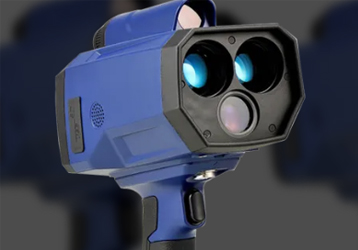
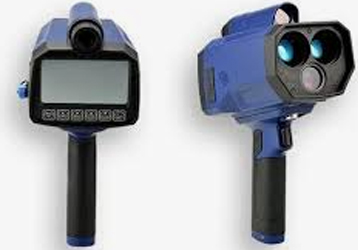
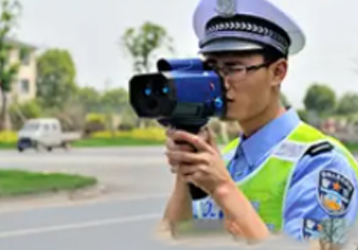
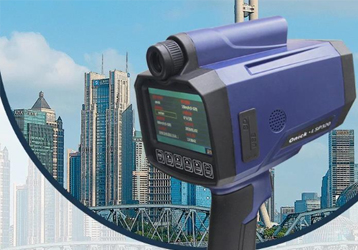
A radar speed gun is often designed for an operator to aim at a target vehicle and obtain a speed reading.
A radar speed sensor may be designed for fixed installation and automated monitoring. It can potentially operate continuously and send measurements to another system.
The distinction is mainly related to system configuration and intended use rather than the underlying radar principle.
For a temporary traffic survey, a portable radar device may be convenient.
For long-term monitoring, a fixed radar sensor with automated data storage or communication may be more appropriate.
Buyers should therefore evaluate the actual operating mode rather than relying only on terminology used in product descriptions.
4. Main Applications of Radar Speed Sensors
Radar speed sensors can support many transportation-related applications.
Road traffic surveys
Transportation researchers can use radar sensors to collect vehicle speed observations at selected locations.
Collected data can be used to study speed distributions, compare observation periods, and investigate traffic patterns.
Highway monitoring
Roadside radar sensors can support monitoring along highways and other high-speed road environments.
Depending on the system, measurements may be collected continuously or at defined intervals.
The installation design should account for road geometry, multiple lanes, target separation, environmental exposure, and communication requirements.
Urban traffic monitoring
In urban environments, radar sensors can support traffic data collection around major roads and transportation corridors.
Traffic speed information may be combined with traffic volume, intersection data, or other transportation information to provide a broader understanding of road conditions.
Smart transportation systems
Radar speed sensors can act as data sources within intelligent transportation infrastructure.
When integrated with communication networks and traffic management platforms, sensor measurements can be transferred to centralized systems for visualization and analysis.
Vehicle testing
Radar technology may also be used in controlled vehicle testing environments where speed measurement is required.
The appropriate equipment depends on the testing methodology, required accuracy, measurement distance, target characteristics, and data recording requirements.
Industrial traffic monitoring
Factories, logistics facilities, ports, and other industrial environments may use suitable radar sensors to monitor vehicle movement.
In such environments, the sensor should be selected according to the types of vehicles, operating environment, mounting conditions, and required data.
5. Key Features to Evaluate
Not every radar speed sensor provides the same functionality. The following features should be considered before purchasing.
Measurement capability
Review the manufacturer's stated speed measurement capabilities and operating conditions.
The appropriate specification depends on the intended traffic environment. A system for urban traffic research may have different requirements from equipment used for highway monitoring.
Detection area
Understand how the radar field of view relates to the road layout.
A wide detection area can be useful in some applications, but it may also introduce additional targets that need to be distinguished.
The detection pattern should therefore match the actual roadway.
Target detection
Some systems are designed to detect a single target, while others may process multiple vehicles.
If multiple vehicles can be present simultaneously, verify how the system identifies and separates targets.
Data storage
For traffic surveys, local storage can be useful when measurements must be collected without continuous network connectivity.
Check storage capacity, supported data formats, data retrieval procedures, and whether historical measurements can be exported.
Communication
Connected radar sensors may support different communication methods.
Depending on the model, options may include wired interfaces, serial communication, wireless connections, or network-based communication.
Always confirm the exact interface rather than assuming compatibility with a particular monitoring platform.
Environmental performance
Outdoor sensors may operate in rain, dust, temperature fluctuations, direct sunlight, and other challenging conditions.
Review the manufacturer's environmental specifications before selecting equipment for roadside deployment.
6. Installation Position and Measurement Geometry
Correct installation is essential for reliable radar speed measurement.
The sensor should be positioned according to the manufacturer's installation requirements. The angle between the radar beam and vehicle movement can affect the measured speed.
If the sensor is not aligned appropriately, the measured component of vehicle movement may differ from the actual travel speed.
Other installation factors include:
-
Road width
-
Number of lanes
-
Traffic direction
-
Sensor mounting height
-
Nearby structures
-
Road curvature
-
Obstructions
-
Target visibility
-
Potential radar interference
-
Power and communication availability
Before permanent installation, conduct a site assessment.
A practical site assessment should identify where the sensor can be mounted, which traffic lanes need to be monitored, and whether other objects could interfere with detection.
For multi-lane roads, it is particularly important to understand how the sensor identifies individual targets and whether measurements from adjacent lanes can be separated reliably.
7. Radar Speed Sensor Data Collection
A radar sensor can generate useful data, but the data must be collected using a consistent methodology.
Before starting a survey, define:
-
Measurement location
-
Observation period
-
Traffic direction
-
Target vehicle selection
-
Required speed unit
-
Data recording format
-
Data storage method
-
Quality-control procedure
If the system records individual vehicle measurements, timestamps can help analysts examine changes in speed over time.
If the system produces aggregated statistics, the definitions of those statistics should be documented.
For example, an hourly average speed and an individual vehicle speed are different types of information. They should not be treated as interchangeable.
Data collection should also record relevant contextual information, such as weather, traffic congestion, road construction, unusual incidents, or changes in traffic control.
8. Analyzing Radar Speed Data
After collection, radar speed data can be processed to identify useful traffic patterns.
Average speed
Average speed provides a simple summary of the collected observations.
However, the average does not show how widely individual speeds are distributed.
Median speed
Median speed can provide a useful description of the center of the dataset, particularly when extreme observations affect the average.
Percentile speed
Percentile values describe the position of observations within a distribution.
The 85th-percentile speed is commonly discussed in traffic studies. It represents a speed at or below which approximately 85% of observations fall, depending on the calculation method.
The statistic should be interpreted within the relevant traffic engineering context and should not be used alone to determine whether a road is safe or unsafe.
Speed distribution
A speed histogram can show whether vehicles are concentrated around a particular range or spread across a wider range.
Distribution analysis may reveal information that is not visible from the average speed alone.
Time-based analysis
If the sensor collects timestamps, analysts can compare traffic speeds during different periods.
For example, the data could be grouped by hour, day, or other relevant time intervals.
When comparing datasets, ensure that collection conditions and processing rules are sufficiently consistent.
9. Data Quality and Verification
Reliable traffic monitoring depends on reliable data.
Several quality-control practices can improve confidence in radar speed measurements.
Verify sensor configuration
Confirm that the device has been installed according to its intended operating procedure.
Check orientation, mounting position, power supply, and communication connections.
Monitor missing data
Long-term monitoring systems can experience communication interruptions, power failures, or sensor downtime.
Record periods when data was unavailable rather than assuming that missing records represent normal traffic conditions.
Investigate unusual measurements
Very high or low readings should be reviewed according to predefined rules.
An unusual value could represent a real vehicle event or a measurement problem.
Do not automatically remove every unusual observation.
Maintain equipment records
Keep records of equipment identification, installation configuration, maintenance, verification, and relevant software changes.
These records can help explain differences between datasets collected at different times.
Preserve original data
Original measurements should be retained separately from processed datasets.
If records are filtered, aggregated, or transformed, document the process so the analysis remains traceable.
10. Radar Speed Sensor Integration with Traffic Platforms
Modern transportation projects may require radar sensors to communicate with centralized systems.
A typical architecture may include:
Radar sensor → communication interface → data platform → analysis software → traffic management dashboard
The exact architecture varies by project.
When integrating equipment, verify:
-
Data communication method
-
Supported protocols
-
Data format
-
Timestamp format
-
Speed units
-
Location identifiers
-
Device status information
-
Error reporting
-
Data storage requirements
Integration testing should be performed before full deployment.
A system may successfully transmit data while still producing incorrect units, timestamps, or field mappings. Therefore, the test should verify the complete data chain from measurement to final display.
11. Choosing a Radar Speed Sensor for Traffic Monitoring
A practical purchasing process should start with the application.
Determine the monitoring purpose
Ask whether the system is intended for:
-
Temporary traffic surveys
-
Continuous roadside monitoring
-
Highway monitoring
-
Urban traffic analysis
-
Vehicle testing
-
Industrial traffic management
-
Smart transportation integration
Different applications may require different hardware configurations.
Determine the required data
Decide whether the project requires:
-
Individual vehicle speeds
-
Average speed
-
Speed distribution
-
Traffic counts
-
Vehicle direction
-
Vehicle classification
-
Timestamps
-
Historical records
Do not pay for unnecessary functions, but make sure the selected equipment can provide every essential data field.
Evaluate the environment
Consider road layout, traffic density, installation height, weather exposure, power availability, and communication conditions.
Check data interfaces
If the sensor will connect to another platform, confirm the supported interface and data format before purchasing.
Consider maintenance
Ask how often the equipment requires inspection, verification, firmware updates, or other maintenance.
Review supplier support
Technical documentation, installation guidance, training, spare parts, and after-sales support can be important for long-term projects.
A supplier should be able to explain the intended operating conditions and provide technical information relevant to the proposed installation.
12. Common Problems in Radar Speed Monitoring
Incorrect sensor orientation
Poor alignment can affect measurement results.
Follow the recommended installation geometry and verify the setup during commissioning.
Multiple targets
On busy roads, several vehicles may be within the detection area simultaneously.
Confirm how the sensor handles multiple targets before selecting it for high-density traffic environments.
Environmental interference
Nearby structures or other radio-frequency sources may influence performance in some installations.
A site assessment and installation test can help identify potential issues.
Poor communication
Long-term systems can lose data if network connections are unstable.
Consider local storage or buffering capabilities where continuous connectivity cannot be guaranteed.
Inconsistent data processing
Combining datasets using different units, timestamps, or filtering rules can produce misleading results.
Standardize the data processing workflow before comparing measurements.
Frequently Asked Questions
What is a radar speed sensor?
A radar speed sensor is a device that uses radio-frequency signals and reflected signal characteristics to detect moving vehicles and estimate their speed.
What is the difference between a radar speed sensor and a radar speed gun?
A radar speed gun is commonly designed for operator-directed measurements, while a radar speed sensor may be designed for fixed or automated monitoring. The exact capabilities depend on the specific product.
Can radar speed sensors monitor multiple vehicles?
Some systems are designed to detect and process multiple targets, while others are optimized for individual target measurements. The capability should be confirmed from the technical specifications.
Can radar speed sensors collect traffic data continuously?
Some fixed radar systems can collect data continuously or over extended periods. Portable operator-controlled devices may instead be intended for individual measurements.
Where can radar speed sensors be used?
They can be used in road traffic surveys, highway monitoring, urban traffic studies, smart transportation systems, vehicle testing, and selected industrial applications.
What affects radar speed measurement?
Installation geometry, target conditions, sensor design, environmental factors, interference, traffic density, and data-processing methods can all influence measurement performance.
Are radar speed sensors suitable for traffic enforcement?
Some equipment may be designed or approved for regulated applications, while other devices are intended only for research, monitoring, or traffic studies. Legal suitability depends on the jurisdiction and intended use and must be verified separately.
Conclusion
Radar speed sensors provide a practical technology for detecting moving vehicles and estimating vehicle speed across a variety of traffic monitoring applications.
Their value depends not only on the radar technology itself but also on installation geometry, data collection procedures, environmental conditions, system integration, and quality control.
For organizations selecting radar-based traffic monitoring equipment, the most effective approach is to define the required data first and then evaluate sensor capabilities, installation requirements, communication interfaces, maintenance needs, and regulatory suitability.
A properly selected and correctly installed radar speed sensor can become a useful data source for traffic surveys, smart transportation systems, highway monitoring, and broader vehicle speed analysis.