









Long-Range Rangefinder: How Distance Measurement Technology Supports Outdoor Applications
A long-range rangefinder is designed to provide fast and convenient distance measurement for distant targets. With the development of optical and digital measurement technology, modern rangefinders have become useful tools for outdoor observation, engineering inspection, construction projects, land surveying, forestry, and various field applications.
For users who regularly need to determine the distance to distant objects, choosing the right long-range rangefinder can improve measurement efficiency and make field operations more convenient.
How Does a Long-Range Rangefinder Work?
Most modern long-range rangefinders use laser-based distance measurement technology.
The device sends a laser signal toward a target. When the signal reaches the target surface, part of the signal is reflected back toward the rangefinder. The internal system analyzes the returned signal and calculates the distance between the device and the target.
This process allows users to obtain distance information without physically approaching the target.
The basic measurement process can be described as:
Target identification → Aiming → Laser emission → Signal reception → Distance calculation → Data display
This simple workflow allows long-range rangefinders to be used efficiently in many outdoor environments.
Why Is Long-Range Measurement Important?
Many outdoor targets cannot be easily reached by the operator. Mountains, buildings, towers, trees, construction structures, and other objects may be located hundreds or even thousands of meters away.
Traditional measuring methods can require additional equipment, multiple operators, or direct access to the target. A long-range rangefinder provides a more convenient alternative by allowing the operator to measure from a distance.
This can save time and reduce unnecessary movement during field operations.
Long-Range Rangefinder for Outdoor Observation
Outdoor observation is one of the common applications of long-range rangefinders.
When viewing distant terrain, users may need to know the approximate distance between their position and a particular landmark. A rangefinder can provide useful distance information while the optical system helps users locate the target.
This makes the equipment suitable for hiking, outdoor exploration, landscape observation, and other recreational activities.
Long-Range Rangefinder for Engineering Projects
Engineering professionals often work in large and complex environments where direct measurement is inconvenient.
A long-range rangefinder can help determine distances between different structures, reference points, or locations. The equipment can be carried directly to the work area and used whenever distance information is required.
For field engineers, inspectors, and technicians, portability and simple operation can be important advantages.
Long-Range Measurement for Building Inspection
Buildings and large structures often require measurements from different positions.
A long-range rangefinder can assist with distance assessment during building inspection and site evaluation. By measuring from a suitable location, operators can collect useful distance information without moving directly to every target position.
When used together with other professional measurement equipment, a rangefinder can become part of an efficient field measurement workflow.
What Factors Affect Long-Range Measurement?
The performance of a rangefinder can vary depending on the target and environmental conditions.
Target Reflectivity
Different surfaces reflect laser signals differently. Bright or reflective surfaces can generally provide stronger returned signals, while dark, rough, or irregular surfaces may be more difficult to measure at long distances.
Weather Conditions
Fog, rain, snow, dust, and atmospheric conditions can influence laser transmission and signal reception.
For this reason, the maximum theoretical measurement range should not always be considered the same as the practical range under every environmental condition.
Target Size
Large targets are generally easier to identify and measure than very small targets at the same distance.
When selecting a target, users should try to choose a clearly visible and sufficiently large surface whenever possible.
Device Stability
Small movements become more noticeable when aiming at distant targets. Keeping the rangefinder stable can therefore improve the consistency of measurements.
How to Improve Long-Range Measurement Results
Several simple practices can help improve measurement performance.
First, choose a clearly visible target with a suitable surface.
Second, hold the device steadily while aiming. A tripod or other stable support can be useful when measuring very distant objects.
Third, avoid measuring through obstacles such as glass, dense vegetation, or other materials that may interfere with the measurement signal.
Finally, consider environmental conditions before making important measurements.
What Should Buyers Look for in a Long-Range Rangefinder?
Different users have different requirements, so there is no single specification that is ideal for every application.
Important factors include:
Measurement range
Measurement accuracy
Optical clarity
Target visibility
Measurement response time
Display readability
Battery performance
Device size and weight
Weather resistance
Ease of operation
For outdoor users, portability and durability may be particularly important. For professional applications, measurement performance and reliability may receive greater attention.
Long-Range Rangefinder and Rangefinding Binoculars
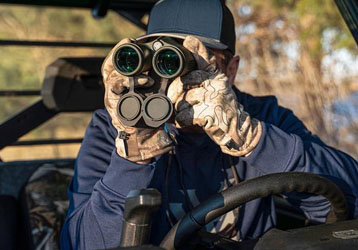
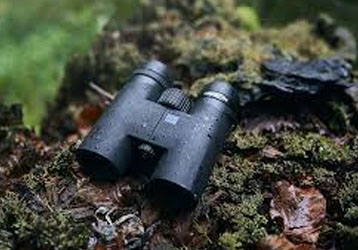
A conventional laser rangefinder mainly focuses on distance measurement, while rangefinding binoculars combine optical observation with distance measurement.
Rangefinding binoculars can be useful when the target is far away and difficult to identify with the naked eye. The optical magnification helps users locate the target before performing the distance measurement.
The appropriate choice depends on whether the user prioritizes compact measurement or combined observation and measurement.
Frequently Asked Questions About Long-Range Rangefinders
What is a long-range rangefinder used for?
A long-range rangefinder is used to measure the distance between the operator and distant targets. Common applications include outdoor observation, engineering inspection, construction, forestry, terrain assessment, and field work.
Can a rangefinder measure very distant targets?
The practical measurement distance depends on the device, target characteristics, weather, visibility, and surrounding environment. A device with a longer rated range may be more suitable for distant targets, but actual performance can vary.
Are long-range rangefinders easy to carry?
Many modern rangefinders are designed to be compact and portable. Handheld models are particularly convenient for outdoor activities and field operations.
Does weather affect laser distance measurement?
Yes. Fog, rain, snow, dust, and other atmospheric conditions can affect laser transmission and signal reception, potentially reducing practical measurement performance.
How can measurement stability be improved?
Keeping the rangefinder steady and selecting a clearly visible target can help. For very distant targets, a stable support can further reduce aiming movement.
Future Development of Long-Range Rangefinders
The future development of long-range rangefinders is expected to focus on better optical performance, improved measurement reliability, smaller device sizes, and more intelligent functions.
Digital displays, improved target recognition, angle measurement, data recording, and multifunctional optical systems may become increasingly common in professional and outdoor measuring equipment.
As users demand faster and more convenient field data collection, multifunctional long-range measurement equipment can provide greater practical value.
Conclusion
Long-range rangefinders provide a convenient way to obtain distance information from distant targets without requiring direct access to the measurement location.
From outdoor observation and engineering inspection to construction, forestry, and field operations, these devices can improve the efficiency of distance assessment.
When choosing a long-range rangefinder, users should consider measurement requirements, target characteristics, optical performance, environmental conditions, portability, and ease of operation. A suitable device combined with proper measurement techniques can provide more reliable and efficient long-distance measurement results.